A stiff neck and tight shoulders can draw your attention to the whole area around your face and collarbones. Décolleté massage uses gentle strokes over the neck, collarbones, front of the shoulders, and upper chest. You can work a short routine into your evening skincare in about five minutes. Keep the pressure light. Pressing harder doesn’t make it better.
I’ll explain why I start with this area before facial care, how to massage it at home, and which movements to avoid.
What Is Décolleté Massage?
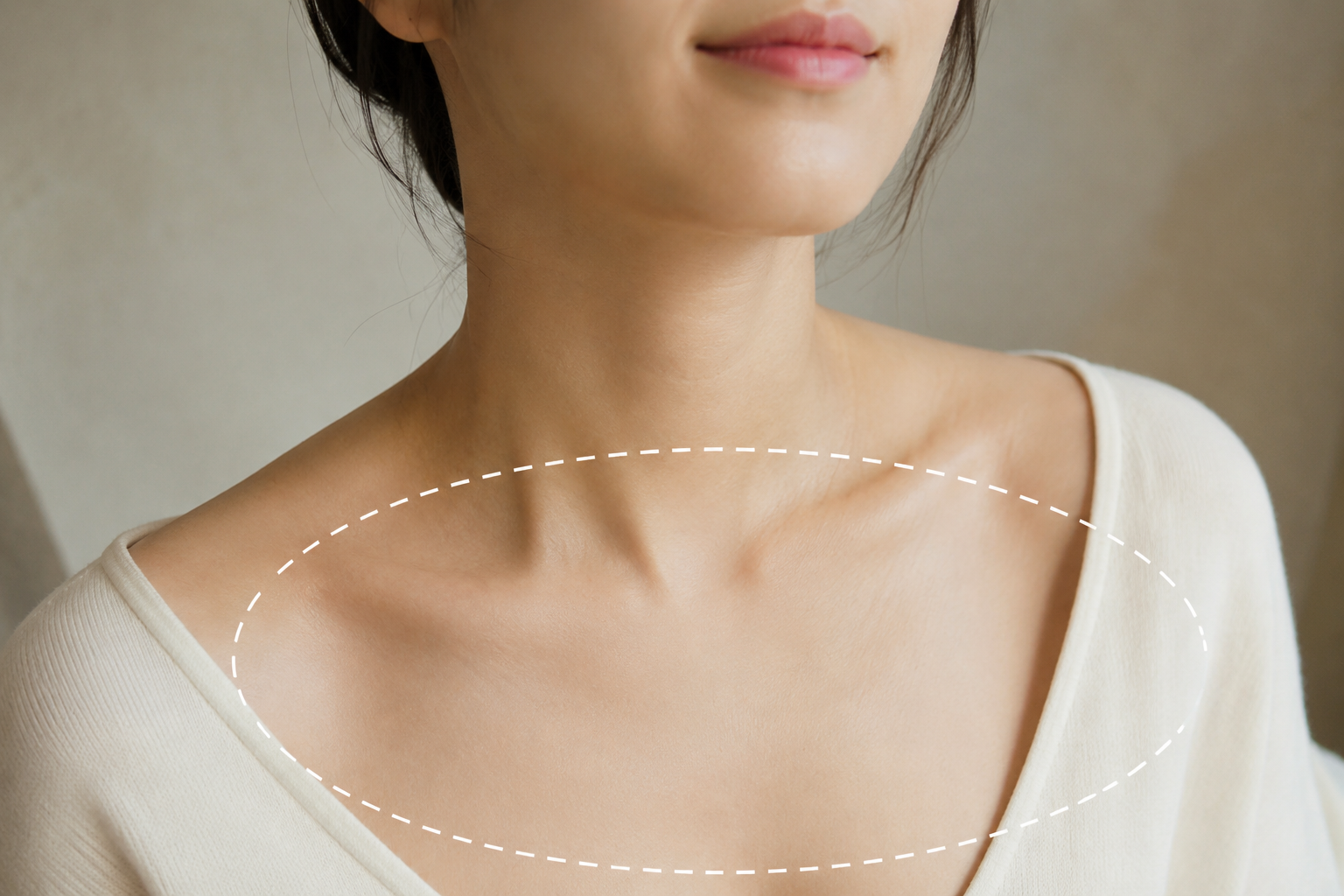
The décolleté is the area below the neck, across the collarbones, and over the upper chest. The word comes from French clothing terminology, so it doesn’t describe a sharply defined anatomical boundary. In esthetic care, we generally work on these areas together:
- The front and sides of the neck
- Around both collarbones
- The front of the shoulders
- The upper chest
What clients notice after décolleté care
Clients who receive regular décolleté care often describe these changes:
- Neck and shoulders: Less stiffness, with shoulders that look more level.
- Puffiness: A lighter feeling around the face and the area near the underarms.
- Skin: Less facial heat and redness, with skin that feels smoother.
- Facial definition: A clearer-looking jawline and facial features when the neck and upper chest sit more upright.
These are clients’ observations about their own care. They don’t mean that everyone will experience the same changes.
Lymph returns to the bloodstream near the collarbones, as explained in Cambridge University Hospitals’ guide to the lymphatic system. In my work, I look at the neck and upper chest as well as the face when a client is concerned about puffiness or facial heat. Circulation is part of how I approach facial care, alongside the way the neck and shoulders move.
Why I work on the décolleté before the face
Décolleté care is part of Meccrom’s facial and facial contour care. Clients sometimes ask why I begin at the neck and shoulders when they’ve come in for their face.
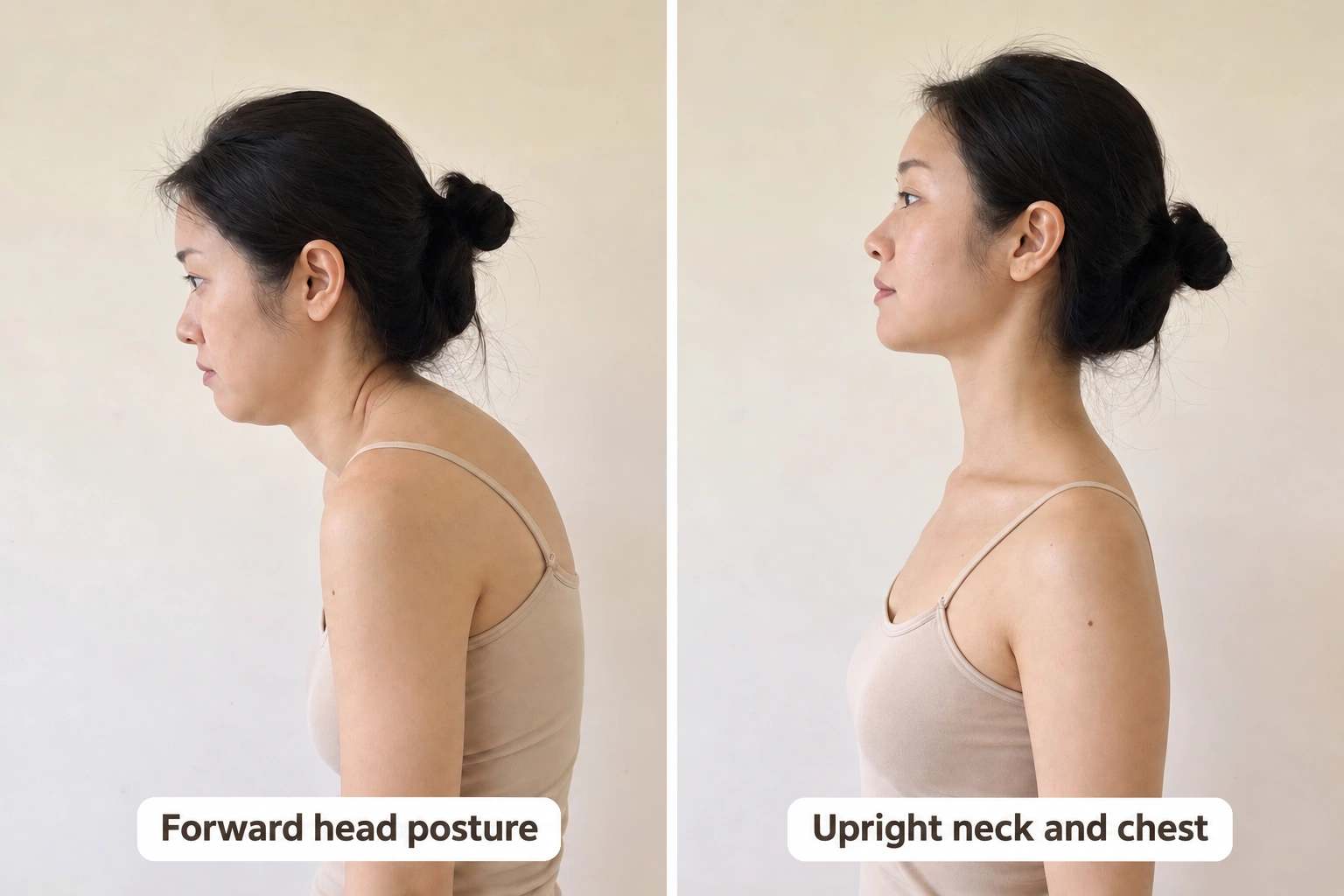
The position of the neck and shoulders affects how the face looks above them. When the head sits forward and the shoulders round inward, the neck can look shorter and the jawline less defined. I start by easing the shoulder area and gently stretching the neck before moving to the face. Our Korean facial massage guide explains this approach in more detail.
How to Massage Your Décolleté at Home
Work down the sides of the neck, across the shoulders, and then outward below the collarbones. Use a light touch. Cleveland Clinic’s self-massage guide also describes gentle downward strokes at the neck and outward strokes across the chest. The four steps below are the routine I describe for décolleté care.
Before you start
- Warm up: Try the routine after a shower, or rest a warm towel on your neck for two to three minutes.
- Apply oil or cream: Use enough for your hands to glide comfortably without dragging the skin.
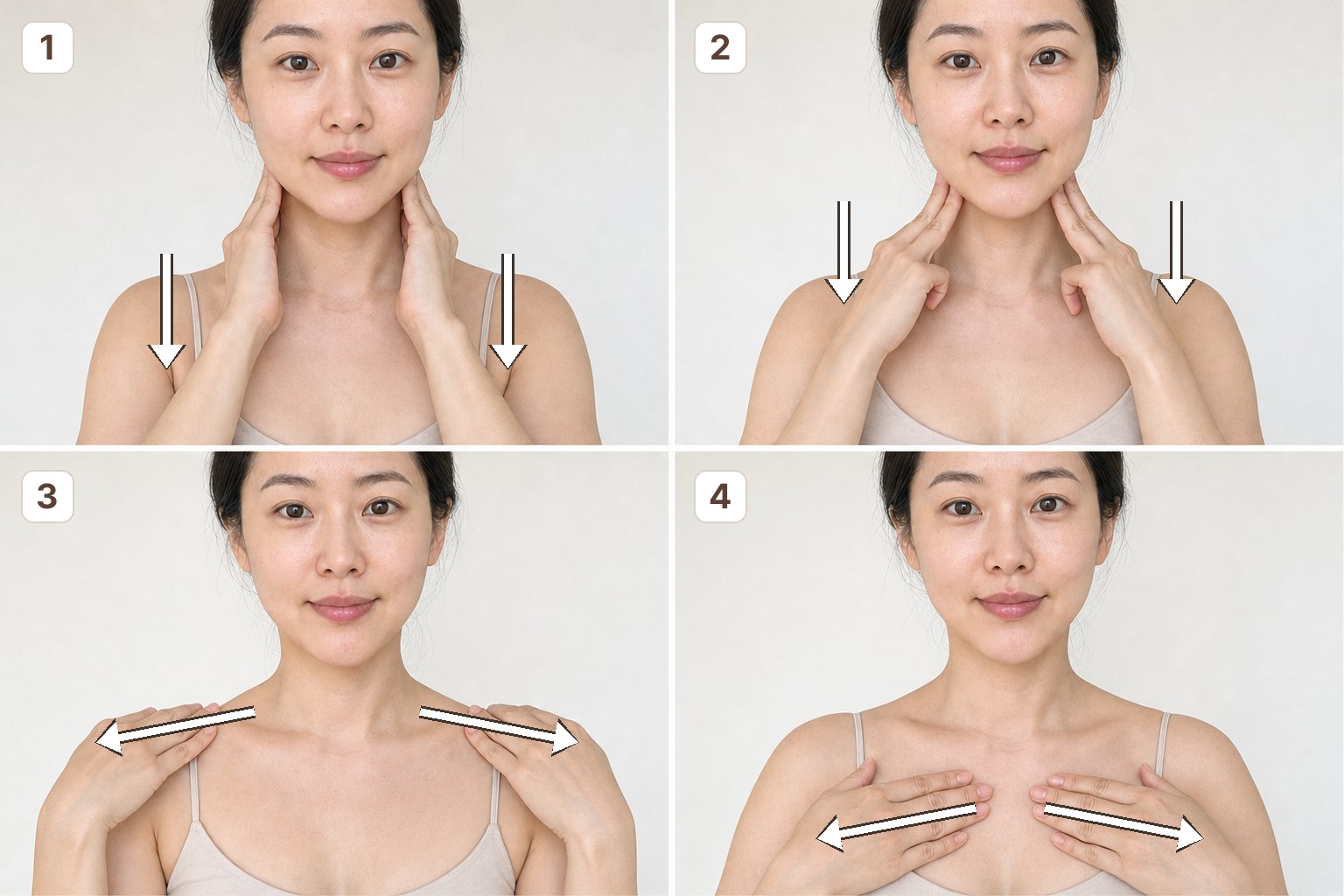
1. Make small circles along the sides of your neck
Rest your fingertips on the sides of your neck, just below your ears. Make small, gentle circles as you move gradually down toward the collarbones. Repeat five to ten times.
2. Press lightly from below the jaw toward the collarbones
Place your index and middle fingers just below the jaw on each side. Move down toward the collarbones, pausing for two or three light presses along the way. Keep this at skin level. Don’t dig your fingertips into the neck.
3. Sweep from below the ears to the ends of the shoulders
Place your palms at the sides of your neck below the ears. Slowly sweep down and over the tops of your shoulders toward their outer edges. Let the whole palm follow the shape of the shoulder. Don’t pinch or tug the upper trapezius muscles.
4. Sweep outward below the collarbones
Start with your palms near the center of your upper chest, just below the collarbones. Slowly sweep outward toward the underarms. Stay below the bones, and don’t hook your fingers over them or try to pull them down.
Use only enough pressure to move the skin gently. Pain or red marks mean you’re pressing too hard. The full routine takes less than five minutes, so you can do it when you apply moisturizer after washing your face in the evening.
For a broader routine that includes the neck and underarms, see our lymphatic massage guide.
Décolleté Massage Mistakes to Avoid
I’ve met many clients who enjoyed strong pressure during a massage but felt more tense or sore the next day. Some also described headaches or facial heat afterward. That experience is why I ask clients to avoid painful pressure and pulling around the décolleté.
- Digging in with a fist or elbow: If you have to brace against the pressure, ease off.
- Pinching and pulling the upper traps: A brief sense of relief isn’t a reason to keep tugging at a sensitive shoulder.
- Pulling the collarbones downward: Don’t try to create a collarbone line by forcing the bones down with your hands.
- Repeatedly kneading one spot: Stop before the skin becomes rubbed, red, or hot.
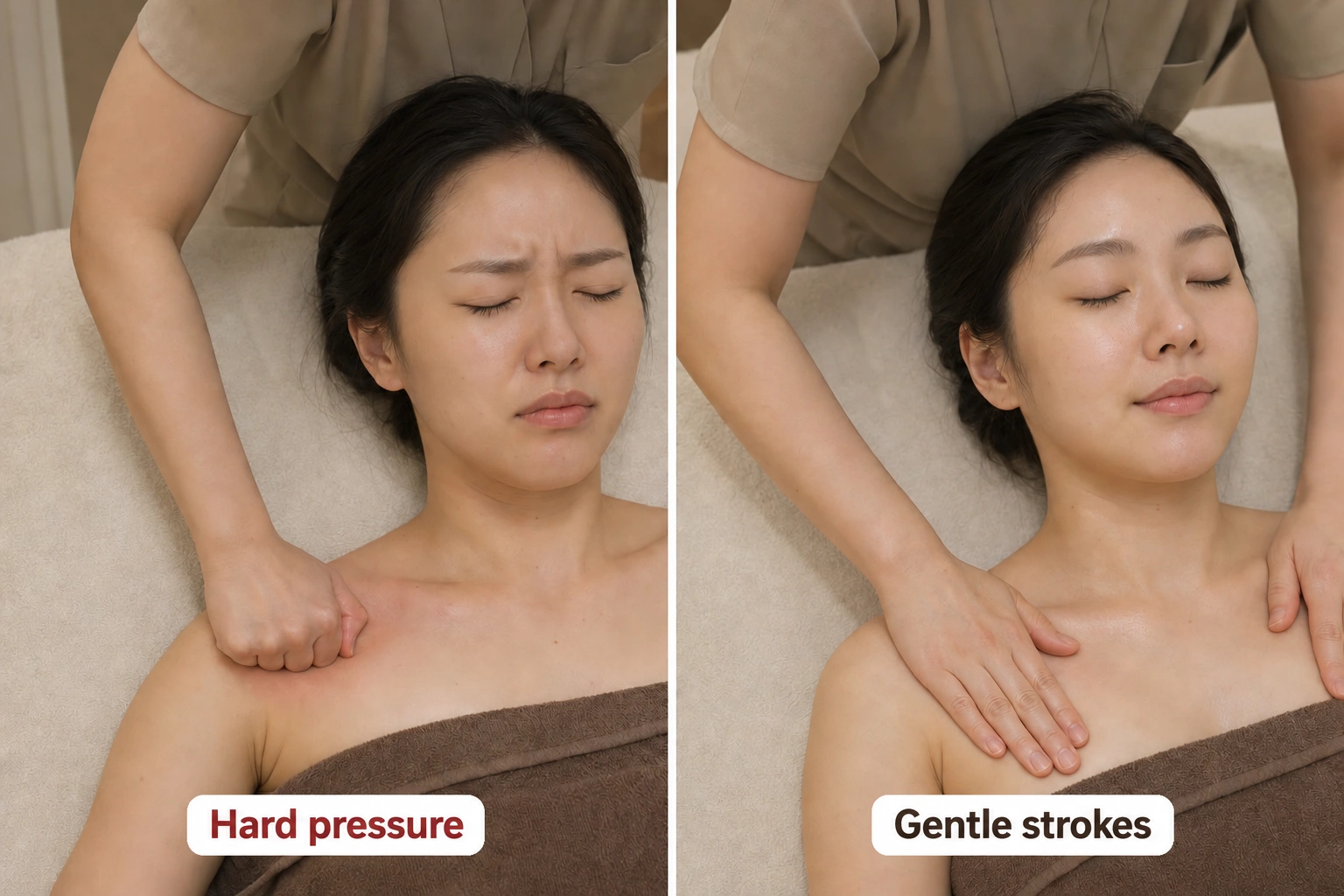
First-time clients sometimes ask, “Can it really be this gentle?” I adjust where I work and how much pressure I use after looking at the body. I don’t ask clients to tolerate pain. If pain, swelling, or tingling becomes worse or continues after massage, stop and have a healthcare professional assess it.
Everyday Care for Your Neck and Upper Chest
The habits between massages matter too.
- Sun protection: Extend your sunscreen to the exposed skin on your neck and upper chest.
- Moisturizer: When you moisturize your face, carry it down over the neck. This is a convenient time for gentle self-massage.
- Phone position: Bring your phone closer to eye level so you spend less time looking down with your shoulders rounded.
- Pillow height: Choose a height that doesn’t push your chin toward your chest when you lie down.
If you often find your head drifting forward, try the movements in our forward head posture exercise guide.
What Professional Décolleté Care Adds
Self-massage is a short daily routine for the areas you can comfortably reach. Professional care can include the upper back and other areas that are harder to work on yourself, with pressure adjusted to how you feel that day.
Areas that are hard to reach yourself
It’s difficult to control pressure around your shoulder blades, upper back, and the back of your upper traps with your own hands. Working only on the front may feel pleasant, while tension behind the shoulders remains. If your upper traps are a particular concern, our upper trap stretches and exercises may also be useful.
Décolleté care at Meccrom Seongsu
Before I begin, I look at your posture and how your neck and shoulders move. I choose the pressure based on how your body feels that day. The care doesn’t involve forceful pressing or pulling.
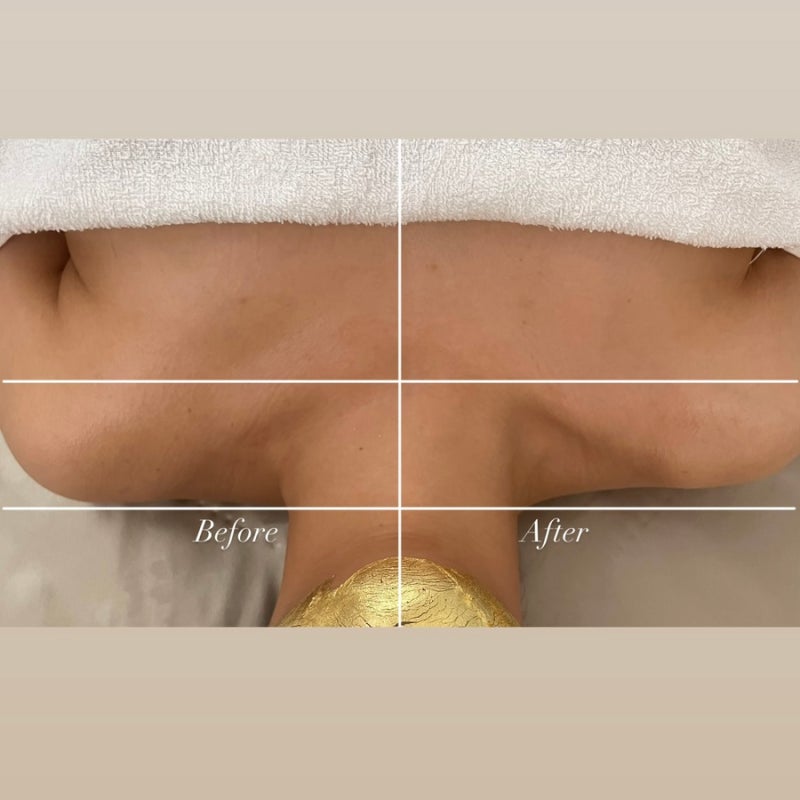
Before-and-after photos from Seongsu
These are actual client photos from décolleté care. In this comparison, the shoulders look less rounded after the session, leaving more of the neck visible. The reference lines help you compare the shoulder height and neck outline.
The front and back views show the areas from another angle. Compare the collarbones, base of the neck, and upper shoulders marked by the arrows.
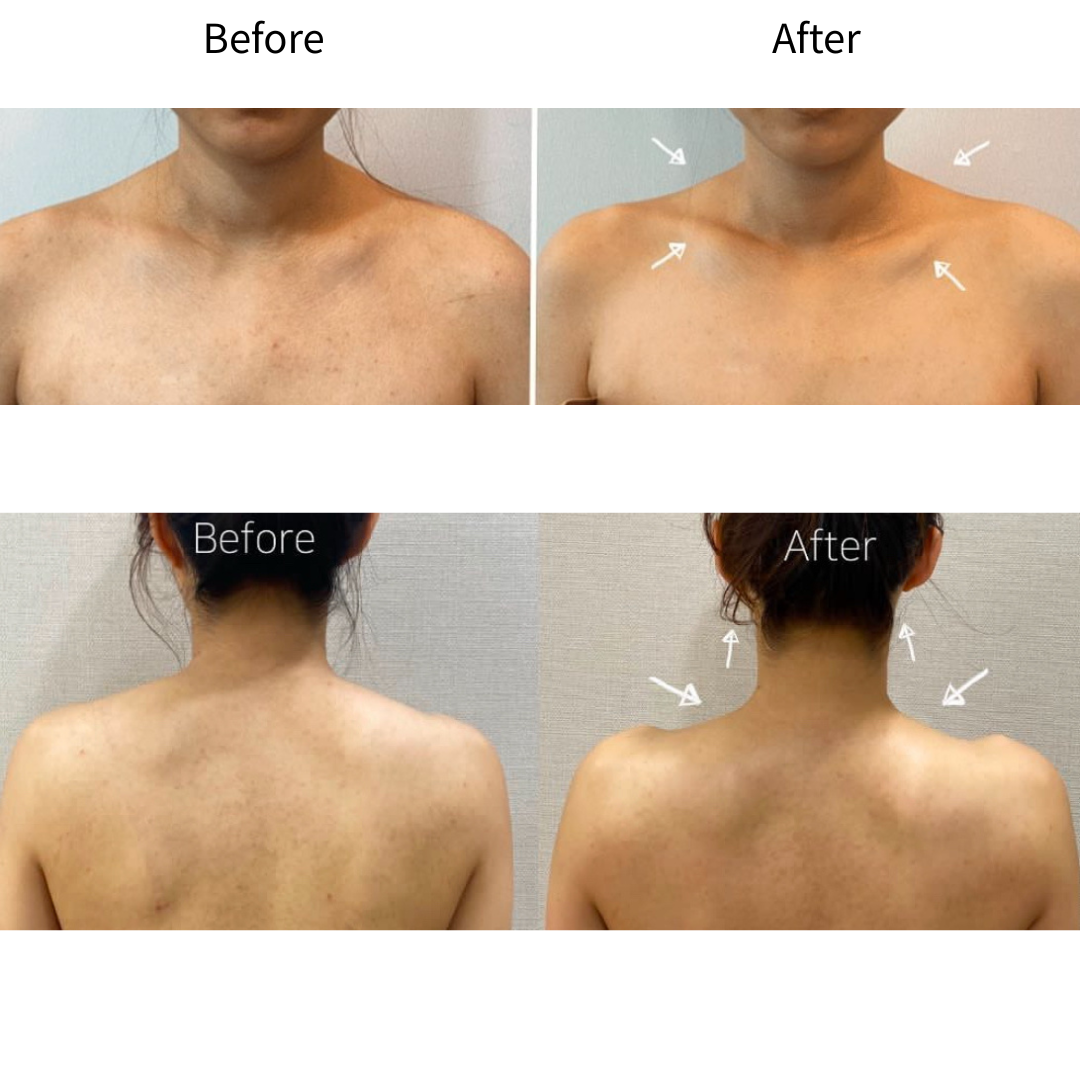
In the front view, the collarbone line looks clearer and the transition from neck to shoulder looks smoother. From behind, the upper shoulders appear lower, with more of the neck showing. The care included the neck, shoulders, and back as well as the front of the décolleté. These photos show individual examples, not a result everyone should expect.
Clients have also shared their experiences in Naver visitor reviews.
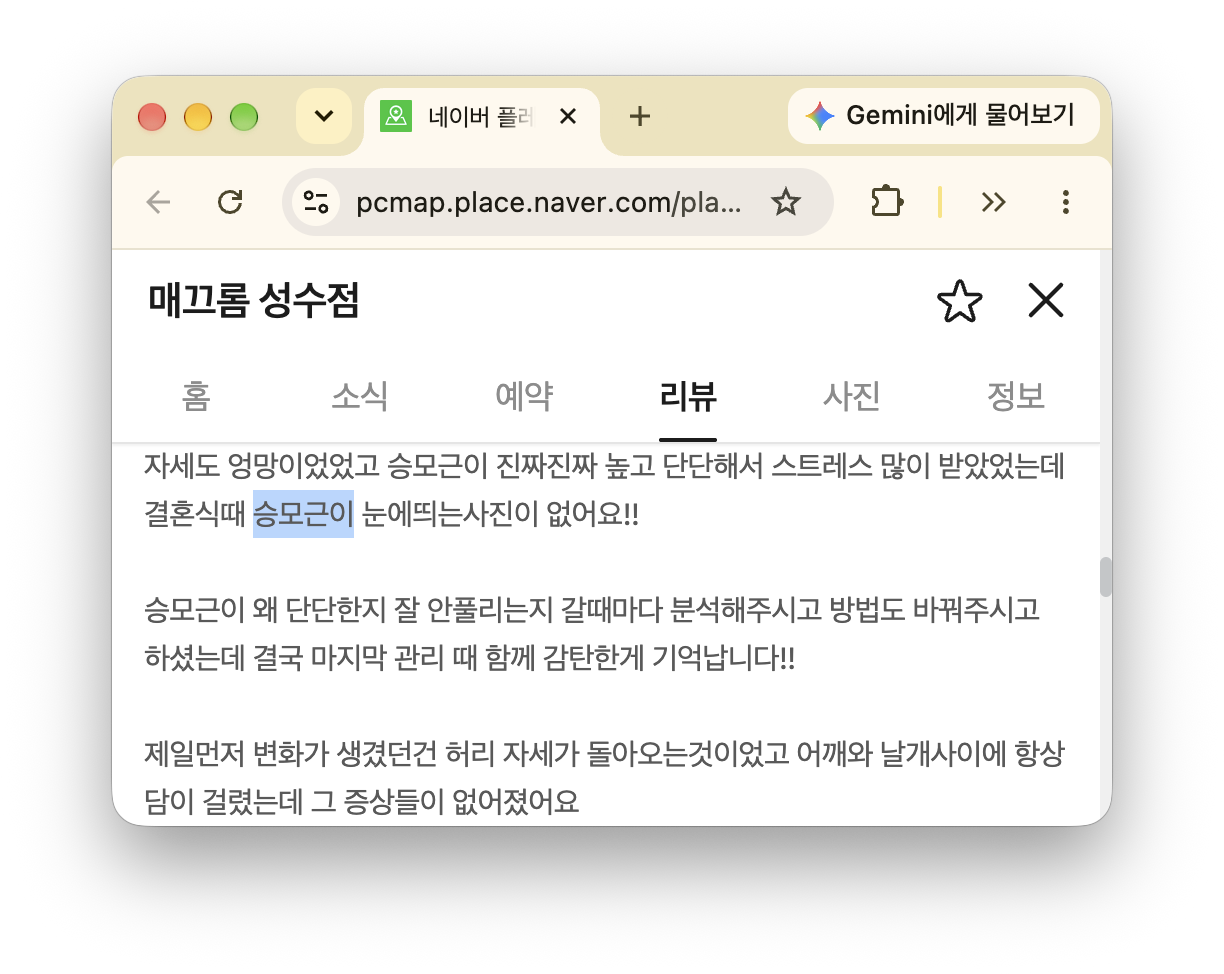
Translated excerpts from the Korean review shown above:
My posture was a mess, and my upper shoulders always looked raised and felt rock-hard. I worried about how they would look, but I couldn’t find a single wedding photo where they stood out.
Each time I came in, my therapist checked why the area stayed so tight and adjusted the session instead of doing the same thing every time.
The first difference I noticed was in my posture. That constantly knotted feeling between my shoulder blades stopped coming back too.
If facial puffiness or your face line is bothering you and your neck and shoulders also feel stiff, tell me about both during your consultation. We’ll look at how you’re feeling that day and decide where to focus, from the décolleté up to the face. I’ll also explain how to care for the area at home between visits. You’re welcome to visit Meccrom Seongsu to talk about what feels uncomfortable.