After a full day on your feet or hours at a desk, both lower legs may feel heavy and your socks may leave deeper marks than they did in the morning. For that familiar pattern, try walking, ankle pumps, leg elevation, and light upward strokes with your palm.
Do not massage a leg that has suddenly swollen on one side or feels painful, warm, or looks red. Those symptoms need medical evaluation. The routine below is for temporary swelling in both legs after prolonged sitting or standing, not swelling caused by a medical condition.
A 10-Minute After-Work Routine for Leg Swelling
Try these steps when your legs feel heavy at the end of the day.
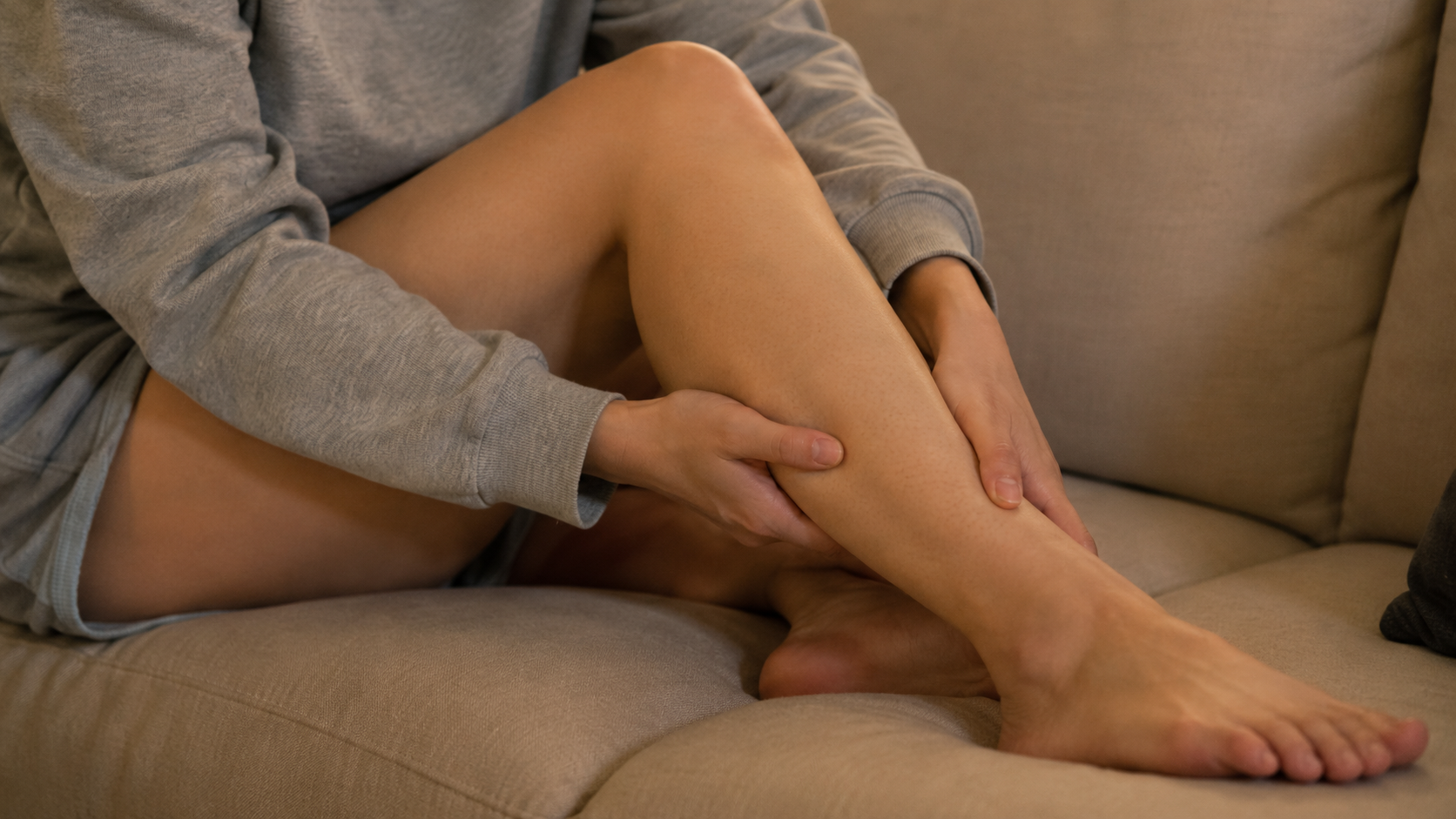
- Remove anything tight
Take off your shoes and socks, then sit in a comfortable position. - Move your ankles, 10 times
Pull your toes toward your body, then point them away. Stay within a pain-free range. - Take a short walk
Walk around your home once or twice to break up a long period in one position. - Elevate your legs for about 10 minutes
Lie down and place a pillow under your calves and ankles so they rest slightly above your heart. - Use gentle upward strokes, 5 to 10 times per section
Apply lotion, place your palm flat against the skin, and glide from the ankle toward the upper calf.
Keep the pressure light. Use the broad surface of your palm instead of pressing firmly with your fingertips.
What you do next depends on how the swelling appears.
- If both legs often feel heavy and self-care is difficult, you may want to speak with an esthetician or massage professional.
- If one leg suddenly swells, or swelling comes with pain or warmth, seek medical care first.
The amount of swelling can change with how long you stay in one position. Once you understand why that happens, it becomes easier to choose the right kind of care.
Why Your Legs Swell After Sitting or Standing All Day
When you stand or sit for a long time, the leg muscles barely move. Blood and fluid can then collect more easily in the lower legs.
The calf muscles normally act like a pump when you walk, helping move blood back toward the heart. When you stay in one position, that pump is less active. By evening, the ankles may look puffy and the calves may feel swollen.
Not every kind of swelling follows the same pattern.
| What to check | Common pattern after prolonged sitting or standing | Pattern that needs medical attention |
|---|---|---|
| Area | Both legs look similar | Only one leg is affected |
| Timing | Worse in the evening and better after sleep | Persists or worsens even with rest |
| Other symptoms | Heaviness or fatigue | Pain, warmth, or a change in skin color |
Even when both legs swell in a similar way, see a medical professional if it keeps returning or becomes more severe.
As temporary swelling settles, the circumference of the leg may briefly decrease. That change reflects fluid, not fat loss. Gentle calf massage is one way to help the body move that fluid.
How to Massage Swollen Legs Gently
Place the full surface of your palm on the skin and glide upward from the ankle toward the calf. Stronger pressure doesn’t make swelling disappear faster.
Follow these three steps.
Step 1: Hold around the ankle, 5 times
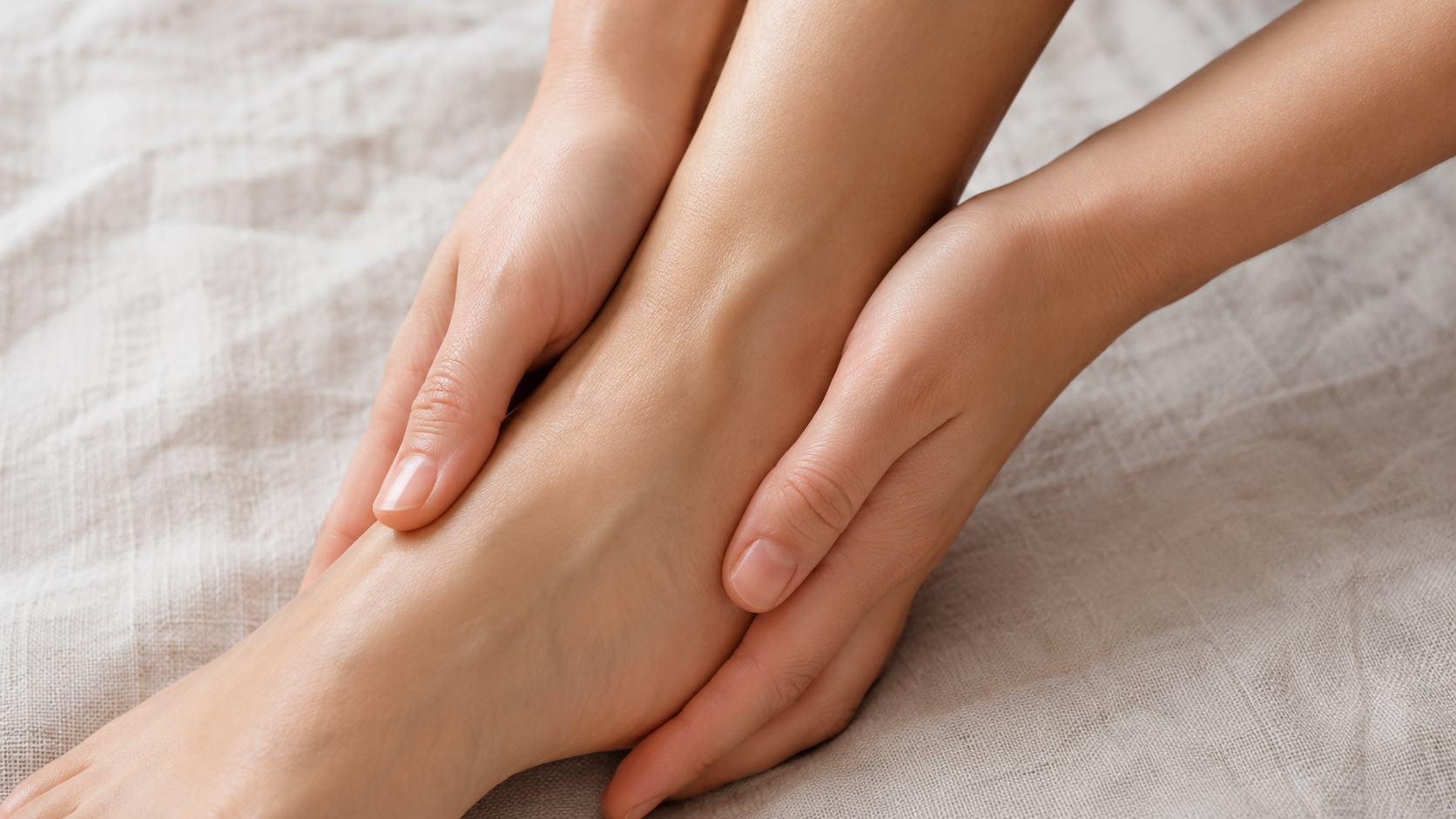
How to: Wrap both hands around the ankle and slowly glide upward.
Tip: Don’t press directly on the ankle bones. Hold the surrounding area broadly instead.
Step 2: Move from the ankle to the middle of the calf, 5 to 10 times
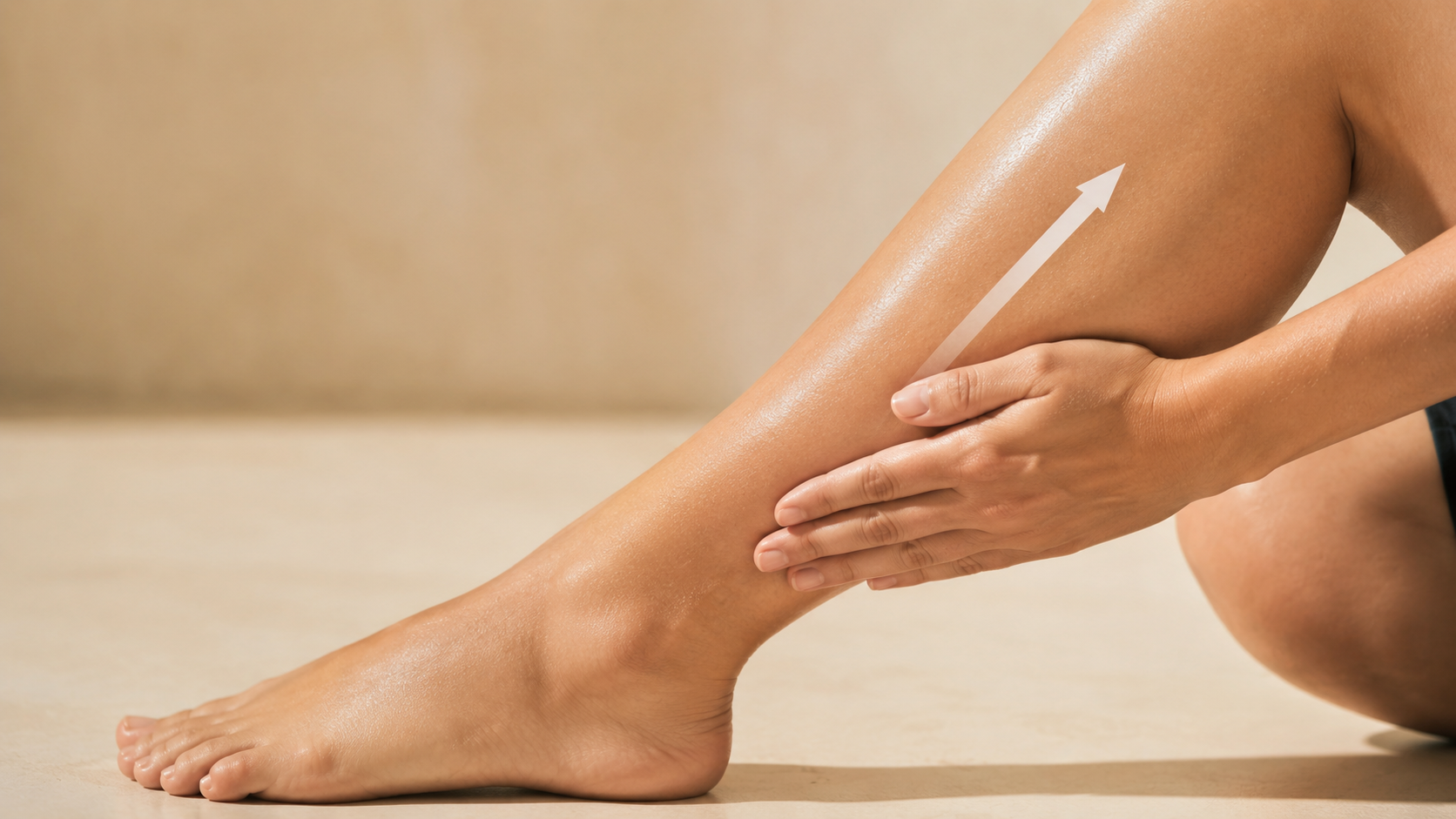
How to: Place your palm just above the ankle and glide to the middle of the calf. Release the pressure as your hand returns to the starting point.
Tip: Don’t twist the skin or push hard.
Step 3: Move from the middle of the calf to just below the knee, 5 to 10 times
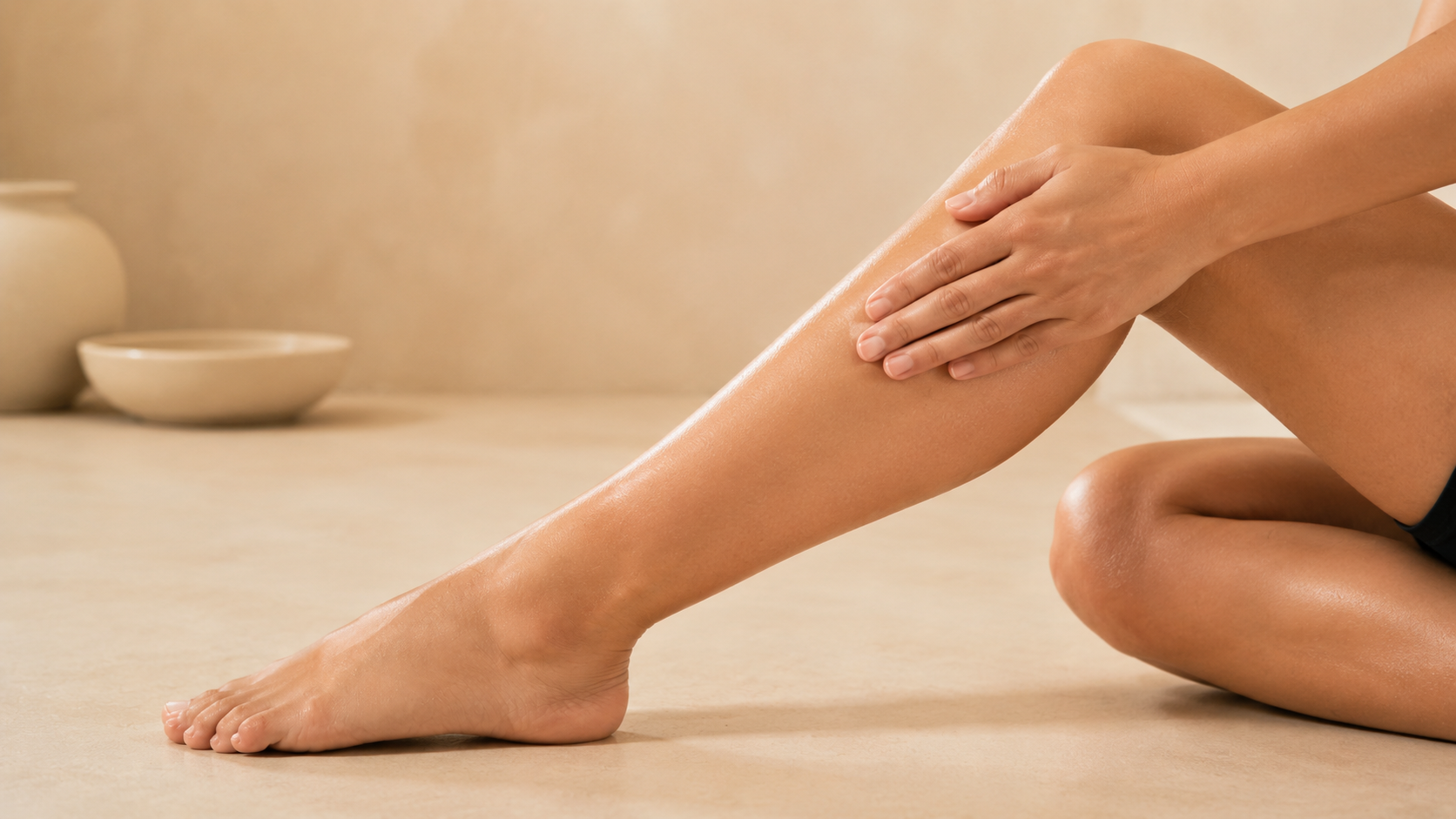
How to: Use a broad upward stroke along the calf.
Tip: Avoid pressing into the hollow behind the knee, where important blood vessels and nerves pass.
Do not try this routine if one leg suddenly swells or feels painful, warm, or red. If you have had surgery, have open or inflamed skin, or have been diagnosed with a heart, kidney, vascular, or lymphatic condition, ask your medical team before massage.
Ankle Exercises for Heavy, Swollen Legs
Start with simple movements that use the ankles and calves, such as toe lifts, heel lifts, ankle circles, and a calf stretch. You don’t need an intense leg workout. The point is to interrupt the long, fixed posture that made your legs feel stiff.
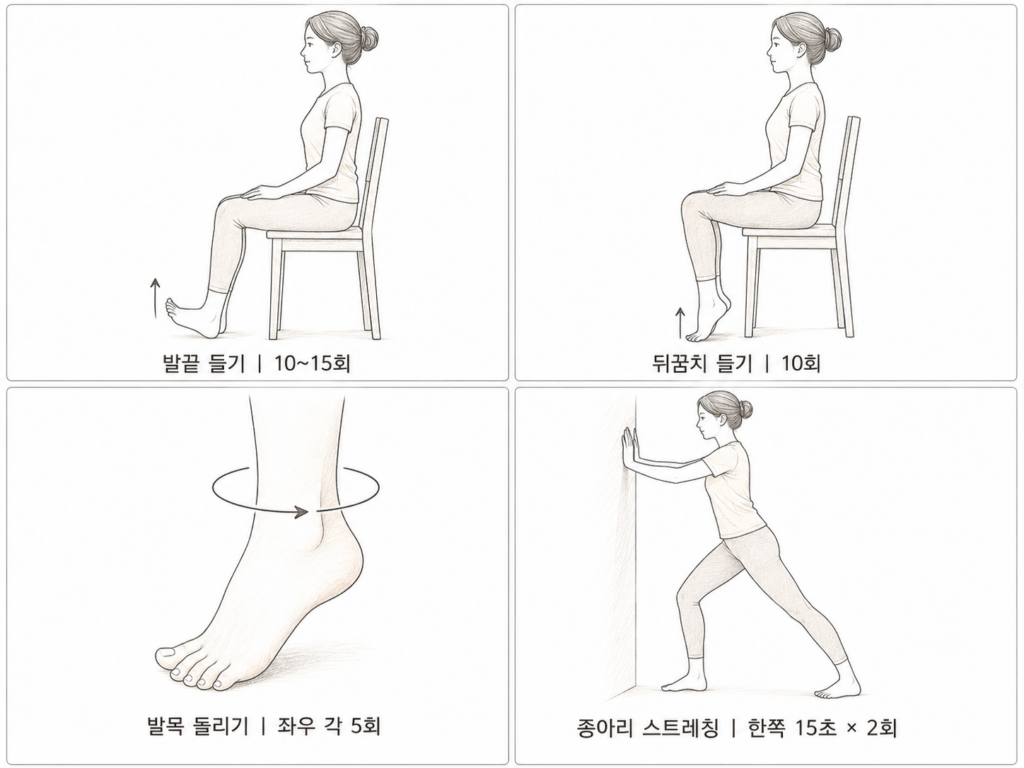
- Toe lifts, 10 to 15 times
Sit in a chair with your heels on the floor. Lift your toes toward your body, then lower them without bouncing. - Heel lifts, 10 times
Keep your toes and the balls of your feet on the floor. Raise and lower your heels slowly. Skip this movement if it hurts. - Ankle circles, 5 times in each direction
Lift one foot slightly and draw a small circle with the ankle. Keep the knee still. - Calf stretch, 15 seconds twice per side
Place your hands on a wall and step one leg back. Keep the back heel down as you lean forward, stopping when you feel a light stretch in the calf.
Short, frequent movement during the workday is more useful than waiting for one long session. High heels, tight shoes, and socks that leave deep marks can also make the legs feel constricted, so check those as well.
A one-minute seated routine
If you can’t leave your desk, you can still move your ankles while seated.
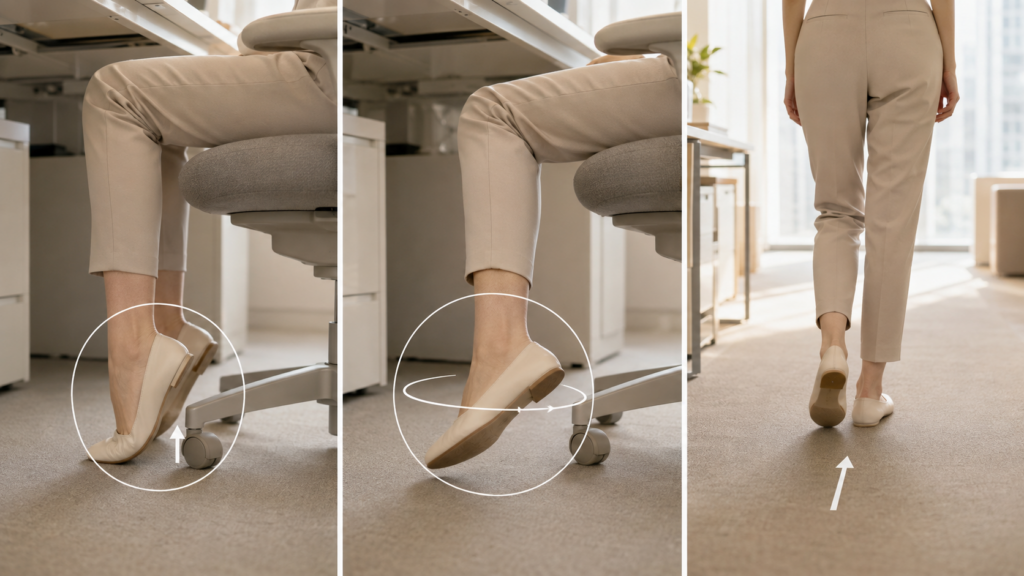
One minute at work: 1) Lift your toes 10 times. 2) Circle each ankle 5 times in both directions. 3) Take a short walk when you next leave your seat.
Use a small pause, such as a phone call or a screen loading, rather than waiting for a separate workout window.
If Only One Leg Suddenly Swells, Don’t Massage It
The routines above are meant for legs that feel heavy after work. Some patterns of swelling need medical evaluation before massage.
Seek medical care first if:
- one leg has suddenly swollen within the past 72 hours
- swelling comes with pain, warmth, or fever
- the skin is red or has changed color
- swelling throughout the body has continued for more than a month
- swelling began after starting a new medication
When to go to the emergency room: If leg swelling comes with sudden shortness of breath, chest pain, collapse, or loss of consciousness, call 119 in Korea or go to the emergency room immediately.
Swelling in both legs can also be related to a health condition or medication. If it keeps returning or gets worse, don’t try to force it down within a few days. Have the cause checked first. See the Korea Disease Control and Prevention Agency’s health information on edema for more information.
When to Consider a Professional Massage for Everyday Leg Heaviness
If there are no warning signs that need medical attention, but both legs feel heavy after long periods of sitting or standing, you may want to consult an esthetician or massage professional. A consultation can also help when you are unsure how much pressure to use on your own.
Before choosing a studio, check whether the esthetician or massage professional:
- asks about surgery history and uncomfortable areas before the session
- adjusts pressure while working
- avoids repeatedly pressing only one spot on the calf
- checks whether ankle, knee, or pelvic movement feels uncomfortable
- recognizes when medical evaluation should come first
A spa massage doesn’t treat a disease or remove the medical cause of edema. It may be an option for everyday heaviness when no warning signs are present and home care isn’t enough for your discomfort.
If you want to understand how light pressure differs from deep massage, read our lymphatic drainage massage guide before booking.
For a personal experience involving postpartum heaviness and puffiness, see this Incheon postpartum care review. The review does not replace medical guidance after birth.
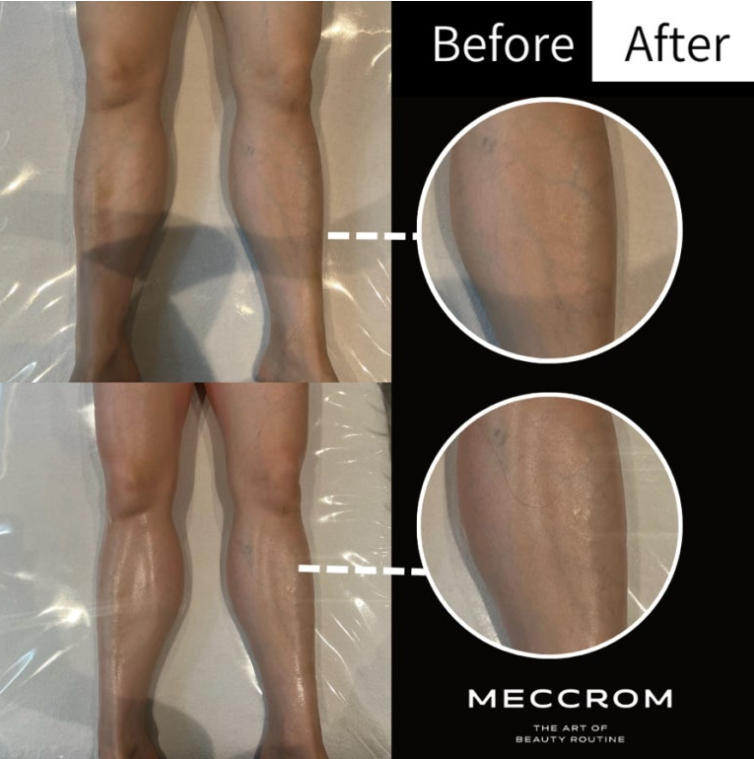
At Meccrom Seongsu, we have met clients whose legs repeatedly felt swollen and painful after knee surgery, as well as clients whose legs often felt swollen and cold with visible veins.
In those cases, the first questions are not about a before-and-after result. We ask about surgery history, pain, and when the swelling began. If there are warning signs, medical care comes before an esthetic session.
When there are no warning signs, we look at how long you’ve stayed in one position and whether moving the ankles, knees, or pelvis feels uncomfortable. That helps us choose the area and pressure for the session.
A note from Meccrom: Stiff ankles or heavy legs do not mean the calf should be pressed as hard as possible. We first look at how long you have been in one position and whether movement at the ankles, knees, or pelvis feels uncomfortable. Then we adjust the pressure to how you feel that day.
If one leg suddenly swells or feels painful and warm, seek medical advice first. If there are no such signs, but both legs feel heavy after long days and home care is difficult, you can speak with the team at Meccrom Seongsu or Meccrom Incheon Namdong-gu. If you plan to visit the Seongsu studio, see which facial or bodywork service to book first.
Meccrom Seongsu is in Seongdong-gu, Seoul, about 235 meters from Exit 4 of Ttukseom Station. It’s also convenient from Seongsu-dong and Seoul Forest.
Meccrom Incheon Namdong-gu is in Namdong-gu, Incheon, about a five-minute walk from Exit 1 of Incheon Nonhyeon Station on the Suin-Bundang Line.
Frequently asked questions
How quickly can leg swelling go down?
There is no fixed timeline. Temporary swelling from staying in one position may change after you move, walk, or rest with your legs elevated. If swelling keeps returning, does not improve, or gets worse, have the cause checked instead of trying to force it down quickly. Do not massage a leg that has suddenly swollen or feels painful or warm.
What tea is good for leg swelling?
No particular tea can be assumed to address the cause of swelling. First, look at whether you drink very little water, eat salty or highly processed foods often, or stay in the same position for long periods. If swelling continues, checking the cause matters more than changing tea. Anyone who has been given a fluid limit because of a heart or kidney condition should follow their clinician’s instructions rather than general hydration advice.
Do compression socks help leg swelling?
Compression stockings may help some types of leg swelling, but the right pressure and fit depend on the cause and your circulation. If swelling is new, keeps returning, or you have a vascular or other medical condition, ask a healthcare professional before choosing a compression level.