How to Depuff Your Face in the Morning: A 5-Minute Routine
If you wake up with a puffy face after a salty dinner, drinks, or a short night of sleep, you do not need to scrub or press hard. Sit upright, use a cool washcloth, move your neck and shoulders, and finish with light fingertip pressure. The routine below takes about five minutes and is meant for mild puffiness that feels familiar.
This article includes AI-generated images for illustration.
A 5-Minute Morning Routine to Depuff Your Face
You will need only a clean washcloth and a chair. The change may be subtle, but this sequence gives the puffiness time to settle without irritating the skin.
What to do when you wake up
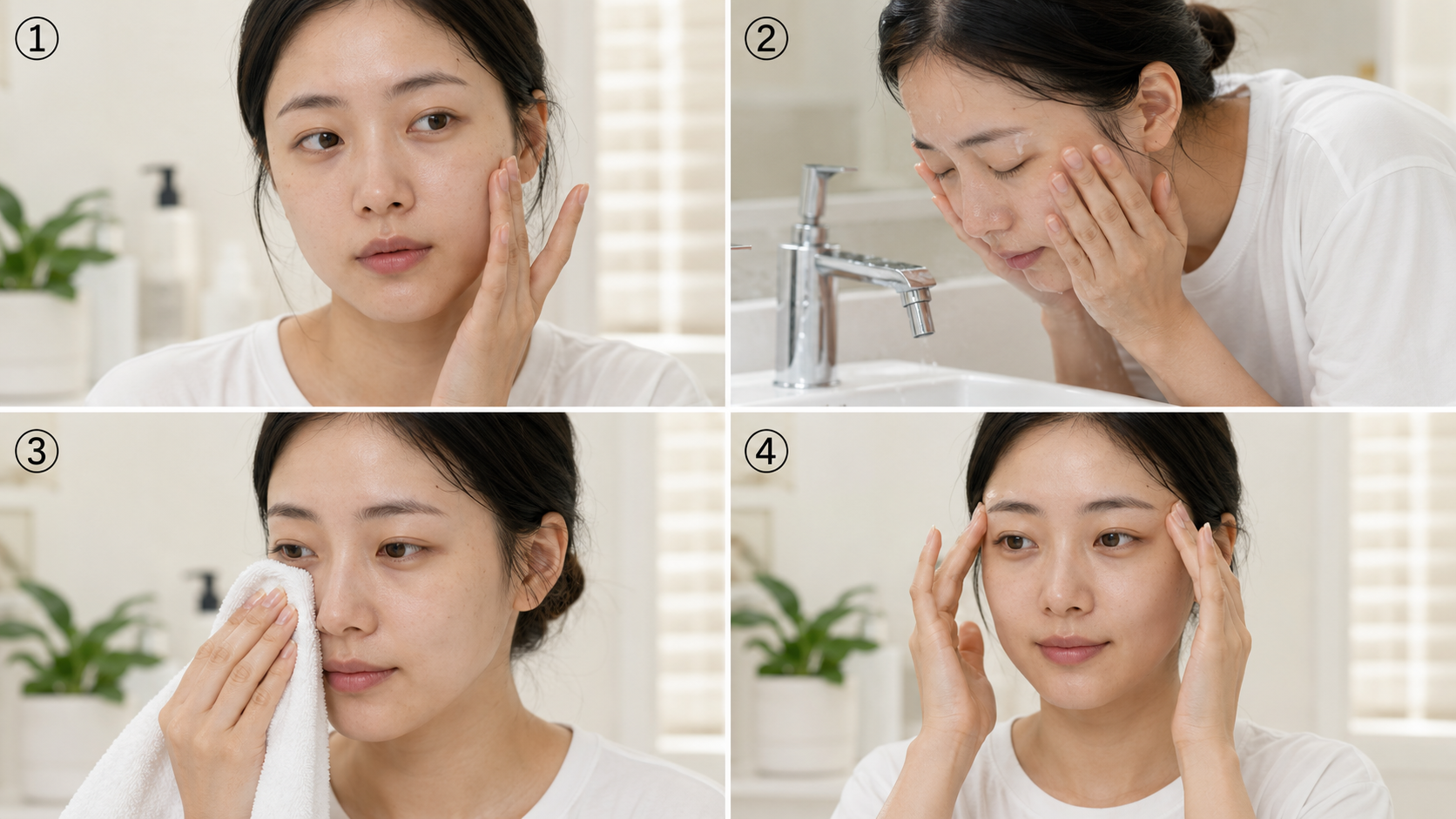
- First minute: Sit upright and check for pain, warmth, redness, itching, or one-sided swelling.
- Second minute: Wash your face gently with lukewarm water.
- Third minute: Rest a clean washcloth dampened with cool water over the puffy area. Do not rub.
- Fourth minute: Loosen your neck and shoulders with the three movements below.
- Fifth minute: Press and release lightly around the temples, ears, and jawline.
This routine is not for sudden or unexplained facial swelling. For familiar morning puffiness, how much pressure you use matters more than completing every step perfectly.
Use gentle pressure, not painful pressure
The fingertip pressure described here isn’t a treatment that targets specific acupressure points. A light press and release is enough. Pressing harder doesn’t make it more effective.
Press lightly around the temples, ears, and along the jawline, then release. Along the jaw, move from the center of the chin toward the ears. Repeat three to five times in each area. There’s no need to sweep forcefully from below the ears down the neck.
Redness, pain, finger marks, or bruising are signs that you’re using too much pressure. Avoid methods that compress the face with rubber bands or other bands.
Three Gentle Neck and Shoulder Movements for Morning Puffiness
Exercises for facial puffiness don’t have to focus only on facial muscles. Start by gently loosening the neck and shoulders, which may feel stiff after sleep.
Three gentle movements for the neck and shoulders
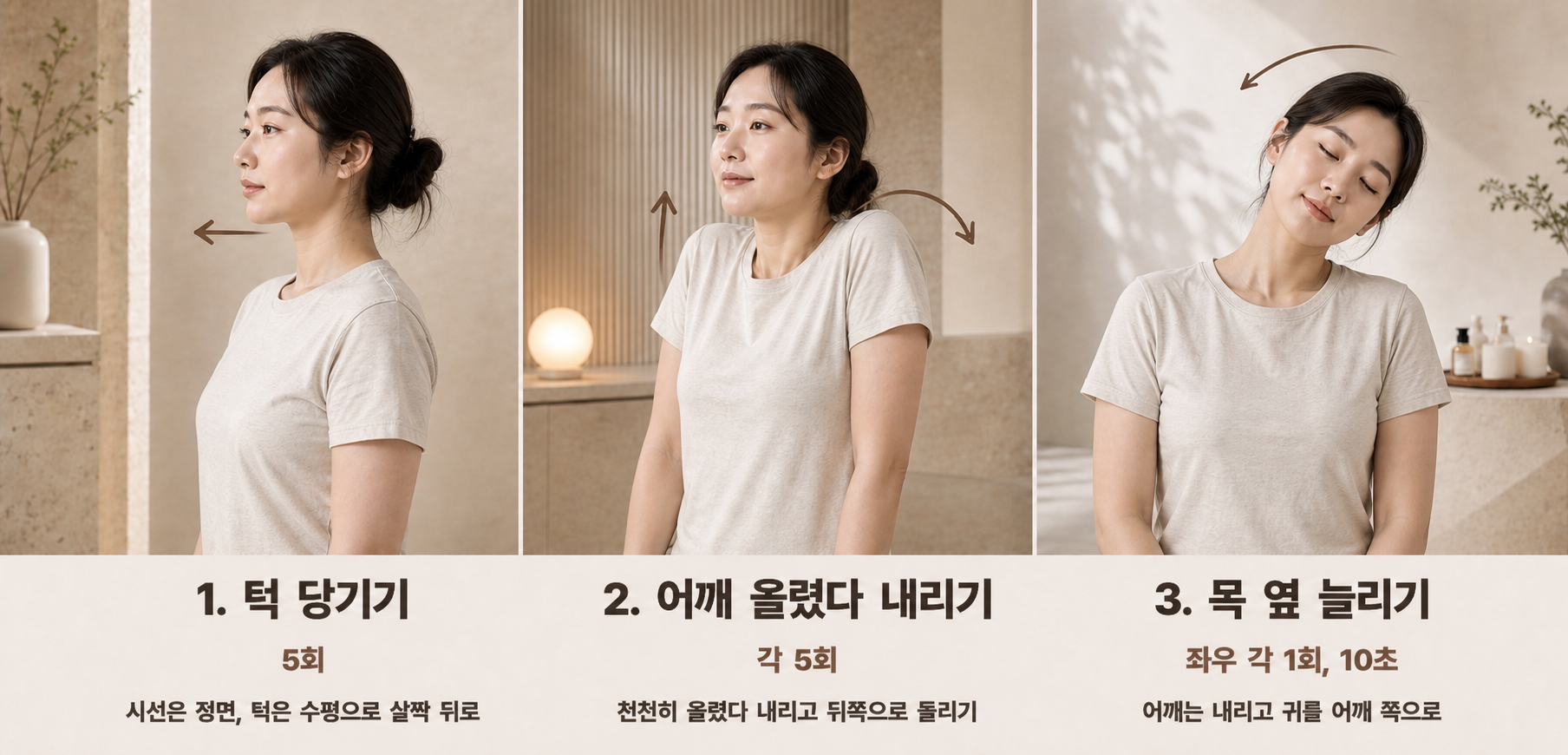
1. Chin tuck, 5 times
- How to: Look straight ahead. Draw your chin slightly backward on a level line, then relax.
- Tip: Don’t lower your head or strain your neck.
2. Shoulder lift and roll, 5 times each
- How to: Slowly lift your shoulders toward your ears and lower them. Then make small backward circles.
- Tip: Don’t rush or tense your shoulders.
3. Side neck stretch, once on each side
- How to: Tilt one ear toward the same-side shoulder and hold for 10 seconds. Repeat on the other side.
- Tip: Keep the shoulder from lifting toward your ear.
Caution: Don’t roll your neck in a large circle or use momentum to force the stretch. Stop right away if you feel dizzy or develop neck or shoulder pain.
Changing the previous evening’s habits is often more useful than relying on a morning routine alone.
Why Your Face May Look Puffy in the Morning
Morning puffiness occurs when fluid collects in the tissues beneath the skin. Unlike fat, temporary puffiness can settle as time passes or the cause changes. Start by looking at the previous evening’s food, drinks, and sleeping position.
After salty food or alcohol
A late meal high in sodium can make the body hold onto fluid temporarily, leaving the eye area and cheeks looking puffier the next morning. Alcohol can also disrupt sleep and make morning puffiness more noticeable. Think back to what you ate and whether you drank the night before.
After sleeping face-down or pressing one side of the face
Sleeping face-down or keeping one side of the face pressed into a pillow can make that area look temporarily puffier. If the same side often looks more swollen in the morning, check your sleeping position before changing your pillow height.
Sudden, severe, or frequently recurring facial swelling can’t always be explained by daily habits. The suggestions below are for mild puffiness that feels familiar to you.
Evening habits that may help the next morning
Notice which days are worse, then change one repeated habit at a time.
- Cut back on late-night ramen, salty soups, and salty snacks.
- Avoid heavy drinking and give your body time to settle before bed.
- Avoid sleeping face-down or pressing one side of your face into the pillow for a long time.
- If it feels comfortable for your neck, keep your head slightly elevated rather than sleeping completely flat.
- Keep a consistent bedtime.
Some facial swelling needs medical attention rather than a change in routine.
Seek medical care when:
- your lips, tongue, or throat suddenly swell and breathing or swallowing becomes difficult. Call 119 in Korea or your local emergency number
- your face suddenly swells severely, especially with pain, warmth, or fever
- the swelling continues to worsen
- unexplained swelling lasts for several days or keeps returning
If swelling began soon after surgery, a medical procedure, or dental treatment, contact the clinic that treated you first.
If puffiness also appears later in the day or keeps returning without a clear morning trigger, read our broader guide to what causes a puffy face and when gentle massage may help.
When Recurring Morning Puffiness Is Hard to Manage at Home

If morning puffiness keeps returning after you have adjusted your habits, you may want to consider a professional facial or massage. A consultation can be useful when you are unsure how much pressure to use or when your neck and shoulders also feel stiff.
The face is sensitive to pressure. Before booking a facial or massage, check whether the esthetician:
- asks about your skin, recent procedures, and painful areas before the session
- adjusts pressure instead of pressing one area hard
- looks at the neck and shoulders along with the face
- avoids promising a medical treatment result or a smaller face
Hands-on work lets an esthetician feel how the skin and nearby tissue respond and adjust the pressure during the session. To learn how that differs from forceful facial pressure, read What Does Face Sculpting Actually Include?.
How Meccrom Approaches Recurring Facial Puffiness
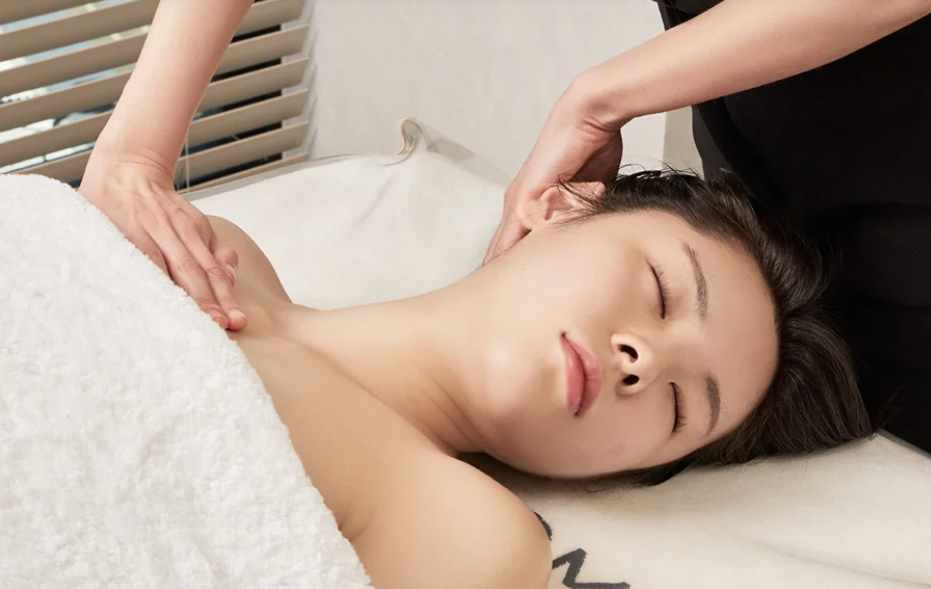
At Meccrom, we don’t respond to facial puffiness by pressing only the face. We also work on the neck, shoulders, and upper trapezius before moving to the face. If recurring puffiness is difficult to manage alone, start with a one-on-one consultation about what you’re experiencing now.
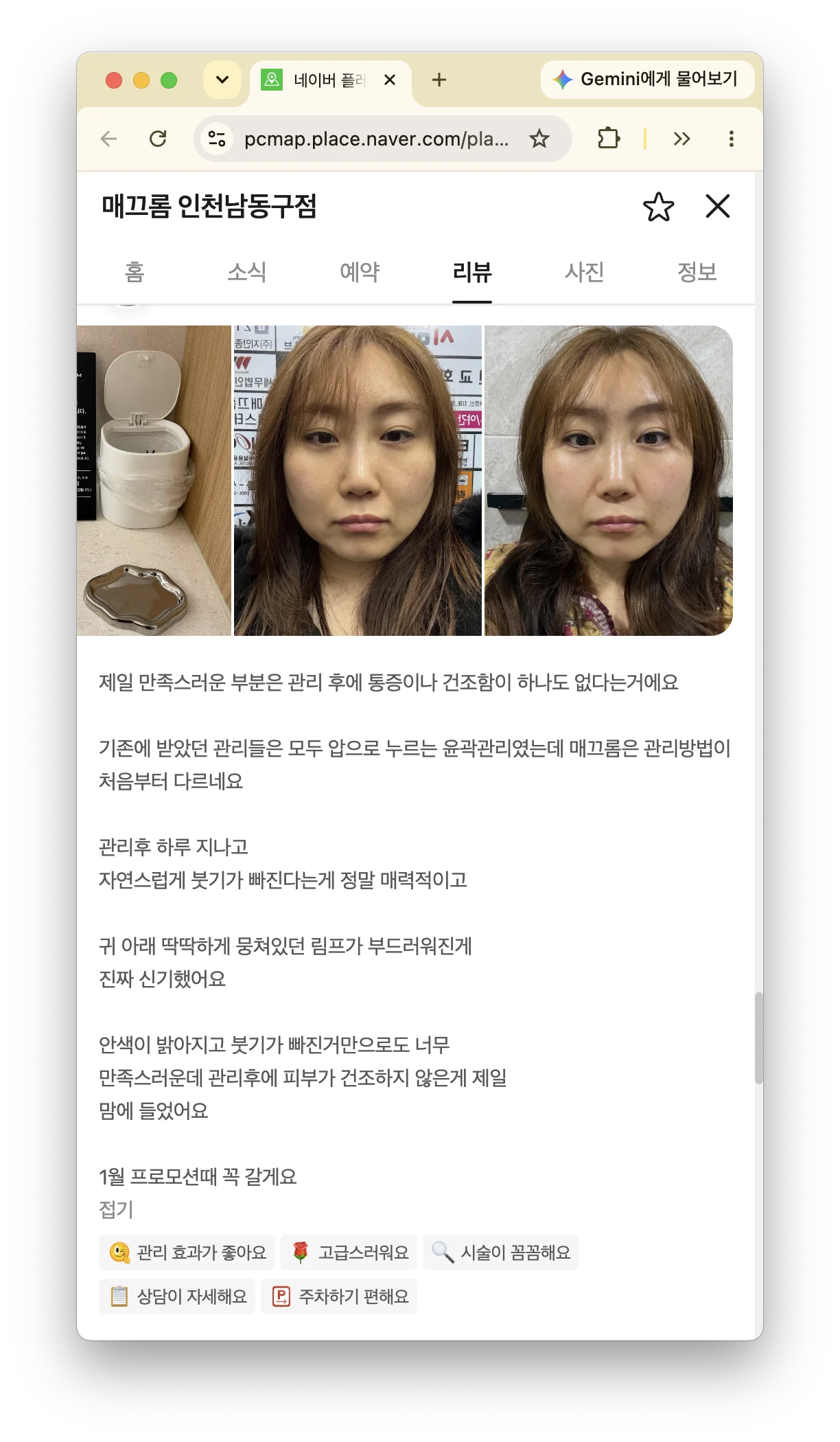
“What I loved was how the puffiness settled naturally by the next day. The hard, tight area below my ears also felt much softer, which was honestly surprising.” From a Meccrom facial gyeongrak care review
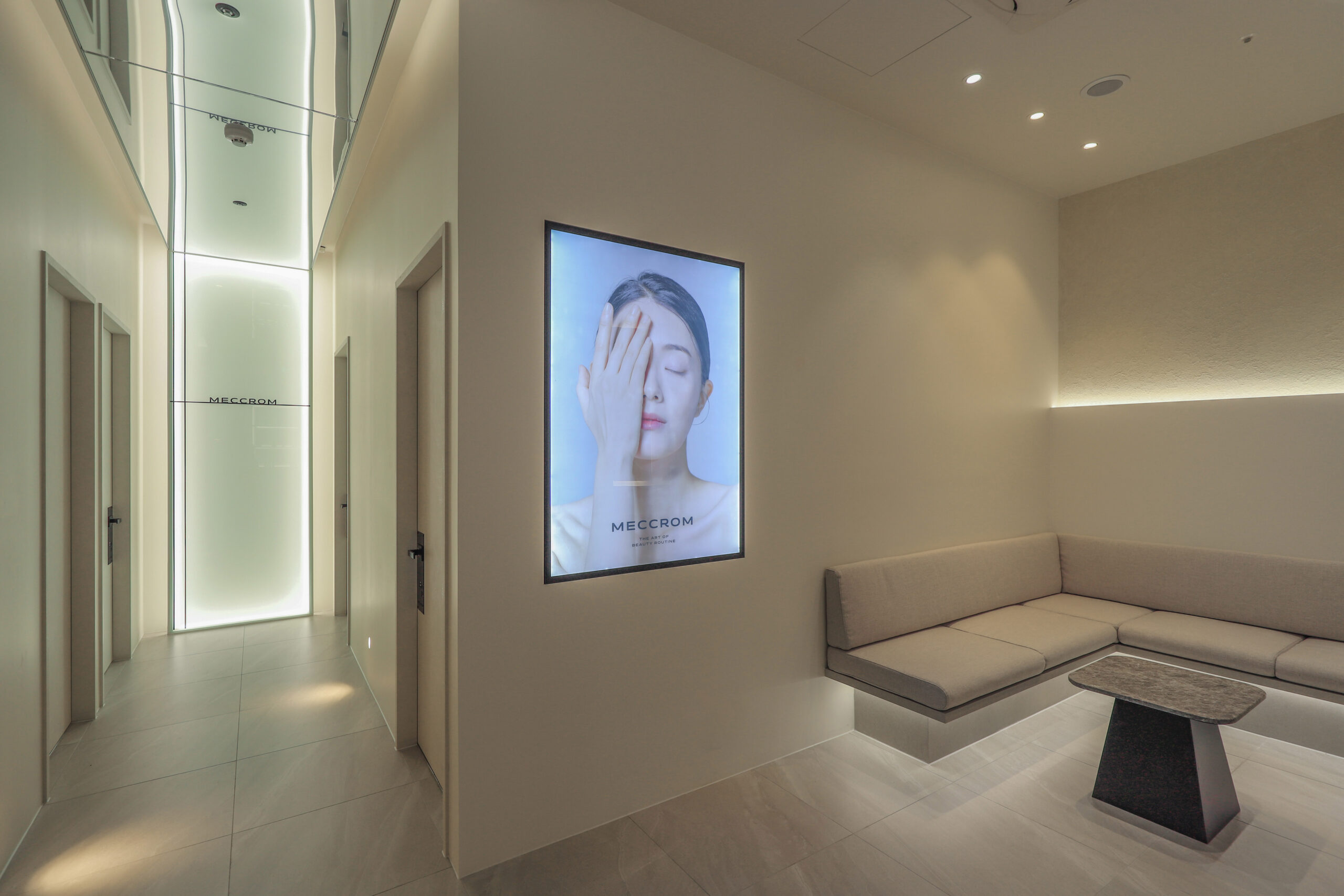
At Meccrom, a hands-on session doesn’t follow the same routine every time. We look at how the face and body respond, then adjust the pressure and areas we work on that day. If swelling appears suddenly or comes with pain or warmth, medical care comes first.