Facial Asymmetry Care
Facial asymmetry care is an esthetic program label built around concern about visible differences between the two sides of the face. It is not a diagnosis or treatment that realigns facial bones or the jaw joint.
Natural side-to-side differences
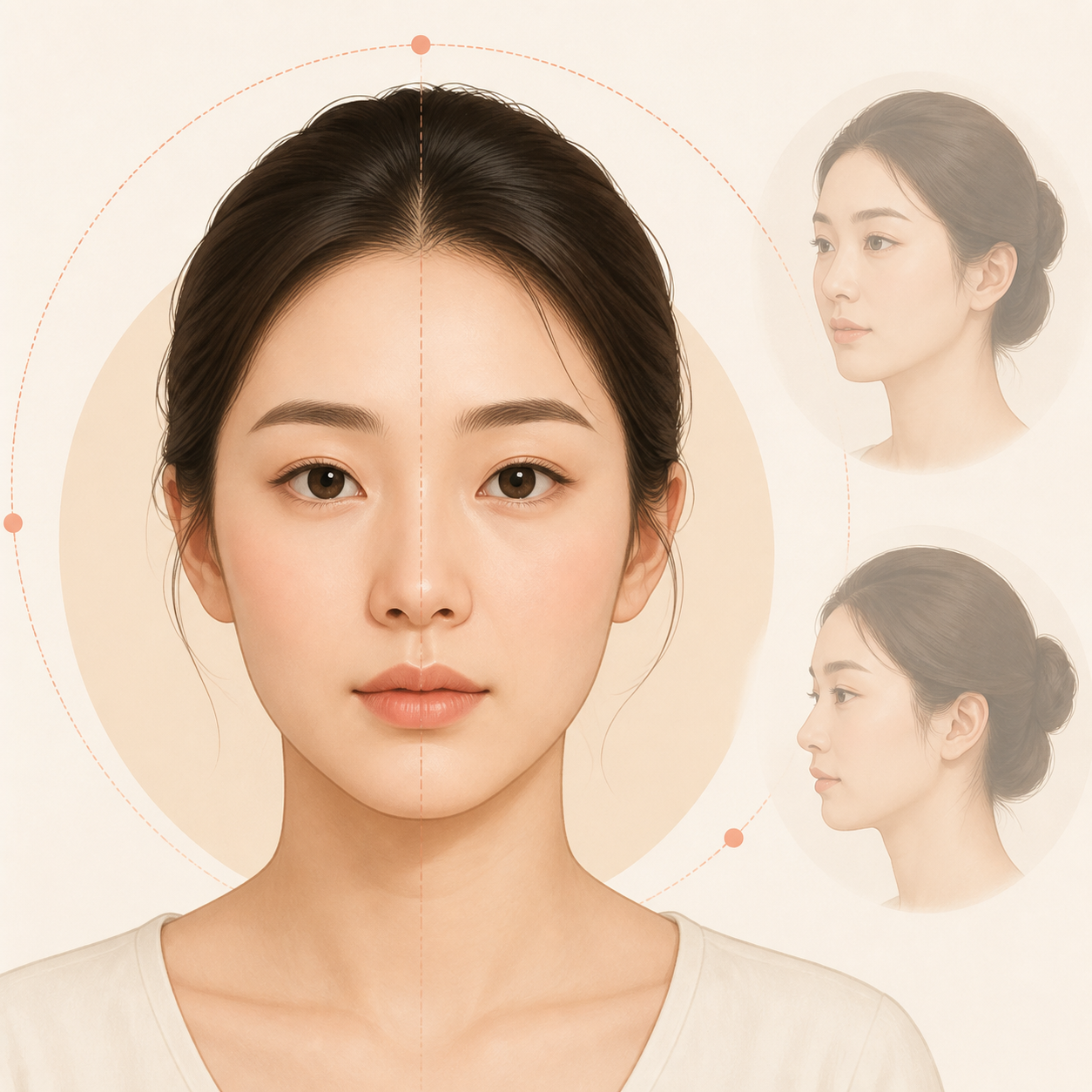
Human faces are not perfectly symmetrical. Camera angle, expression, and temporary swelling can make differences look larger. Bone structure, teeth, the jaw joint, nerves, and muscles may also be involved, so appearance alone cannot identify a cause.
Contour care and medical diagnosis
Contour care is an industry label focused on the visible facial outline. Medical assessment of facial asymmetry may examine the facial bones, bite, jaw joints, and soft tissue and use imaging when needed. Before-and-after esthetic photos do not replace that assessment.
Limits of esthetic care
Esthetic care should not claim to move facial bones or correct asymmetry. Sudden facial drooping, weakness, speech difficulty, or altered sensation requires urgent medical attention.
Related terms
- Facial asymmetry: A medical-adjacent term for differences between the two sides of the face.
- Contour care: An industry label focused on facial appearance.
- Skeletal Balance: Meccrom’s care-planning term involving posture and surrounding soft tissue.