Lomilomi Massage
Lomilomi is a Hawaiian massage and healing tradition whose knowledge and practice vary across families and teaching lineages. The long, flowing forearm work familiar in modern spas is one contemporary use of the name. It doesn’t represent the whole tradition.
This entry separates the Hawaiian cultural practice from the spa service you may see on a treatment menu. It doesn’t present lomilomi as a Meccrom service.
Meaning and spelling
Hawaiian dictionaries define lomi with actions that include rubbing, pressing, kneading, and massaging. The Hawaiʻi Tourism Authority’s language guide writes lomilomi as one word. English-language spas also use lomi lomi, while Korean sources commonly write the name as 로미로미 or 로밀로미.
A dictionary definition can’t reduce lomilomi to one fixed sequence. Who taught the practice, which community holds that knowledge, and how it was passed down can all shape what lomilomi means in a particular setting.
Lomilomi in Hawaiian culture
Hawaiian lomilomi organizations and cultural health programs describe a practice that goes beyond a set of hand movements. Depending on the lineage, it may include prayer and spirituality, family knowledge, stories, Hawaiian language, and cultural protocols. That doesn’t mean every lineage follows the same ceremony or sequence.
Calling lomilomi a Hawaiian version of Swedish massage strips away that background. At the same time, a spa service isn’t automatically part of a traditional lineage just because lomilomi appears in its name.
Modern spa use
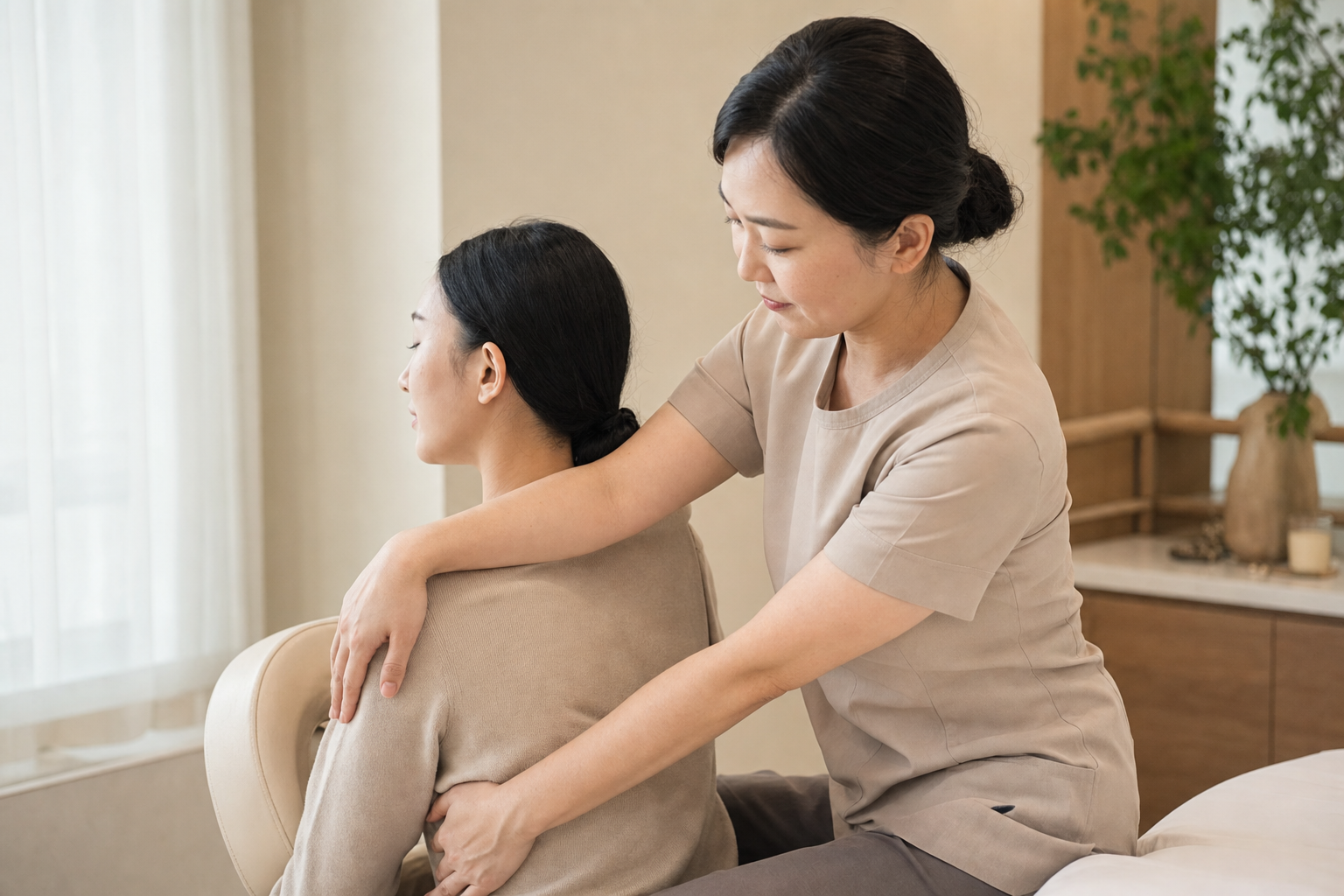
Massage schools and spas often describe lomilomi as broad contact with the palms and forearms, with long movements that continue from one area into the next. Oil may help the forearm glide across the skin.
This is a common modern presentation, not a universal standard for traditional lomilomi. Pressure, movement, oil, full-body coverage, and draping can change with the provider and their training.
Difference from Swedish massage
Swedish massage is commonly taught through movements such as gliding, kneading, friction, vibration, and tapping. Modern spa lomilomi tends to place more emphasis on broad forearm contact and a longer, connected flow.
Both services may use oil, and either can use light or firm pressure. To understand what you’re booking, ask about the provider’s training, the movements they use, the areas covered, and the draping rather than relying on the name alone.
Questions to ask before a session
Forearm work can cover more skin at once than a hands-only technique. Set clear boundaries before the session begins.
- Which areas will be worked on and left out?
- What clothing stays on, and how will sheets or towels be used for draping?
- Will the provider use the hands, forearms, or both?
- What oil will be used, and how are skin sensitivities handled?
- How can you ask for less pressure or stop a movement?
Lomilomi is a form of massage, not a treatment for disease or a way to remove toxins. If pain or tingling continues, or if you have an injury, get medical advice before booking a massage.
Related terms
- Manual massage: The broad category of care that presses, glides, and works on the body by hand.
- Swedish massage: A massage style that combines several classic movements across the full body or selected areas.
- Deep tissue massage: Slower, focused work with pressure that is adjusted over a selected area.
Frequently asked questions
Should it be written lomi lomi or lomilomi? The Hawaiʻi Tourism Authority’s language guide uses lomilomi as one word. You will still see lomi lomi on many English-language spa menus.
Is any long forearm massage traditional lomilomi? No. Long forearm movements are common in modern spa services. Traditional lomilomi also has a lineage, community, and cultural setting that technique alone can’t establish.
Is lomilomi always a full-body oil massage? No single format applies everywhere. Ask the provider about oil, pressure, coverage, and draping before the session.
This entry is for general information. Results and comfort vary, and massage isn’t intended to prevent or treat disease.