Lymphatic Massage
Lymphatic massage is a broad market term for hands-on care that takes the direction of lymph flow into account. Korean search results use the same name for esthetic lymph care, light self-massage, and Manual Lymphatic Drainage for people with lymphedema. These services do not have the same purpose or training requirements.
Medical lymphatic drainage and esthetic care for a healthy client need to be separated before pressure, sequence, or expected results are discussed.
Structure and role of the lymphatic system
The lymphatic system includes lymphatic vessels, lymph nodes, the spleen, the thymus, and other tissues. It returns fluid and proteins from the spaces between tissues to the bloodstream, carries some fats absorbed from the intestine, and contributes to immune function. Groups of lymph nodes sit in areas such as the neck, armpits, and groin.
The system has no single central pump like the heart. That does not mean lymph only moves when it is massaged. Contractions of the vessels, one-way valves, breathing, and surrounding muscle movement all contribute to normal flow.
The popular phrase waste removal also needs care. Collecting fluid and substances from tissue is not the same process as the liver and kidneys processing substances for removal from the body.
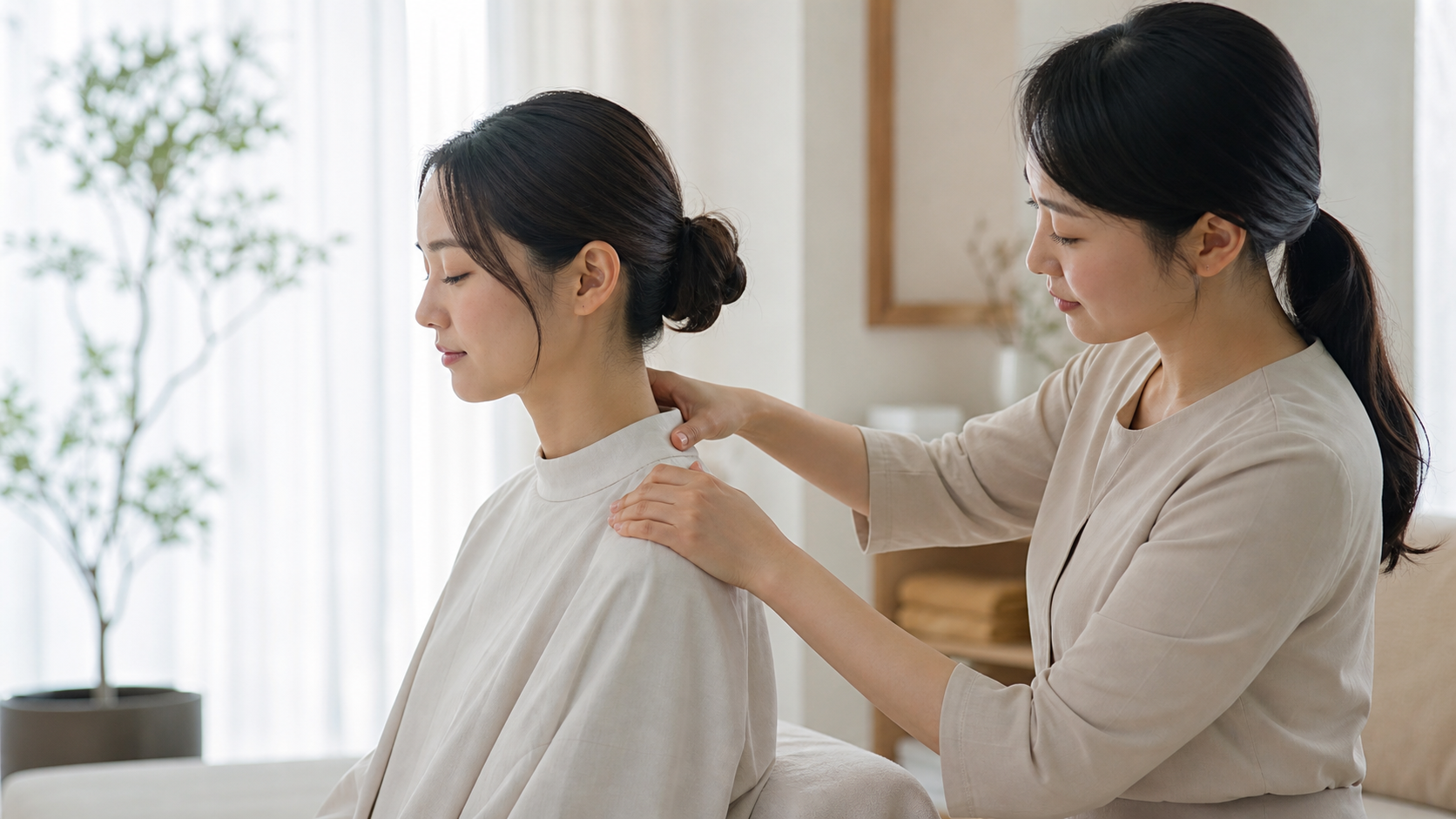
Esthetic lymph care and Manual Lymphatic Drainage
Korea’s national beauty skills framework includes skin esthetics lymph care as a separate skill unit. This shows that lymph-related care is taught in the beauty field. It does not prove a medical treatment effect.
In rehabilitation, Manual Lymphatic Drainage is usually shortened to MLD. It uses light, rhythmic skin movements selected for the individual’s functioning drainage routes. Treatment for lymphedema is not MLD alone. Compression, exercise, skin care, and patient education are normally combined in a broader plan.
Surgery, lymph-node removal, or radiation can change drainage routes. A generic sequence found online should not be applied to someone with those medical circumstances.
Pressure and sequence
MLD is not deep kneading of muscle. The practitioner lightly stretches and releases the skin, often preparing the trunk and functioning drainage areas before working closer to swelling. It does not force fluid upward or press hard on lymph nodes.
Not every esthetic service called lymphatic massage follows MLD training, pressure, or sequence. Before a session, ask whether the program is general esthetic care or clinical MLD, what training the provider has, which areas will be touched, and how pressure will be adjusted.
Phrases such as opening lymph nodes
Descriptions of lymph care often say that lymph nodes are opened first or that blocked lymph is cleared. These are simplified teaching phrases. They do not mean that a closed lymph node is physically opened by hand or that pressure pushes a plug through a vessel.
Taking the metaphor literally can lead to the false idea that more force works better. Clinical MLD uses light pressure precisely because it is not a technique for forcing open a blockage.
Swelling and before-and-after changes
An area may look less puffy or feel lighter immediately after a session. A single photograph cannot show that lymphatic function improved. Fluid distribution, position, lighting, and camera angle also affect appearance.
There is not enough evidence to claim that lymphatic massage reduces fat, causes weight loss, removes cellulite, boosts immunity, or permanently changes facial contours. Even studies of clinical MLD involve selected patients, and results differ. Those findings cannot be transferred to detox claims for healthy clients.
Swelling that needs medical assessment
Sudden swelling on one side, redness, warmth, pain, or fever should be assessed before massage. Swelling after cancer treatment, lymph-node removal, or radiation also falls outside an esthetician’s role because the cause and drainage route require clinical assessment.
Possible infection or blood clot, heart or kidney disease that affects fluid balance, and an open wound are further reasons not to begin with a general esthetic program. A clinician and a professional trained in lymphedema care should decide what is appropriate.
Related guides and client stories
- Lymphatic Drainage Massage in Korea: What to Expect and How It Works
- Incheon Upper Arm Care Review: My Arms Felt Lighter Afterward
Related terms
- Manual Massage: A broad market term for care delivered by hand.
- Swelling: A guide to temporary puffiness and edema that needs medical assessment.
- Detox: A term used differently in medicine, diet marketing, and esthetic programs.
- Microcirculation: Blood flow through small vessels, which is different from lymph flow.