Postpartum Therapy
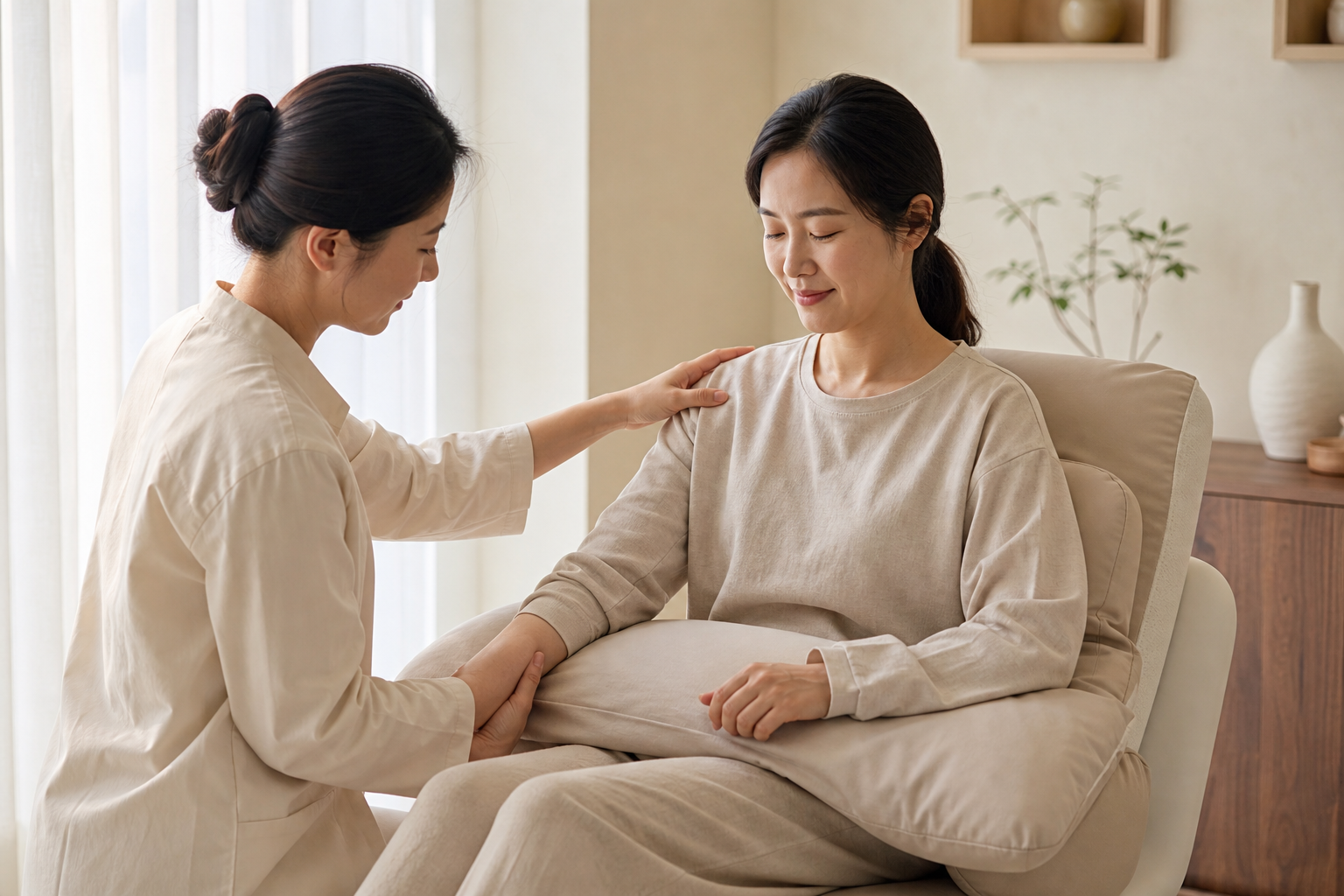
Postpartum Therapy is nonmedical esthetic care that adjusts position and touch to the client’s condition after birth. It isn’t a standardized technique with one starting date. The name covers many postpartum massage and body-care programs.
Recovery doesn’t follow one calendar. A vaginal birth and a cesarean birth involve different wounds, but the type of birth isn’t the only factor. Bleeding, feeding, sleep, medical conditions, complications, and the maternity team’s advice also shape what is appropriate.
Postpartum Therapy and medical postpartum care
Medical postpartum care checks wounds, pain, bleeding, blood pressure, infection, feeding, emotional health, and ongoing medical conditions. Postpartum Therapy doesn’t take over that work. It is hands-on esthetic care considered only within the boundaries cleared by the maternity team.
A business may call its service postpartum recovery care, but an esthetic practitioner can’t assess the uterus or pelvis, judge whether a wound is healing properly, or change medical advice.
Why there is no universal starting week
Two, four, or six weeks after birth can’t serve as one rule for everyone. Even after the same type of birth, incisions, sutures, bleeding, pain, movement, and follow-up findings can differ. The current condition matters more than a date on the calendar.
Before booking, share the birth date and type, wound location, positions or activities the maternity team has restricted, and any current concern. If the timing isn’t clear, ask the maternity team exactly when nonmedical touch can begin and which areas should be left alone.
After vaginal and cesarean birth
After vaginal birth, the provider needs to consider perineal wounds, bleeding, and discomfort when sitting or lying down. After cesarean birth, the abdominal incision and the effort of getting up, coughing, or changing position matter. Neither route automatically means earlier clearance for massage.
An esthetic practitioner doesn’t inspect or massage a wound. Skin that looks closed doesn’t prove the tissue is ready for pressure. The area stays outside the session until the maternity team has cleared it.
Feeding and the chest area
Feeding and infant care can make the shoulders and neck feel tired and make one position hard to hold. Cushions, seated care, and shorter sessions may help with comfort. That doesn’t mean the practitioner has diagnosed or treated the source of pain.
Breast pain, redness, warmth, a lump, or feeding problems fall outside ordinary body care. Contact the maternity team or a qualified lactation professional. A service that works directly on the breast needs a clearly defined professional scope and relevant training.
Reading postpartum recovery claims
Advertisements may promise pelvic correction, removal of postpartum discharge, faster uterine recovery, prevention of postpartum illness, less swelling, or restoration of the pre-pregnancy shape. Ordinary esthetic massage doesn’t have enough evidence to promise those outcomes.
You may feel comfortable or lighter after a session. That feeling doesn’t prove that the pelvis has been structurally changed or recovery has sped up. Look for wound boundaries, medical clearance, adjustable positioning, and the right to pause.
Changes that need medical attention
Contact the maternity team promptly for bleeding that soaks a pad in an hour, continuing large clots, fever, or severe abdominal pain. A severe headache, vision changes, chest pain, trouble breathing, or severe pain and swelling in one leg also needs medical attention.
If pain, dizziness, shortness of breath, or sudden bleeding starts during a session, stop immediately. It isn’t a situation for adjusting the pressure and continuing.
Related terms
- Maternity Therapy: The broader label for screening and service boundaries during pregnancy.
- Prenatal Therapy: Hands-on care adjusted for position and pressure before birth.
- Body Balance: Meccrom’s term for choosing care areas and sequence across connected parts of the body.