Scapula
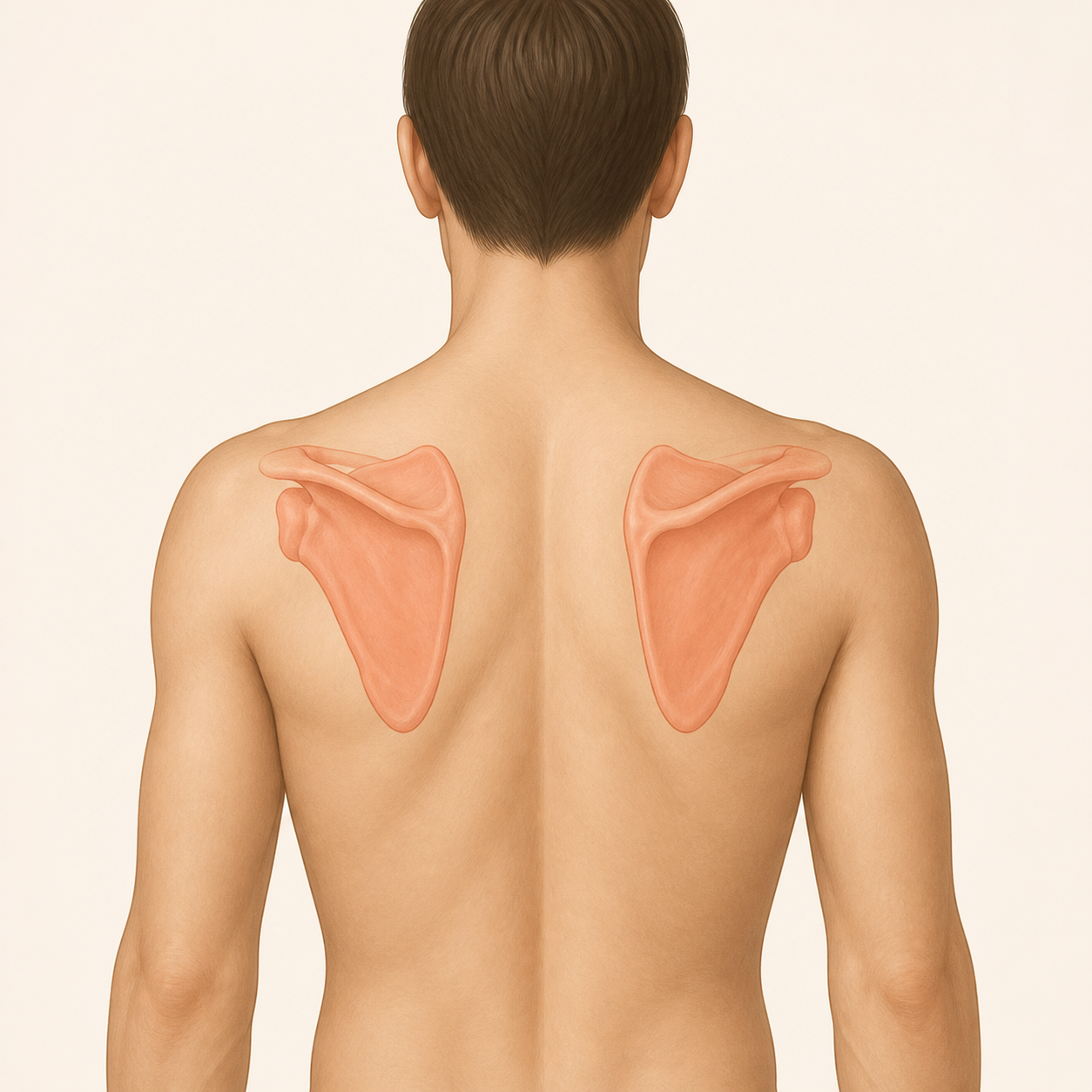
The scapula is the flat, triangular bone on each side of your upper back. It’s commonly called the shoulder blade. In Korean, people may also use words that translate to wing bone.
Location and shape
Each scapula sits over the back of the rib cage. It meets the collarbone above and the upper arm bone at the shoulder joint. Muscles hold it against the rib cage rather than a solid bony joint fixing it directly to the spine.
Shoulder blade and Korean names
Scapula and shoulder blade refer to the same bone. Korean speakers also use a shortened anatomical form and an everyday name that translates to wing bone. These names identify the bone, not a diagnosis of a protruding shoulder blade.
Movement with the arm
The scapula moves when you lift, lower, or reach with your arm. The trapezius, serratus anterior, rhomboids, levator scapulae, and other muscles help guide that movement. No single muscle explains the position of the shoulder blade on its own.
Shoulder blade care in esthetics
An esthetic service described as shoulder blade care works on the skin and soft tissue around the bone. It doesn’t move the scapula into a corrected position or treat the shoulder joint.
A visible difference between the two sides also doesn’t identify a damaged or shortened muscle. Sudden pain, weakness, or restricted arm movement needs medical assessment.
Related terms
- Subscapularis: A rotator cuff muscle on the front surface of the scapula.
- Levator scapulae: A muscle connecting the upper neck to the scapula.
- Rhomboid muscles: Muscles connecting the spine to the inner border of the scapula.
- Round shoulders: A common description for shoulders that sit forward.