Slimming
Slimming is a broad label used for body-care products and esthetic programs. It can be attached to very different ideas, from weight loss to body contour and swelling, so the name alone doesn’t tell you what a program does or prove an effect.
In esthetics, slimming isn’t one standardized technique or procedure. Check what happens during the session and what, if anything, the provider measures.
Meaning and industry usage
Slimming comes from slim, meaning thin or lean. Korea’s Urimalsaem dictionary defines a slimming centre as a place that helps people reduce weight through diet or exercise. The word began close to weight loss, but Korean beauty businesses now use it for body products, hands-on care, and device-based programs.
Two slimming programs may work on different areas and use completely different methods. The industry label shouldn’t be read as the name of a standard treatment.
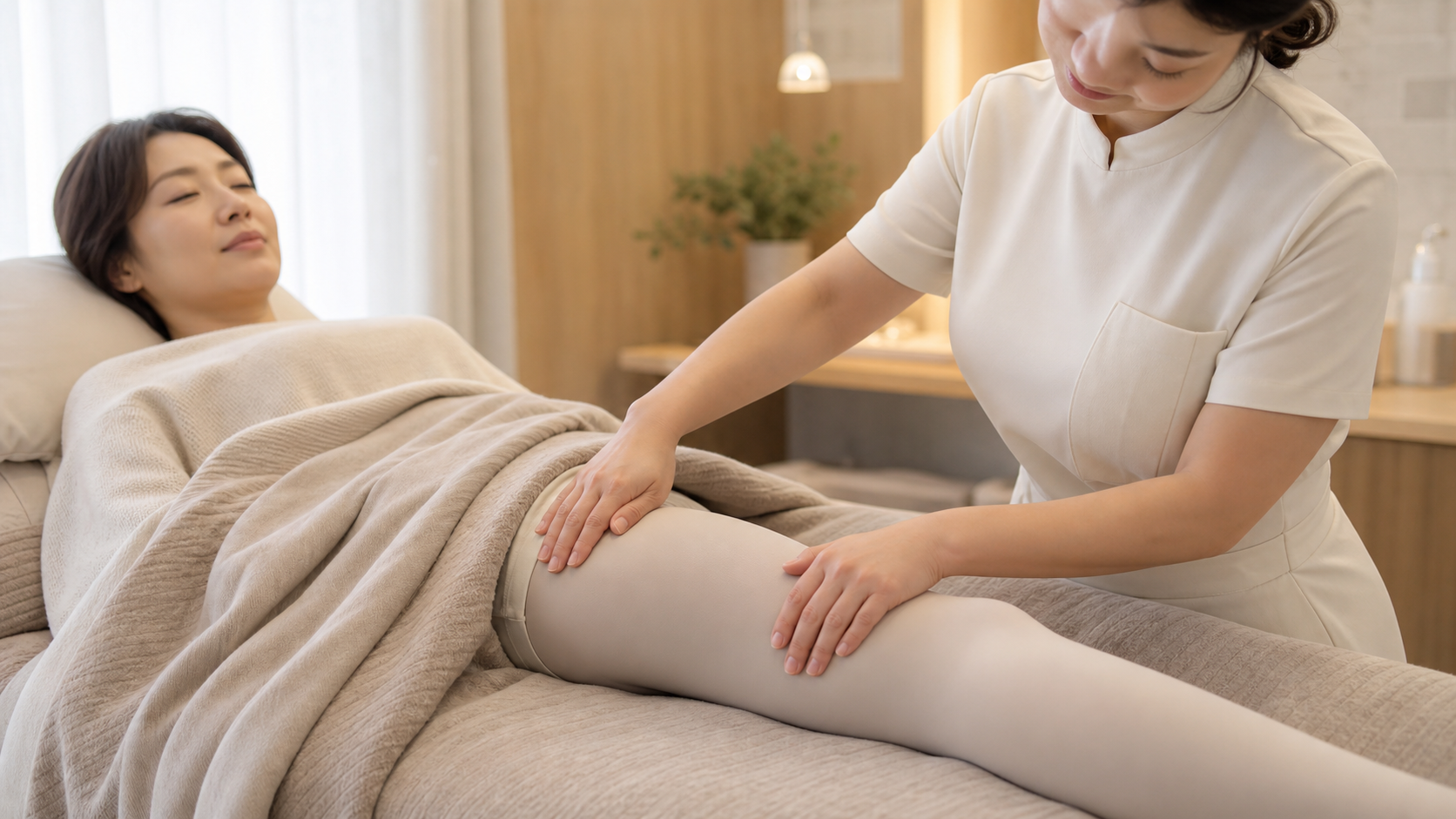
Program details to check
Look past the word slimming and ask what the program includes.
- Does it use hands, a device, a cosmetic product, or a combination?
- Which area does it cover, and how long is a session?
- Will the practitioner stop if you feel pain or see bruising?
- Are results presented with weight, circumference, or photographs?
Measurements can shift with posture, placement of the tape, and the point in the breath cycle. One photograph or circumference reading doesn’t establish fat loss.
Weight, body fat, and appearance
Weight is the total mass of the body. Body fat is stored fat tissue. A body outline can look different with changes in posture, clothing, lighting, swelling, or skin. The three can be related, but they aren’t interchangeable measures.
Receiving an esthetic slimming session doesn’t show that weight or body fat has decreased. Feeling lighter or more comfortable afterward isn’t a measure of fat loss either.
Difference from a medical procedure
Liposuction is surgery that removes fat from beneath the skin. It isn’t a treatment for obesity or a procedure that removes cellulite. A clinician is responsible for the decision, operation, and recovery plan.
Esthetic slimming is the name of a nonsurgical beauty service. It shouldn’t be described as matching liposuction or replacing weight management.
Slimming cosmetics
Creams and oils may also carry the slimming label. The name doesn’t prove fat breakdown or a smaller body size. Follow the product directions and stop if the skin becomes irritated.
Related terms
- Cellulite: A common dimpled texture shaped by structures beneath the skin.
- Swelling: An area that looks larger than usual or feels heavy, tight, or puffy.
- Manual massage: A broad form of care in which pressure and movement are adjusted by hand.
Frequently asked questions
Does slimming care cause weight loss? The program name can’t establish weight or fat loss. Check the method and the measure being used.
Are slimming and liposuction the same? No. Liposuction is surgery performed in medical care. Esthetic slimming is a nonmedical beauty-service label.
Does a smaller circumference prove fat loss? No. Placement of the tape, posture, and the point in the breath cycle can change the reading. One measurement doesn’t establish a reduction in fat.
This glossary entry is for general information. Experiences vary, and esthetic care isn’t intended to prevent or treat a condition.