When you spend hours looking at a monitor, your head can slowly drift toward the screen without you noticing. You rub the back of your neck and roll it from side to side, but the stiffness returns a few days later. Forward head posture exercises shouldn’t focus on the neck alone. Your chest and upper back need to move too, and pulling harder doesn’t make a stretch better.
If you work sitting down for long hours, check your current posture first. Then begin with movements you can do without leaving your chair.
Some images in this article were created with AI to help explain the movements.
Check Your Posture Before Starting the Exercises
Forward head posture means the head sits in front of the torso when viewed from the side. Forward head posture, straight neck, rounded shoulders, and a rounded upper back are often discussed together. They can occur at the same time, but they don’t mean the same thing.
Take a photo from the side. Draw an imaginary vertical line down from the opening of your ear and see whether it falls in front of the center of your shoulder. This is the self-check described by Korea’s National Health Information Portal. You can also look for the following signs.
- Your upper back looks rounded
- Your neck and shoulders often feel stiff
- Leaning your head back feels uncomfortable
- Your head sits in front of your shoulders
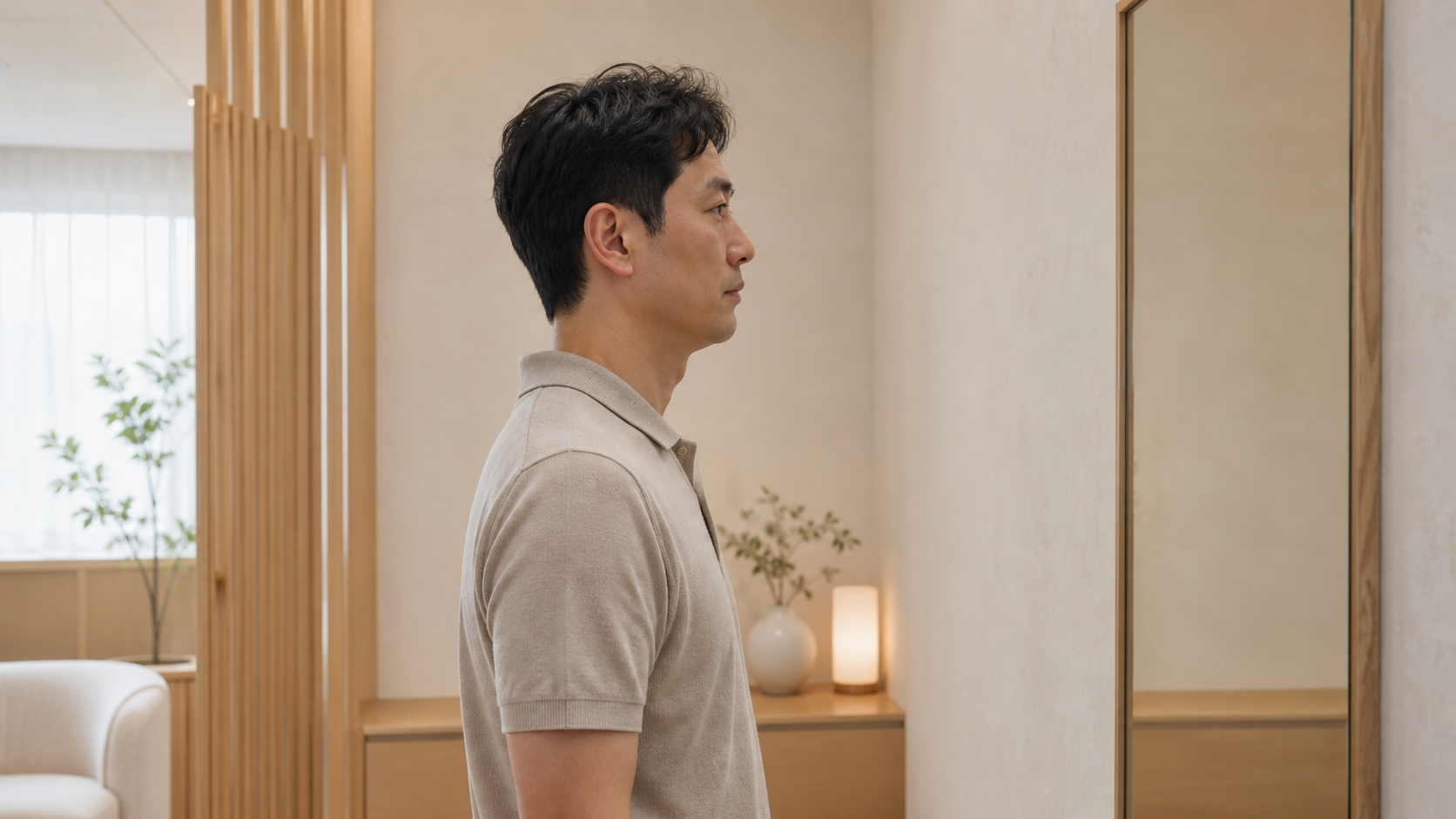
The farther your head moves forward, the more load the neck has to hold. According to Korea’s National Health Information Portal, the head weighs about 5 kg in an upright position. The load rises to 12 kg at a 15-degree angle and 27 kg at 60 degrees. People often lower their heads by about 37 to 47 degrees while looking at a phone, which means the neck muscles may be holding several times the usual load for hours. The same source also cites research reporting that 70 percent of people aged 25 to 42 had a straight neck or forward head posture.
If you feel stiffness or heaviness without pain, begin gently with the following movements.
3 Forward Head Posture Exercises You Can Do at Your Desk
These three movements can be done in your chair. Remember one rule before you start. A neck stretch should feel gentle, not sharp or forced. A few controlled repetitions during regular movement breaks are more useful than one long, painful session.
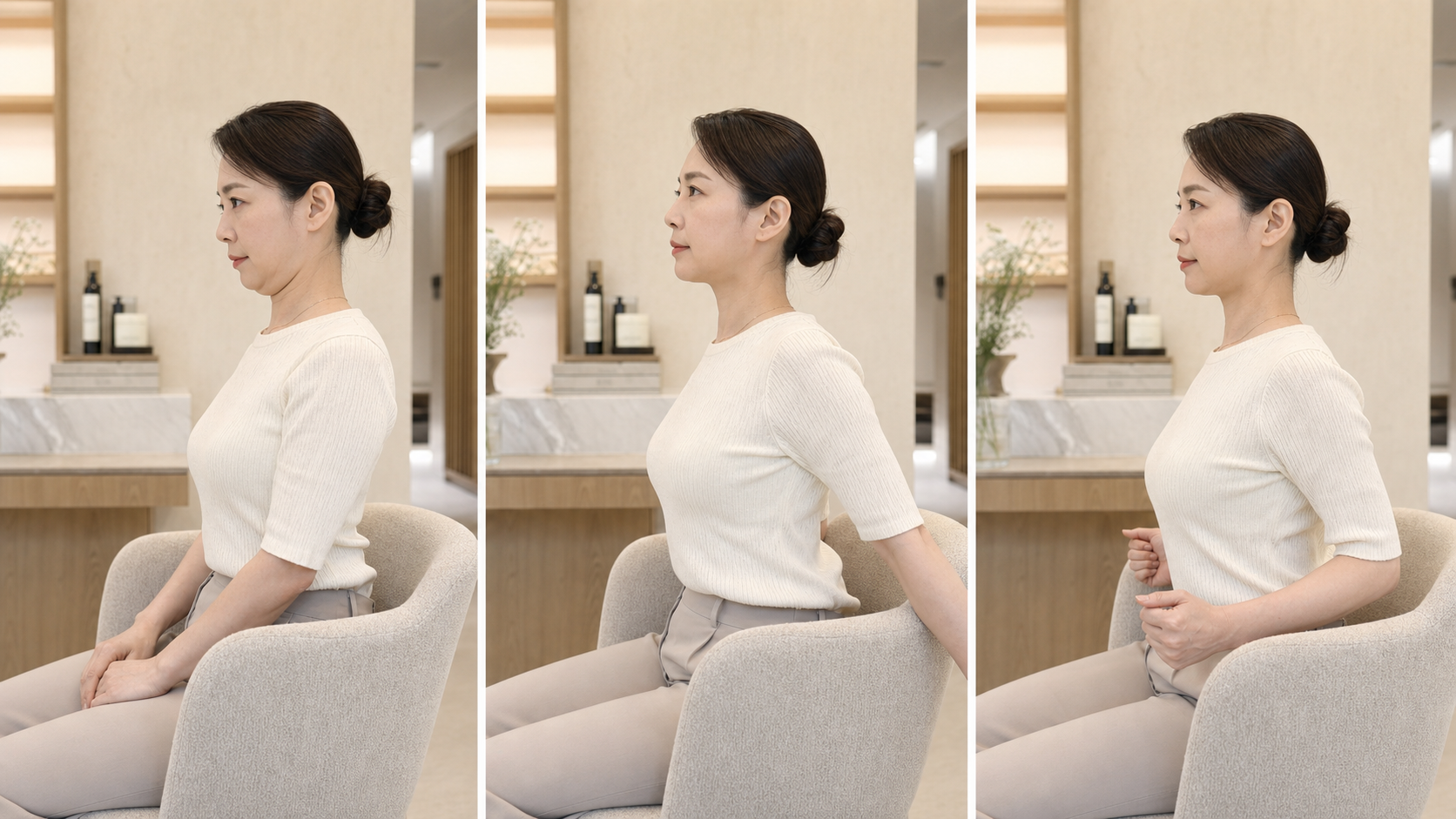
Gently draw your chin straight back
Sit upright and look straight ahead. Slide your chin horizontally backward. Do not tilt your head down. Think of moving your entire head straight back. Hold for about five seconds, release, and repeat five times.
- Don’t lower your head
- Don’t force your chin as far back as possible
- A slight double-chin shape is normal during this movement
Open the chest and front of the shoulders
When you sit in a rounded position, the muscles across the front of the chest stay shortened. Lightly clasp your hands behind your back and open your chest, or place one arm against a doorframe and step forward until you feel a gentle stretch. Hold for 10 to 30 seconds. Don’t pull your arms hard enough to arch your lower back.
Move the upper back and shoulder blades
Roll your shoulders slowly backward. Then draw both shoulder blades gently toward the middle of your back, hold for five seconds, and repeat five times. Keep the shoulders down instead of shrugging them toward your ears.
2 More Exercises Using a Wall or the Floor
Once the seated movements feel familiar, use a wall and a firm surface for clearer feedback.
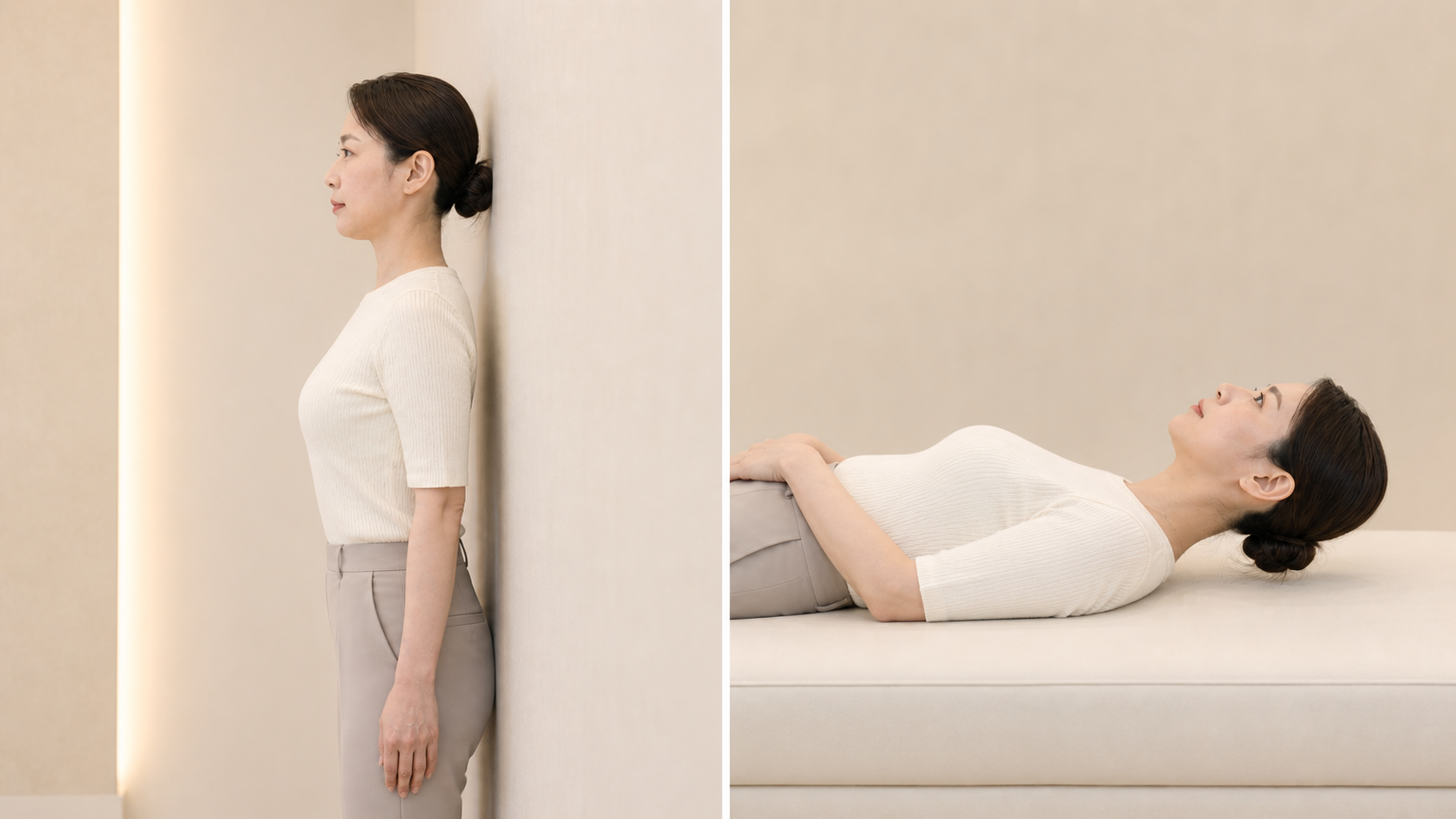
Stand against a wall
Stand with the back of your head, upper back, and hips touching the wall. Draw your chin straight back while keeping it level. The goal is to feel what an upright reference position is like without letting the back of your head move away from the wall. Try it two or three times a day for 30 seconds. It can help you notice how far forward your head usually sits.
Draw your chin back while lying down
Lie flat without a pillow and gently draw your chin back as though you were lightly pressing the back of your head into the surface. Hold for about five seconds and repeat five times. This position may require less effort around the neck than the seated version. If there is a large gap beneath your neck, place a thinly folded towel underneath it.
Do both movements only within a pain-free range. If pain worsens or your arm begins to tingle, the problem may need more than stretching. Stop repeating the movement and seek medical care to find the cause.
One more point matters as much as the exercises themselves. If the eight hours you spend sitting never change, your head is likely to drift forward again.
Adjust Your Desk and Take Regular Movement Breaks
Don’t try to hold one perfect posture all day. Staying fixed in any position for too long can strain the neck. Set up a comfortable position, then move out of it often.
- Place the top of your monitor at eye level. If you use a laptop, raise the screen with a stand
- Hold your phone closer to eye level instead of at chest height
- Every 30 to 40 minutes, stand up, walk briefly, or change position
- Rest your elbows comfortably on the desk and keep the keyboard close to your body
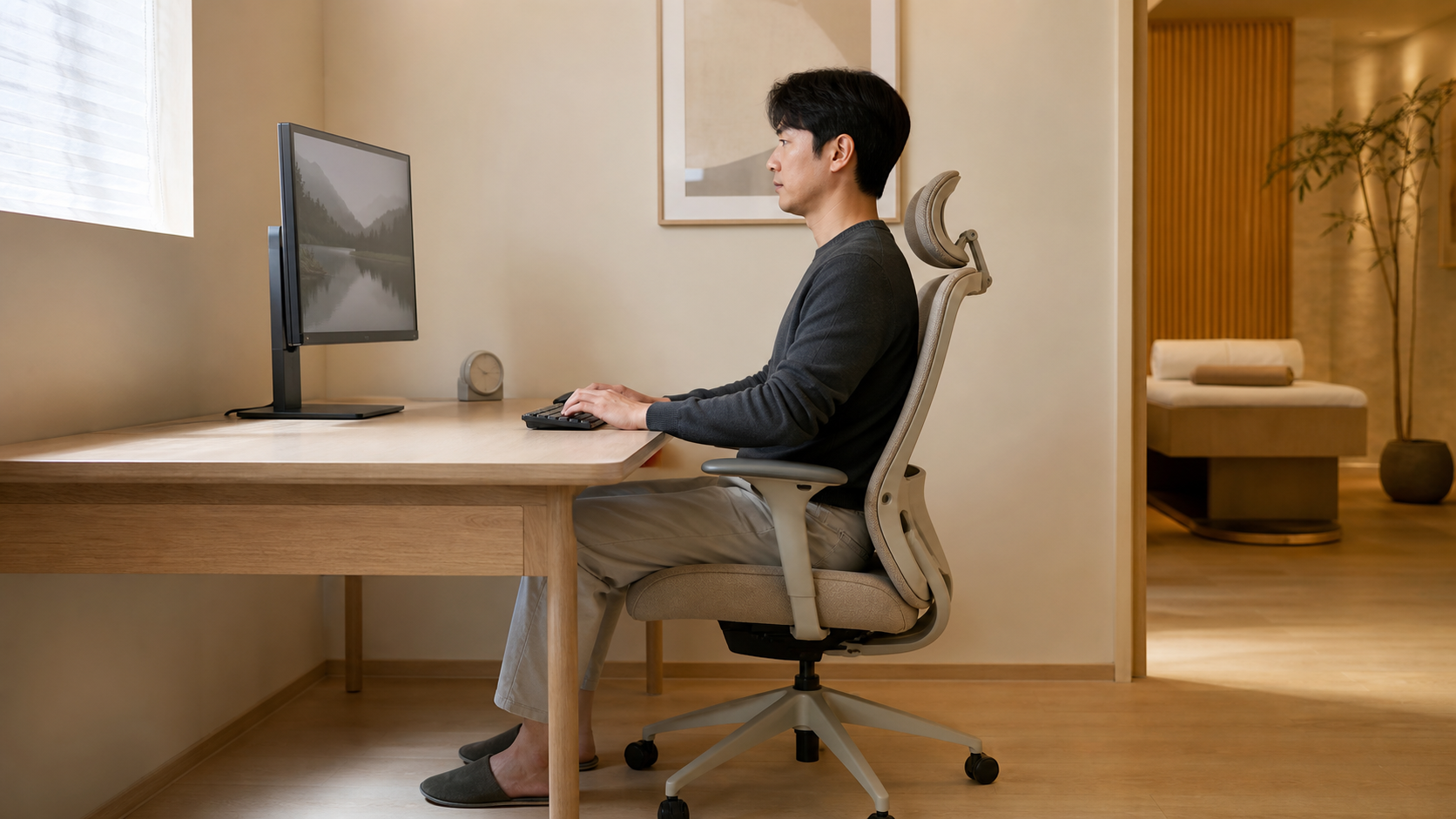
These habit changes don’t cost anything. Posture correction devices, on the other hand, are widely marketed. Korea’s National Health Information Portal notes that scientific evidence for their effectiveness is still limited. Screen height and regular movement breaks should come first.
Why the Upper Back and Shoulders Matter Too
There is a simple reason your neck may move forward again even after several days of stretching. The neck doesn’t create the pattern on its own. When the upper back rounds and the shoulders roll forward, the head follows. During a consultation, I look at the upper back, shoulders, and overall body balance before focusing on the neck.
Some clients also say that their jawline looks less defined or their face looks larger when the head moves forward. My order stays the same in those cases. I begin with the upper back and shoulders that are drawing the head forward, not the face.
Massage should not be a test of how much pressure you can take
Pain is not our measure of a good session. At Meccrom, we begin with a consultation and posture check, then choose the areas and pressure based on how the shoulders and upper back look and feel that day.
A senior developer who spent years in front of a monitor
A developer in his 40s visited Meccrom Seongsu because his head sat forward and his upper back and shoulders looked rounded. As a senior developer, he had spent much of his career at a computer. We did not focus on his neck alone. We checked his shoulders, shoulder blades, and upper back, then adjusted the bodywork on each side.
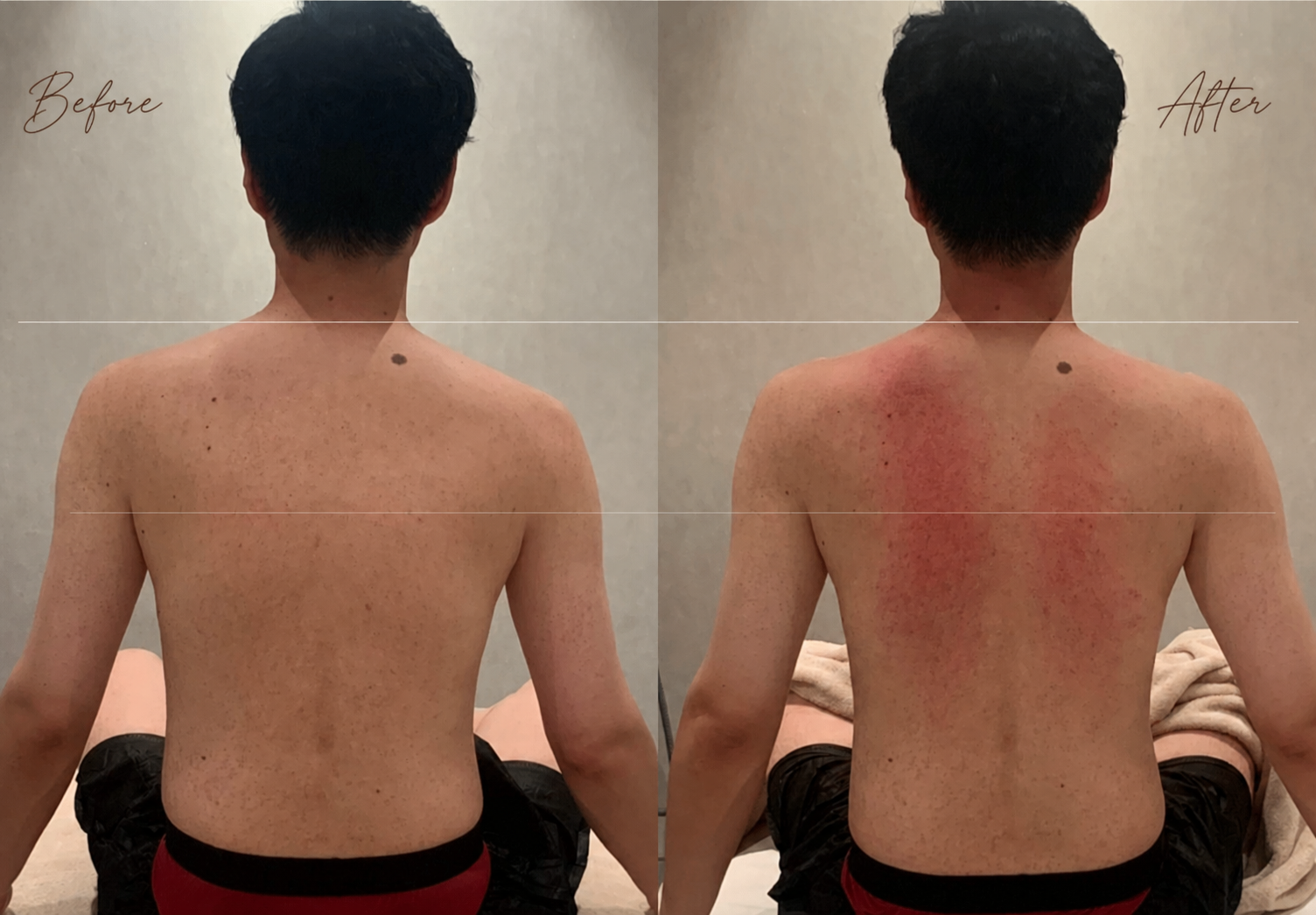
The image on the right was taken after the session. Before the session, the left shoulder and shoulder blade sat higher than the right. In the photo taken afterward, the left shoulder blade sits lower and the difference between the shoulder lines looks smaller. This is one client’s immediate result, not a promise of permanent posture correction.
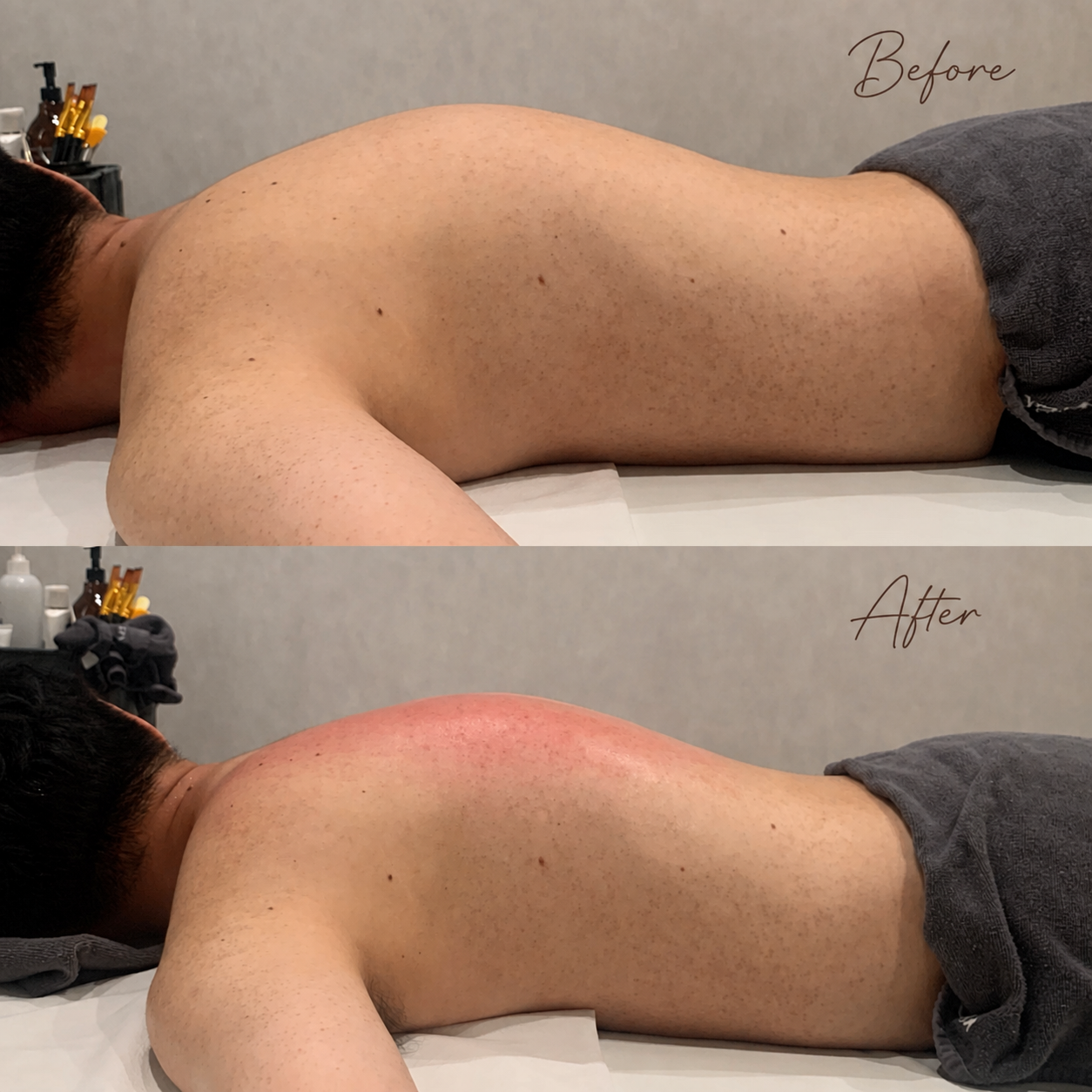
The upper image is before the session and the lower image is after. From the side, the raised area around the shoulder blade looks slightly lower in the second photo.
When a client has different shoulder heights, I do not begin by pressing the neck. I first check which shoulder blade sits higher and how the upper back and shoulders are connected. In these photos, the raised left shoulder blade sat lower after the session, and the difference between the shoulder lines looked smaller. Even when two people share the same forward head posture concern, their daily movement habits and tension patterns are different. The areas we work on and the pressure we use need to change with them.
Hands-on bodywork doesn’t realign the bones of the neck. It can ease tension in the upper back and shoulders that may be contributing to the way you hold your head. If stiffness keeps returning despite regular stretching, a consultation at Meccrom Seongsu can help you look at your current posture and areas of tension.
If you are comparing studios for shoulder and upper-back bodywork, use our guide to choosing a shoulder massage in Incheon to check the location, areas included, pressure, and reviews.
You can also read a Seongsu bridal body care review focused on the neck and shoulder line to see how one client described her experience.
Frequently asked questions
What are the signs of forward head posture?
Forward head posture describes a position in which the head appears in front of the torso from the side. The neck and shoulders may often feel stiff, and the upper back may feel tight. Appearance alone can’t tell you the condition of the cervical spine or the cause of pain. Stop stretching and seek medical care if you also have arm tingling, weakness, dizziness, or a severe headache.
Will fixing forward head posture reduce a double chin?
When the head moves forward, the skin beneath the chin can fold and make a double chin look more noticeable. A change in posture may make the jawline appear neater, but stretching and hands-on bodywork don’t remove fat.
Is there one posture that gets rid of forward head posture?
There isn’t one perfect posture that eliminates forward head posture. Set the top of your monitor at eye level, draw your chin back gently, and support your back against the chair. More importantly, don’t hold that position for hours. Stand up, walk, or change position every 30 to 40 minutes.
Can forward head posture be permanently corrected?
Forward head posture continues to be influenced by daily habits and the work environment, so one exercise or one bodywork session is not a permanent correction. Even if the shoulder line or shoulder blade height looks more even in a photo, discomfort can return when the same posture continues. Keep adjusting your workstation and moving regularly. If pain or tingling continues, seek medical care.
How long does it take to improve forward head posture?
There is no reliable timeline that applies to everyone. It depends on how long you have held the posture, your mobility and strength, your workstation, and how consistently you take movement breaks. Look for gradual changes in comfort and control rather than expecting one stretch or massage session to fix it.
This article is for general information. The right approach varies by individual and this is not guidance for preventing or treating disease.