Upper Trap Stretches and Exercises for Tight Shoulders
If your shoulders always look raised or your neck-to-shoulder line feels tight, you may be tempted to keep pressing the upper traps. Harder pressure is not always the answer. The trapezius is a large muscle that helps move the shoulder blades, and you cannot spot-remove it with one stretch or massage session.
What you can change is how often you shrug, how your shoulder blades move when you lift your arms, and how your desk is set up. Start with the four moves below and stay within a comfortable range.
Some images in this article were created with AI to help explain the movements.
Why Your Upper Traps May Look Raised
The trapezius runs from the neck across the upper back and connects to the collarbones and shoulder blades. The upper portion helps raise and rotate the shoulder blades when you move your arms. It is supposed to work. The goal is not to keep your shoulders pinned down all day.
Your upper traps may feel tight or look more prominent when you:
- Work with your head drifting toward a laptop or phone
- Shrug your shoulders when you are stressed
- Lift your arms by pulling the shoulders toward your ears
- Sit with the chest and shoulders rounded forward for long periods
Your natural shoulder shape also depends on your collarbone angle, neck length, and muscle mass. Stretching will not change your bone structure. It may, however, help a tense shoulder feel more comfortable and make you more aware of how often you shrug.
2 Upper Trap Stretches for Tight Shoulders
Do not force the neck or pull hard on the head. A stretch should feel gentle and steady, not sharp.
Seated upper trap stretch
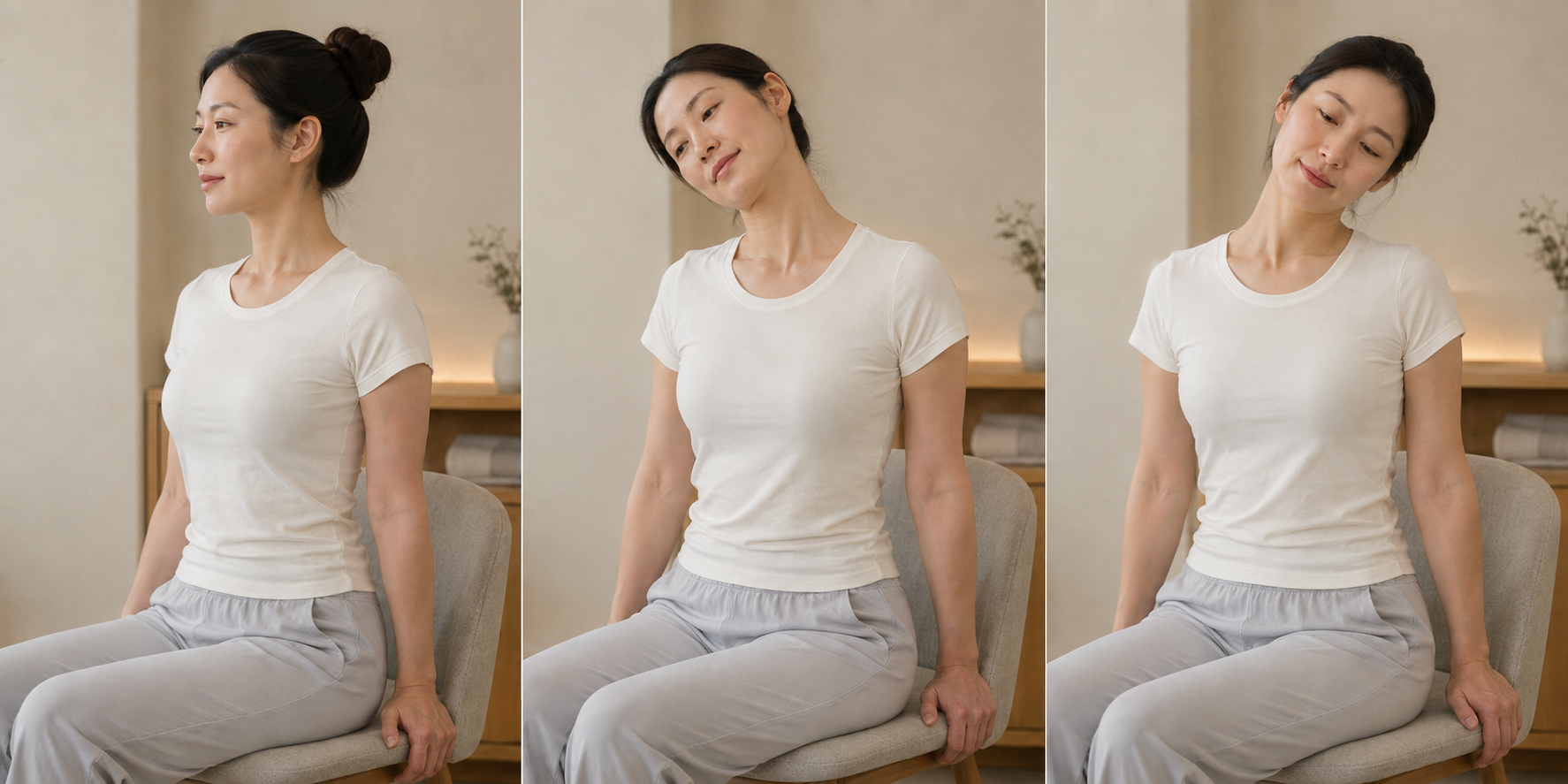
- Sit tall and lightly hold the side of the chair with one hand.
- Tilt your head toward the opposite shoulder until you feel a gentle stretch along the side of your neck.
- Hold for 15 to 20 seconds, then repeat on the other side.
- Complete two rounds per side.
Keep the shoulder you are stretching relaxed. Stop if the movement causes sharp pain, dizziness, or symptoms down the arm.
Wall chest and shoulder stretch
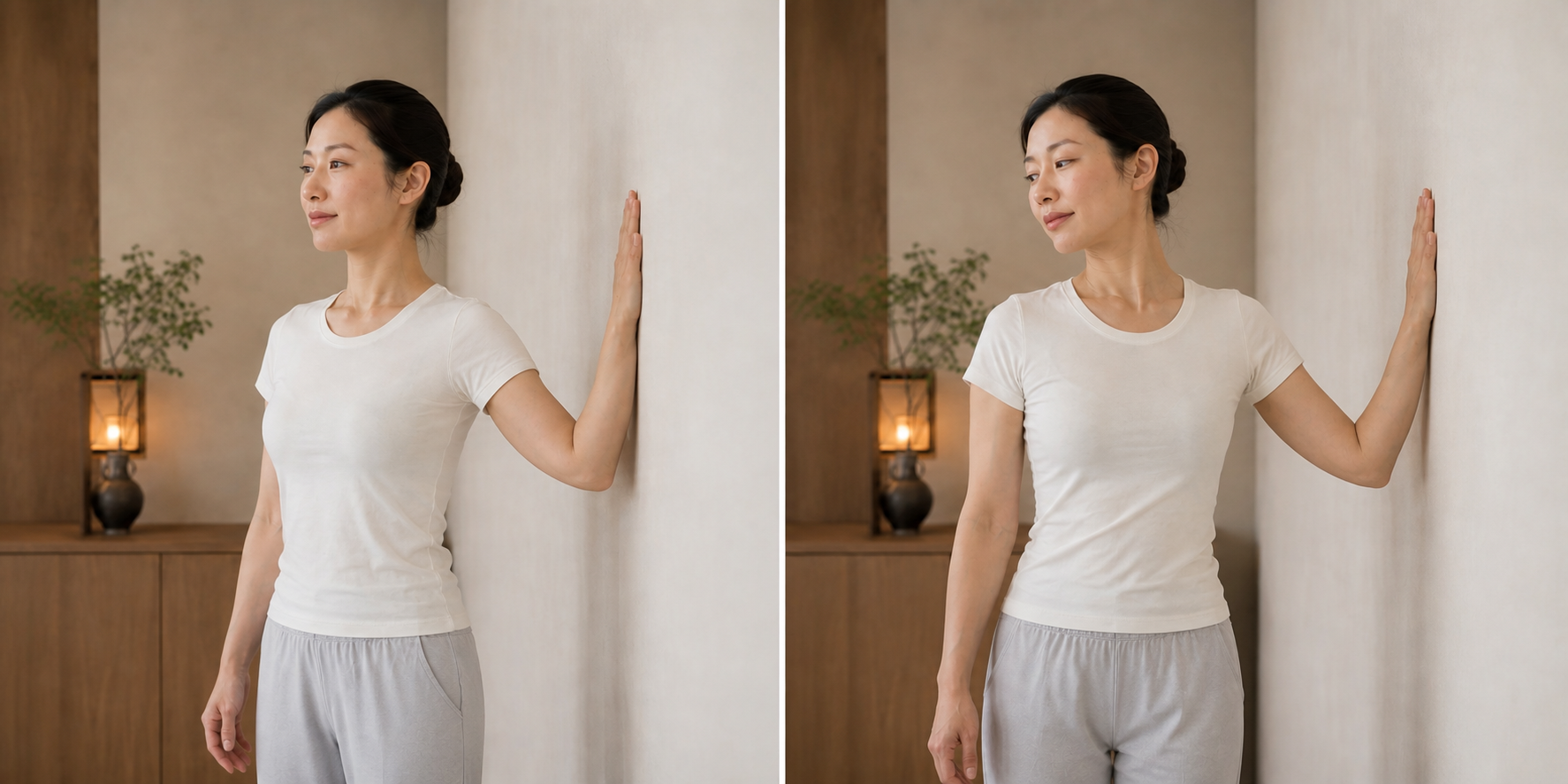
- Stand beside a wall and place your forearm or palm against it with the elbow bent.
- Keep the shoulder relaxed as you slowly turn your torso away from the wall.
- Stop when you feel a gentle stretch across the chest and front of the shoulder.
- Hold for 20 to 30 seconds and repeat twice per side.
Lower your arm if you feel pinching in the front of the shoulder. Do not bounce or push through pain.
2 Exercises for Better Shoulder Blade Control
There is no exercise that selectively gets rid of the trapezius. These movements have a different purpose. They help you practice lifting and moving your arms without turning every repetition into a shrug.
Wall slides
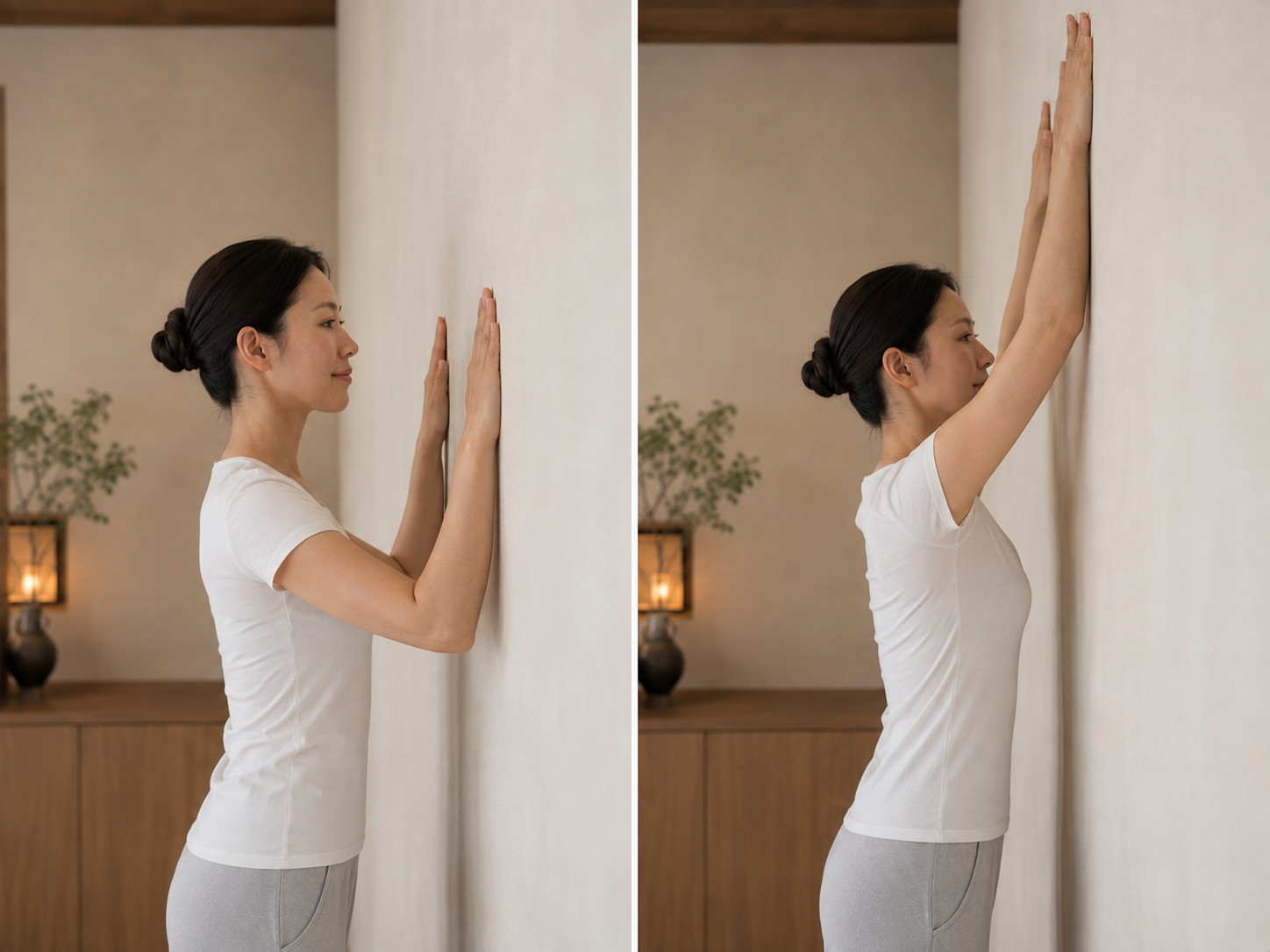
- Face a wall and place both forearms against it.
- Let your neck stay relaxed as you slowly slide your arms upward.
- Stop before your shoulders pull sharply toward your ears.
- Lower with control and repeat 8 to 10 times for one or two sets.
Your shoulder blades will move as your arms rise. Do not force them down. Use a smaller range if your neck starts doing most of the work.
Light band pull-aparts
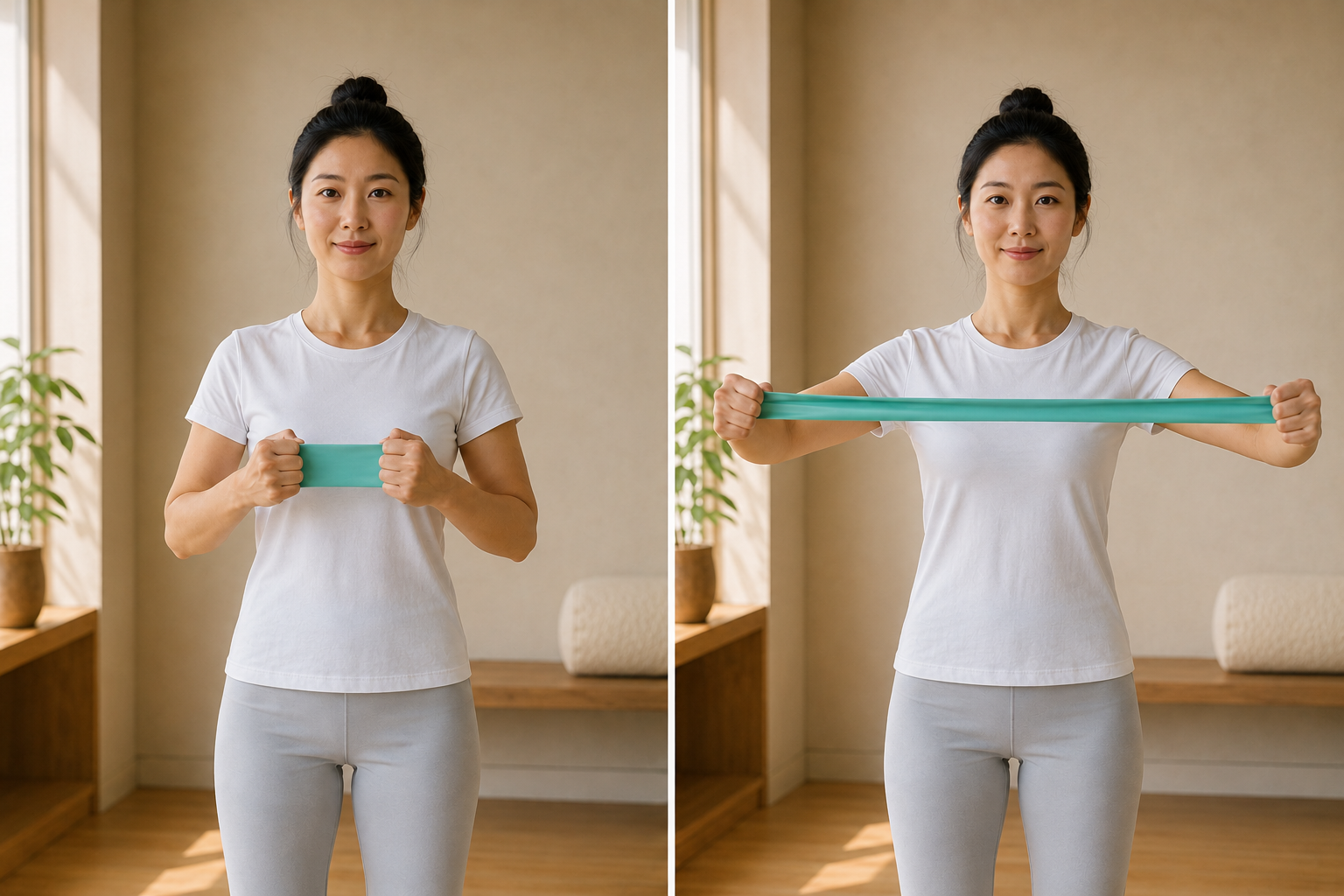
- Hold a light resistance band at chest height.
- Keep a soft bend in the elbows and slowly open your hands to the sides.
- Keep the neck relaxed without squeezing the shoulder blades together as hard as possible.
- Repeat 8 to 12 times for one or two sets.
Switch to a lighter band or shorten the movement if your neck tightens or your shoulders rise.
Desk Changes That Help You Stop Shrugging
Stretching for a few minutes cannot offset eight hours in the same position. You do not need to hold perfect posture all day, but your workstation should not make you reach or shrug for hours.
- Place the top of the monitor at or slightly below eye level.
- Keep the keyboard and mouse close enough that your elbows can stay near your sides.
- Relax the shoulders instead of holding the arms up to reach the desk.
- Raise your phone closer to eye level and change positions regularly.
If your head also drifts in front of your shoulders, follow these forward head posture exercises for desk workers. If your shoulders tend to roll forward, read our guide to rounded shoulders.
When Massage May Help With Tight Upper Traps
At Meccrom Seongsu, I do not focus on the upper traps alone. When the shoulders roll forward and the head sits in front of the body, the neck-to-shoulder line can look heavier and the collarbones may be less visible. I first look at the neck, shoulders, collarbones, upper back, and how the shoulder blades move. Then I adjust the areas and pressure for that client.
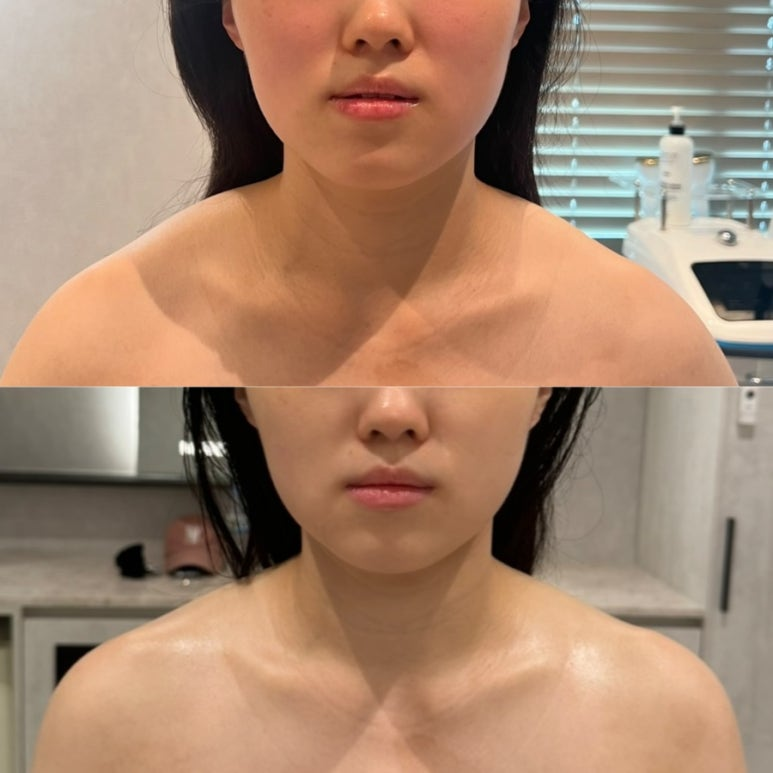
In this client’s photos, the shoulders appear less raised and the neck-to-shoulder line looks more relaxed after one session. This does not mean the trapezius muscle was removed or permanently reduced. It is one client’s immediate photo comparison.
This wider view is especially useful before a wedding, dress fitting, or photo shoot. An off-the-shoulder dress shows the full line from the neck and collarbones to the shoulders, not one muscle in isolation.
One bride told us that her upper traps had felt hard and that the area between her shoulders and shoulder blades often felt uncomfortable. We adjusted the pressure and the areas we worked on at each visit. After the wedding, she wrote that her upper traps did not stand out to her in the photos. You can read her Meccrom Seongsu bridal bodywork review.
Massage can help a tight area feel more comfortable, but it does not permanently change your anatomy. If you are comparing studios, ask whether the session looks beyond the top of the shoulders and whether the pressure can be adjusted. Our guide to choosing shoulder massage in Incheon explains what to check before booking.
Frequently Asked Questions
Will shoulder exercises make my upper traps bigger?
It depends on the exercise, resistance, and how you perform it. Heavy shrugs directly load the upper traps. The wall slides and light band work in this article are meant to practice comfortable shoulder blade movement, not to build the biggest possible traps. Reduce the range or resistance if your neck tightens first.
Can massage get rid of upper traps?
No. Massage does not remove a muscle or permanently change your bone structure. It may ease a tight feeling and make the shoulder line look different for a time, but daily posture, stress, and movement habits still matter.
Why is one shoulder higher than the other?
Daily habits, how you carry a bag, your workstation, and differences in muscle use can all affect how the shoulders sit. A photo alone cannot identify the cause. Seek medical care before massage if the difference appeared suddenly or comes with weakness, numbness, tingling, or ongoing pain.
This article is for general information. Stop the exercises and seek medical care if pain worsens or you develop weakness, numbness, or tingling.