Leg Line
Leg line is a Korean beauty term for the overall silhouette and proportions of the legs. The Korean word, gak-seon-mi, combines the characters for leg, line, and beauty. It isn’t a diagnosis or an anatomical condition.
There is no single ideal leg line. Beauty standards shift with culture, fashion, and time. The same legs can also look different with a change in stance, clothing, or light.
Meaning and scope
Leg line describes the contour from the thighs down to the ankles. Bone length, joint shape, muscle mass, subcutaneous fat, and skin texture all contribute to what you see.
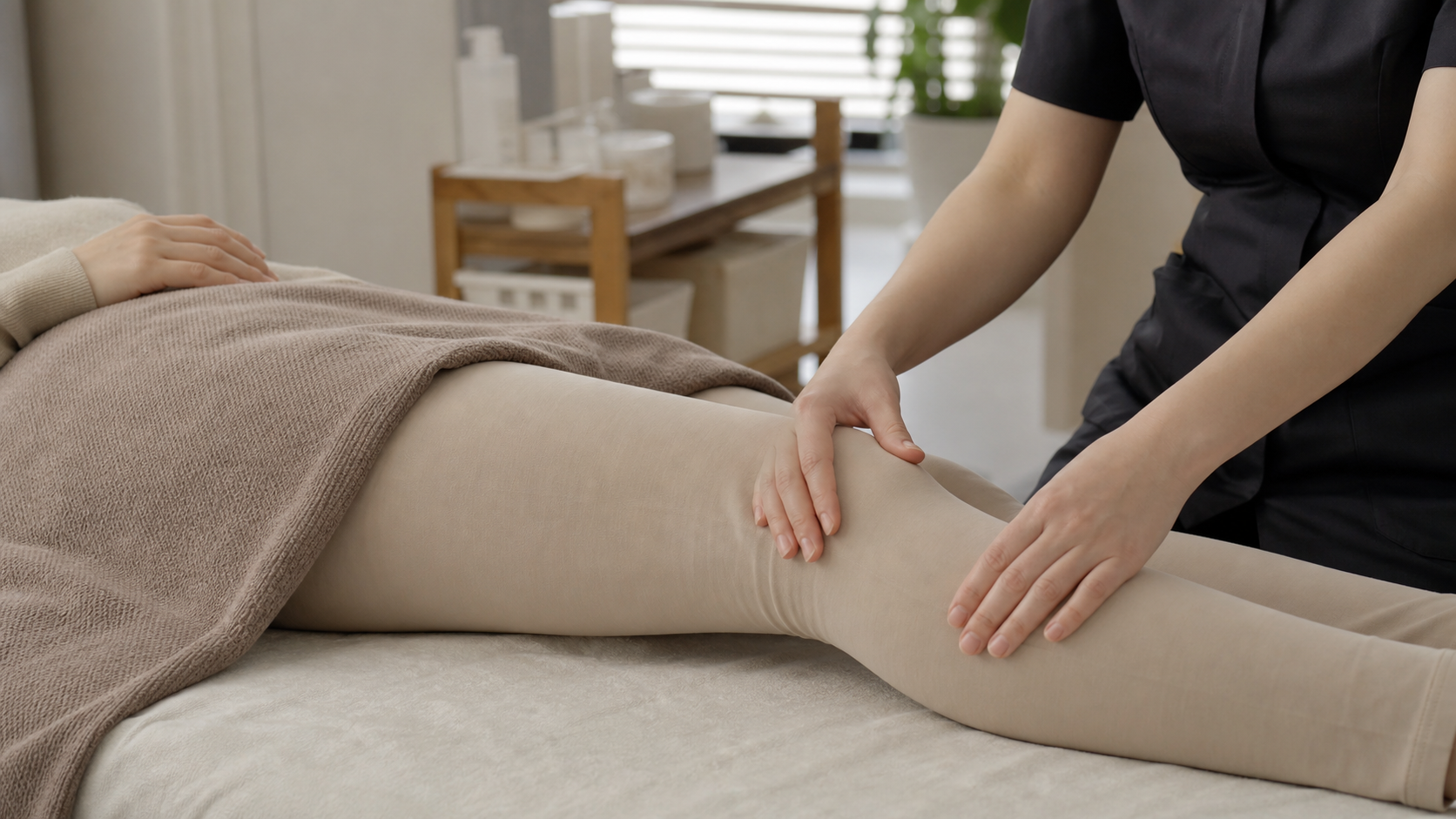
Ideas such as perfectly straight legs or a required gap between the thighs aren’t medical standards. Bodies differ in skeletal shape and fat distribution, so one outline can’t define what is normal.
Factors in the visible outline
- Natural structure: Bone length and joint shape set the basic proportions. Esthetic care doesn’t change them.
- Muscle and subcutaneous fat: Muscle mass and the location of fat affect the contours of the thighs and calves. Regional fat distribution varies from person to person and isn’t explained by body weight alone.
- Skin surface: Skin laxity and the dimpled texture of cellulite can change the way the outline reads.
- Stance and movement: Knee position, foot direction, and weight shift can change the line you see in that moment. A tilted stance doesn’t prove that the pelvis or bones are out of place.
- Temporary edema: Fluid in the tissues can change leg size and make the skin feel tight. Edema has many possible causes and isn’t only a cosmetic issue.
Scope of esthetic care
An esthetic practitioner doesn’t assess the legs by appearance alone. They may check how the skin and soft tissue feel and adjust pressure around stiff or sensitive areas.
Your legs may feel more comfortable or lighter after a session, but esthetic care doesn’t reshape bone or remove fat from a chosen area. It doesn’t diagnose or treat the cause of edema either. A particular leg shape can’t be promised.
Swelling and pain
Mild swelling in both legs can occur after sitting or standing for a long time. Swelling needs medical attention when it begins suddenly in one leg, becomes severe or painful, or comes with warm or red skin. Shortness of breath or chest pain with leg swelling calls for urgent care.
Related terms
- Edema: Swelling caused by fluid collecting in body tissues.
- Cellulite: A cosmetic skin texture created by the relationship between fat and connective tissue beneath the skin.
- Manual massage: Hands-on care that adjusts pressure and movement across the skin and soft tissue.
Frequently asked questions
Is there an official standard for a beautiful leg line? No. Leg line is shaped by beauty and cultural preferences, not a medical standard for the body.
Can posture correct the shape of the legs? A different stance can change how the legs look in the moment. It doesn’t mean posture reshapes bone or corrects the skeleton.
Will esthetic care make the legs slimmer? Esthetic care doesn’t remove fat cells or guarantee a smaller leg measurement. Comfort and a lighter feeling after care vary from person to person.
This glossary entry is for general information. Experiences vary, and esthetic care isn’t intended to prevent or treat a condition.