Skin Elasticity
Skin elasticity is the ability of skin to return to its original shape after it has been pressed, pulled, or otherwise deformed. In skin science, this is often called recoil.
Elasticity is related to firmness and laxity, but the terms aren’t interchangeable. Esthetic care doesn’t claim to make new collagen or elastin. It works with surface hydration and feel instead.
Elasticity, firmness, and laxity
Elasticity describes how skin returns after deformation. Firmness describes how strongly it resists an outside force. Laxity, or sagging, reflects the position and support of skin and deeper tissues, including fat and other facial structures.
This distinction matters. Better recoil doesn’t mean that sagging disappears. A quick pinch or snap test gives only a rough impression, while formal elasticity measurements require standardized conditions and instruments.
Collagen and elastic fibers
The dermis contains collagen fibers, elastic fibers, and ground substance. Collagen helps skin withstand pulling forces. Elastin within elastic fibers contributes to recoil. The skin’s mechanical behavior never comes down to just one protein.
The amount and organization of collagen and elastic fibers change with age. Long-term ultraviolet exposure can also alter connective tissue in the dermis through photoaging. Age, sun exposure, body site, and environment all shape how elasticity changes over time.
Surface hydration and true recoil
When the stratum corneum lacks water, the surface may feel stiff and rough. Moisturizer can make it feel softer and plumper. That change in feel doesn’t mean collagen or elastic fibers in the dermis have been remodeled.
Keeping hydration, elasticity, and firmness separate makes it easier to describe what someone actually notices after a session.
Scope of esthetic care
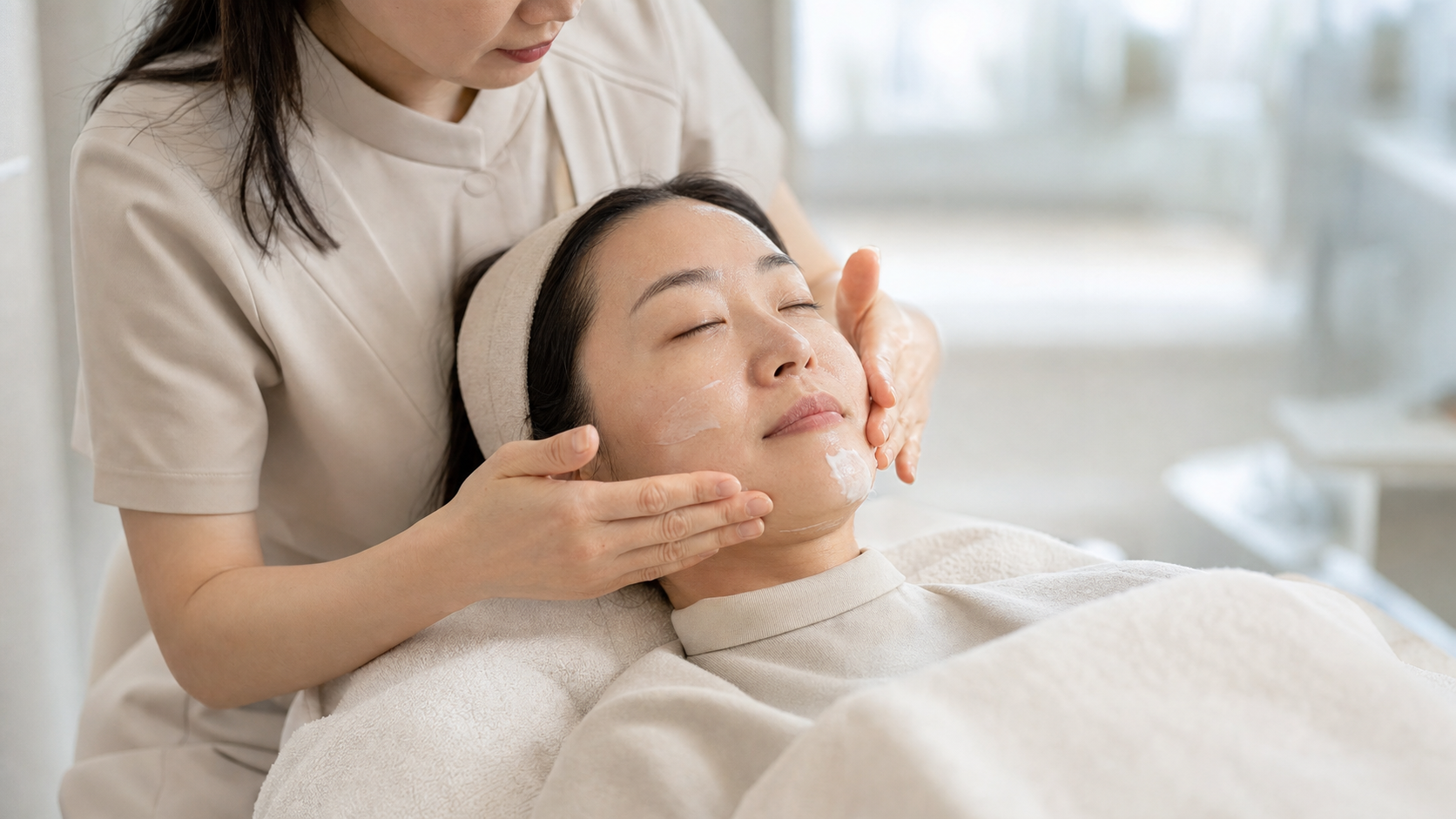
Esthetic care checks the skin’s current condition and adjusts products and hand pressure.
- Moisturizer can reduce a dry, tight feeling at the surface.
- The range and pressure of manual massage are adjusted without harsh friction.
- Everyday sun-protection habits may be discussed.
These steps may change how smooth or firm the skin appears for a time, but they don’t guarantee collagen production or lifting. Injections, lasers, and ultrasound procedures aren’t part of Meccrom’s esthetic services.
Related terms
- Collagen: A dermal protein that helps skin withstand tensile force.
- Elastin: A protein in elastic fibers that contributes to recoil.
- Firmness: The skin’s resistance to stretching or pressure.
- Skin laxity: A loose or sagging appearance shaped by skin and its supporting tissues.
Frequently asked questions
Are elasticity and sagging the same thing? No. Elasticity is recoil after force is removed. Sagging describes how skin and deeper tissues sit and look.
Does a plump feeling after moisturizer mean better elasticity? Moisturizer can make the stratum corneum feel softer and fuller. That alone doesn’t show a change in the dermal elastic-fiber network.
Does massage increase collagen production? There isn’t enough evidence to promise that routine esthetic massage increases collagen production. Meccrom doesn’t make that claim.
This glossary entry is for general information. Experiences vary, and esthetic care isn’t intended to prevent or treat a condition.