Have you ever traced the outline of your face in the mirror and wondered, "Is it my cheeks, or is it my jaw?" The first step is to understand exactly what’s shaping the concern you see.
The approach to a contouring facial differs depending on whether your cheeks are full from within, your side cheeks are hollow and make your cheekbones and jaw stand out, or your jaw looks angular below your ears.
I’ll walk you through the causes and care approaches for the three face shapes we discuss most often in contouring consultations at Meccrom Seongsu. Keep a mirror nearby as you read.
What is facial contouring, and why does the approach depend on your face shape?
Facial contouring care is a hands-on esthetic service that addresses puffiness and tight muscles in the face, neck, and décolleté to refine the facial outline.
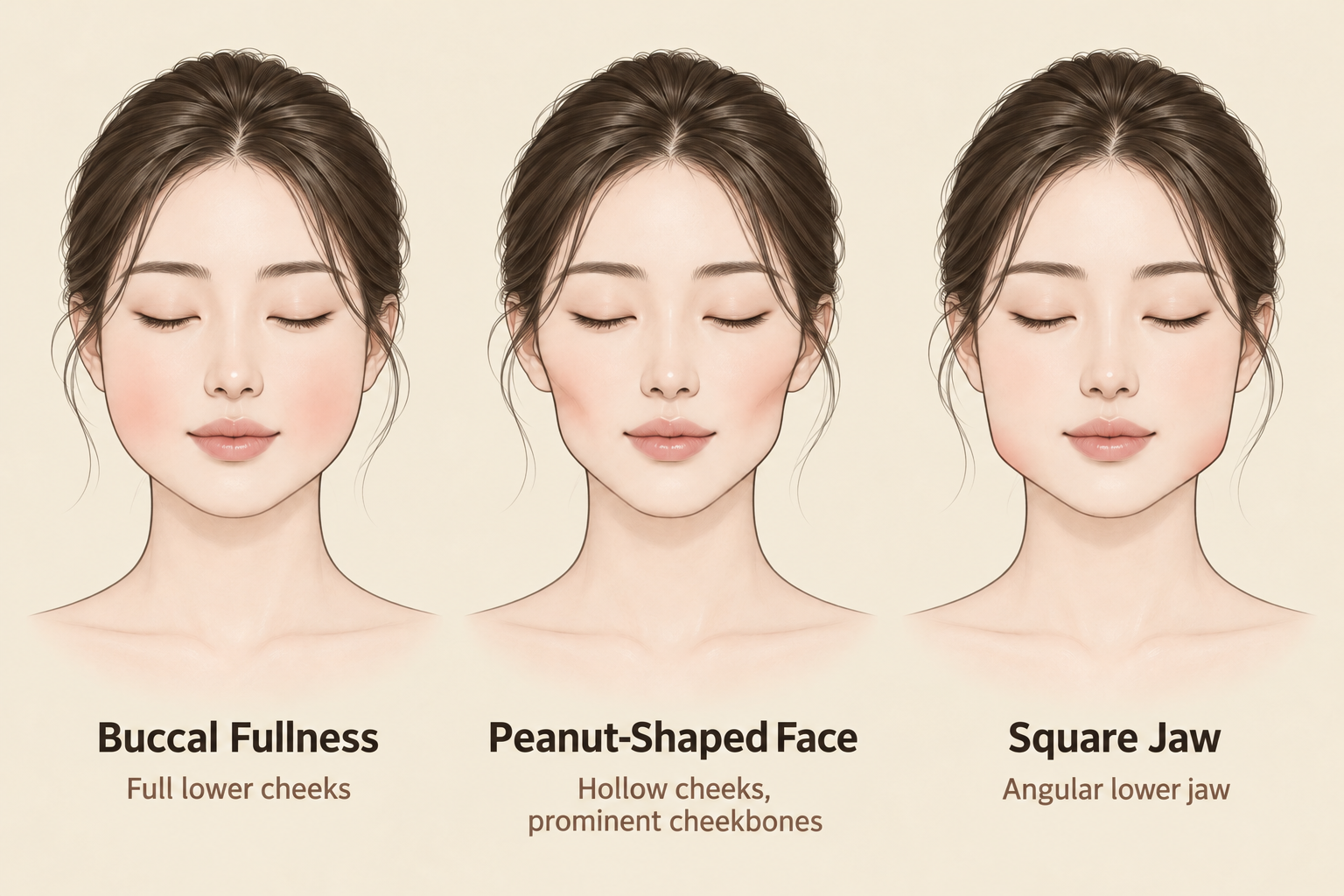
Use the illustration below and the last column of the table to look at your own face in the mirror.
| Face shape or concern | What stands out | Common causes | What to look for in the mirror |
|---|---|---|---|
| Buccal fullness | Full cheeks between the corners of the mouth and the cheekbones | Fat deep within the cheeks and puffiness | Do your cheeks look as though you’re holding a candy inside them, even when you’re not smiling? |
| Peanut-shaped face | Prominent cheekbones and jawline, with hollow side cheeks between them | Natural bone structure, developed jaw muscles, and loss of cheek volume | From the front, do the areas below your cheekbones look sunken, creating an uneven facial outline? |
| Square jaw | A wide, angular jaw below the ears | The shape of the jawbone and developed chewing muscles | Does a firm bulge appear at the sides of your jaw when you clench your teeth? |
Buccal fullness: causes and care
Buccal fullness comes from prominent fat deep inside the cheeks that doesn’t readily shrink with weight loss. In an esthetic studio, we focus on reducing puffiness and supporting the contour of sagging cheeks, rather than trying to press or pinch the fat away.
Why full cheeks begin to sag
As we age, this fat gradually loses volume and moves downward. Cheeks that once looked full can begin to sag, and the area beside the mouth starts to look heavier. But in consultations, I often find that the concern isn’t limited to the face. A forward head posture or a stiff décolleté can make the cheeks and lower face look more droopy. I’ve experienced this myself: my neck, which still felt out of alignment despite personal training, found its alignment again as I received hands-on therapy. That’s why I look at the neck too, even when someone comes in about their face.
How I care for buccal fullness
‼ Don’t try to get rid of all the volume in your cheeks. This fat naturally decreases with age, and you may wish you still had that fullness later on.
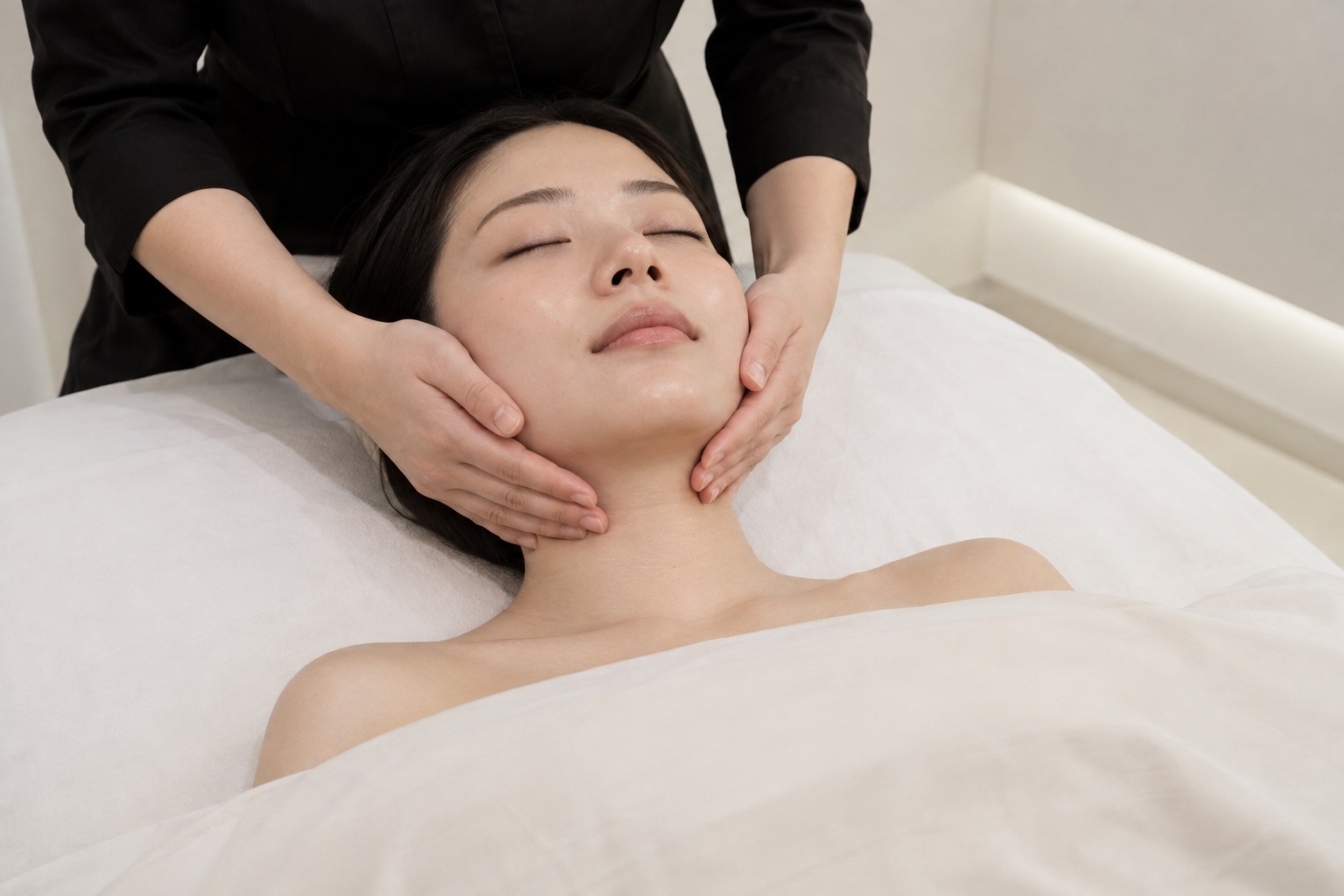
During a session, I use my palms to gently ease puffiness and tight fascia around the cheeks, rather than pressing directly into them.
A peanut-shaped face: causes and care
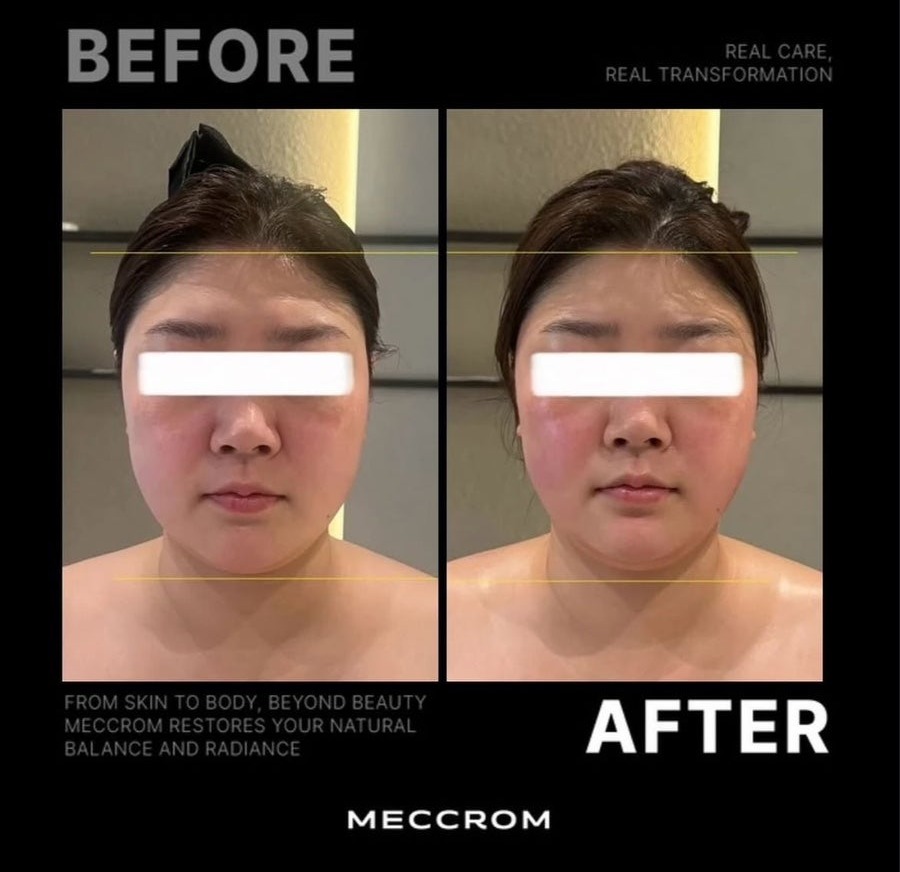
A peanut-shaped face has prominent cheekbones and a defined jawline, with hollows in the side cheeks and temples between them. This creates an uneven outline resembling a peanut. Clients often tell me, "My cheekbones stick out, but the area just below them looks sunken," or "People say my face looks stern."
Why a face takes on a peanut shape
- Natural bone structure: Prominent cheekbones and little cheek volume can make the cheeks look hollow even when there is facial fat.
- Developed jaw muscles: Habitual clenching can enlarge the jaw muscles, making the area below the cheekbones look more hollow.
- Loss of cheek volume: Rapid dieting, age, or stress can reduce the fat layer in the cheeks.
- Sagging cheeks: Sometimes the cheeks haven’t lost fat. Instead, the fat has shifted downward, leaving the area below the cheekbones looking empty. This is common from the mid-thirties onward.
How I care for a peanut-shaped face
❌ Avoid pressing hard on your cheekbones in an attempt to fill out hollow cheeks. Cheekbones don’t move inward when you push on them.
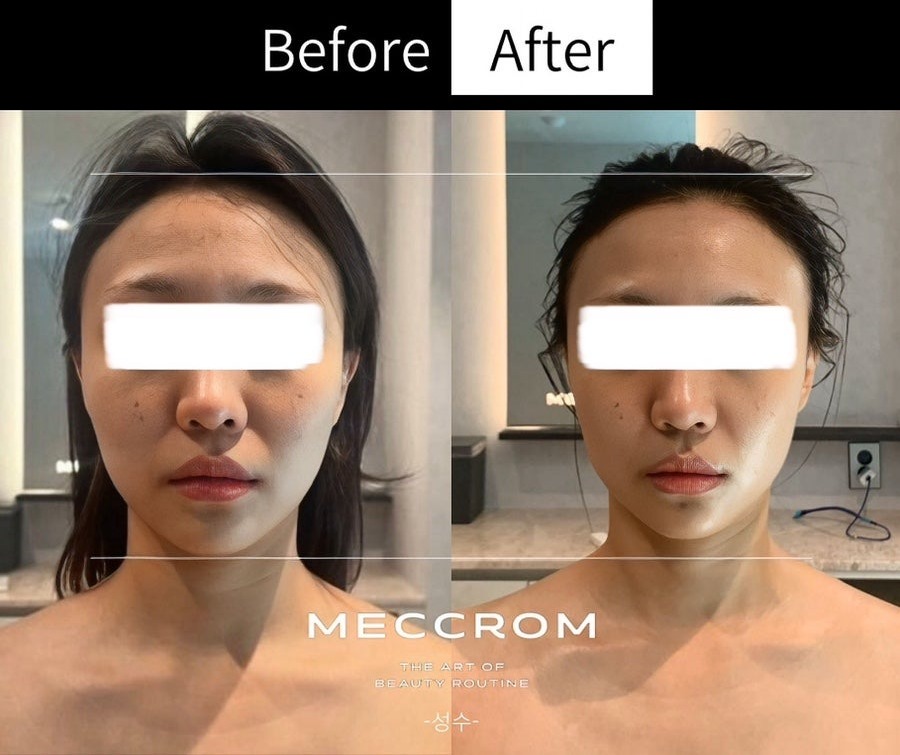
For a peanut-shaped face, I don’t begin with the face itself. I first release tension around the pelvis and along the sides of the torso, then move on to the face. Around the prominent cheekbones and jawline, I reduce puffiness and refine the outline. Over the hollow areas of the cheeks, I use gentle sweeping movements. In my experience, this face shape tends to need somewhat more sessions than others.
A square jaw: causes and care
A square jaw extends outward on both sides of the lower face when viewed from the front and looks angular from the side. It can come from the jawbone itself or from developed chewing muscles, known as the masseter muscles. In many cases, both the muscles and bone are prominent. (See this source on the causes of a square jaw.)
How to check whether your jaw muscles are contributing
Try clenching and then relaxing your teeth. If a firm bulge appears and subsides at the sides of your jaw, just below and in front of your ears, developed chewing muscles are likely contributing. If you want to know precisely how much comes from the bone, a medical professional can check with an X-ray.
What to do when the jaw muscles are contributing
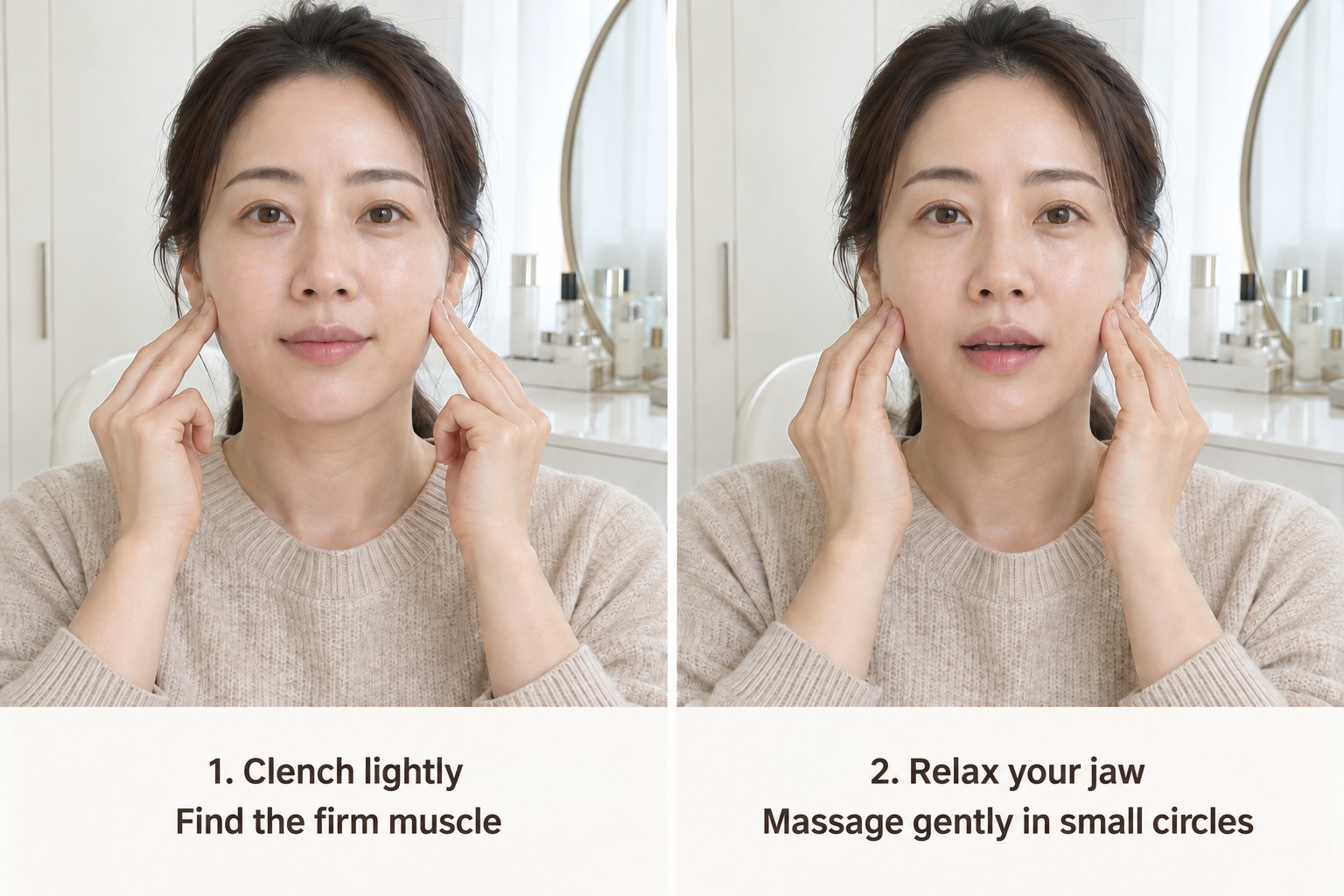
- Self-massage: Open your mouth slightly to relax your jaw. Use the pads of your fingers to make small, gentle circles over the area that felt firm. Don’t press hard enough to hurt. You can also read about masseter release.
- Reduce aggravating habits: Clenching, grinding, eating tough foods, and chewing on only one side. If any of these apply to you, start cutting back today. Developed chewing muscles can also contribute to headaches or jaw discomfort.
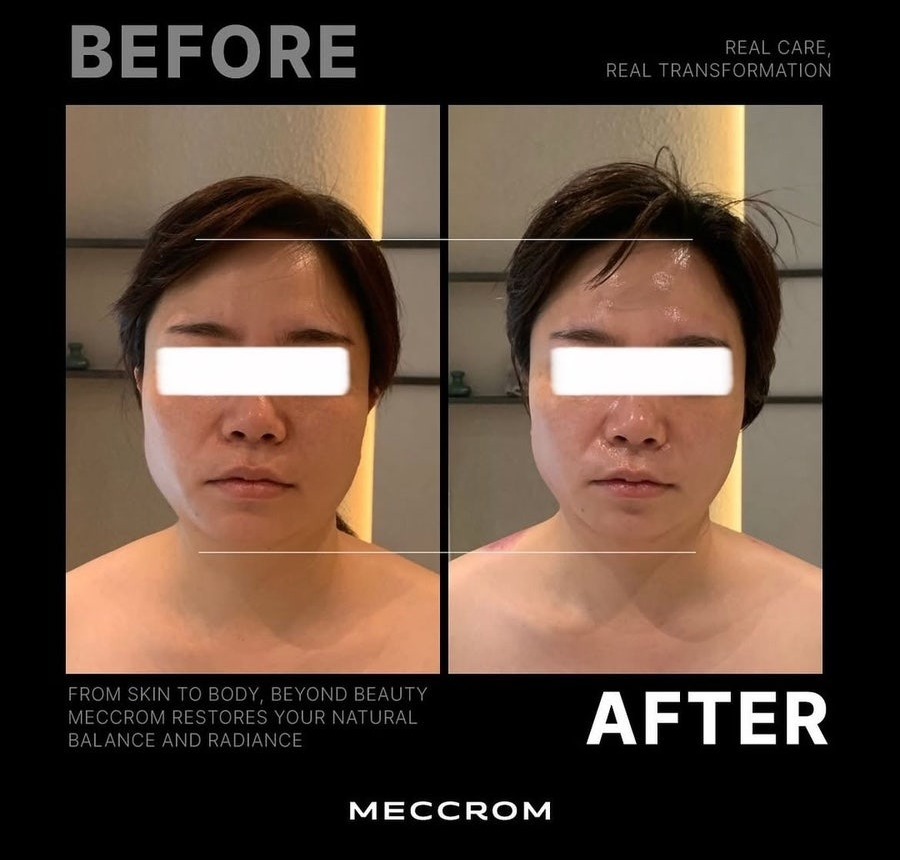
- Care at an esthetic studio: When a client comes in about a square jaw, I use my palms to sweep away puffiness around the masseter muscles and gently release tight fascia. I also ease tension in the neck, shoulders, and upper trapezius to refine the jawline. For a lower face that looks wide, I use upward sweeping movements from beneath the jaw toward the ears to lift its outline.
At Meccrom Seongsu, I usually recommend our Maekkeun Gravity Contouring Therapy program for square-jaw concerns.
What happens during facial contouring at Meccrom Seongsu?
The steps in a session
During the 10 years I ran a studio specializing in problem skin, I met many clients whose concerns couldn’t be fully addressed by working on the face alone. Wanting to move beyond that limitation led me to Meccrom’s hands-on approach to the whole body. That’s why our contouring facials at Seongsu aren’t limited to facial gyeongrak massage. We include décolleté care and bodywork. I’ve explained why we work on the face and décolleté together in our gyeongrak massage article and décolleté massage article.
- Face and posture assessment: You complete a facial contour questionnaire, and we take front and side photos. Together, we look at facial proportions and symmetry, the lines of the neck and shoulders, and any pelvic misalignment.
- Décolleté care and bodywork: I use my hands to release tight fascia around rounded shoulders, the upper trapezius, and the collarbones.
- Facial care: Based on your face shape, I work differently on areas where we want less fullness and areas where we want to preserve volume. I address the overall outline first, then focus more closely on concerns such as buccal fullness or asymmetry.
My own body is sensitive enough that even a slightly misplaced touch can give me a headache, so I pay close attention to the pressure every time I put my hands on a client’s face. I use gentle palm movements throughout, without pressing down hard or kneading forcefully. Many clients fall asleep during their session. If the pressure feels too strong, tell me straight away. I’ll adjust it there and then.
Number of sessions and client reviews
The number of sessions depends on the face shape. The first one or two sessions are for assessing the face and posture. After that, I check how you’re doing at every visit and adjust the bodywork and facial care for that day. That’s why I don’t promise in advance that we’ll finish after a certain number of visits.
I’d also like to share a review from a client who chose our Seongsu studio after trying several other places.
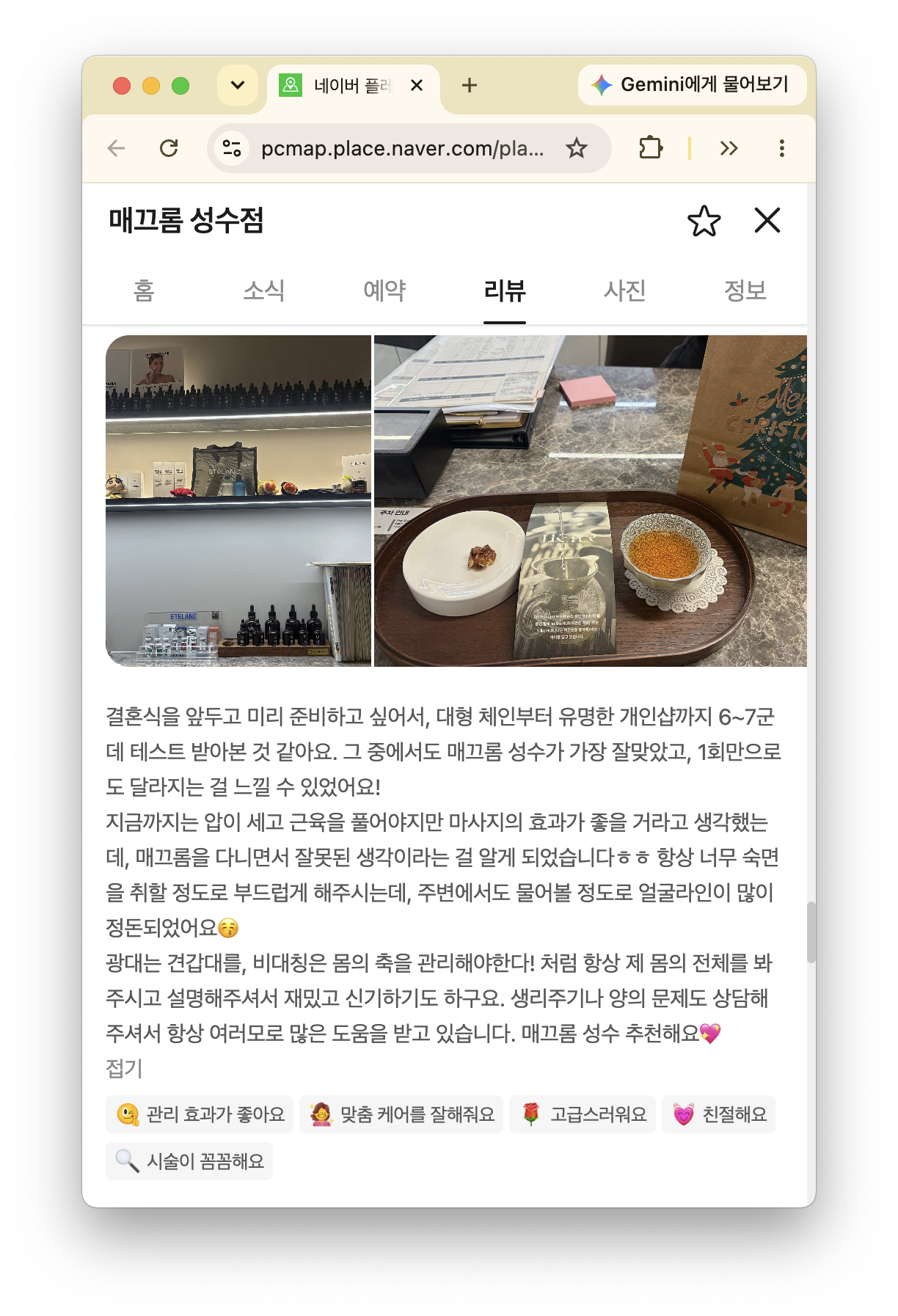
Excerpt translated from the Korean review above:
"I tried six or seven places, from large chains to well-known independent studios, ahead of my wedding. Meccrom Seongsu suited me best, and I could feel a difference after just one session. I used to think massage had to be firm to work. Here, the care is gentle enough that I fall deeply asleep, yet people around me have noticed the change in my facial contour."
At the first consultation, I use my hands to check the cheeks, the areas below the cheekbones, and the jaw muscles as we assess your face shape together. I then recommend an appropriate contouring program, such as Maekkeun Gravity Contouring Therapy or Maekkeun Volume and Face-Slimming Therapy.
Frequently asked questions
Can hands-on care make a square jawbone smaller?
No. Hands-on care doesn’t change the shape of bone. But bone isn’t the only reason the lower face can look wide. When tight jaw muscles relax and puffiness subsides, the neck comes back from a forward position, and the neckline becomes more visible above the upper trapezius, the proportions of the face, neck, and shoulders change. Even with the same jaw, a longer-looking neck and a lower shoulder line can make the face look smaller and more slender.