Face Gyeongrak
Face gyeongrak is a Korean esthetic service that borrows the traditional meridian concept for hands-on care of the face and nearby areas. You may also see it called facial gyeongrak massage or facial meridian care. These names don’t point to one officially standardized technique.
It isn’t a procedure that shrinks the face or corrects facial bones. Look at the actual working area, movements, and pressure rather than assuming a result from the menu name.
Meaning and industry use
Gyeongrak is the East Asian medicine concept that brings meridians and their smaller branches into one system. Face gyeongrak isn’t a separate treatment name standardized in classical terminology. It’s a Korean beauty-industry label for a face-focused manual service.
Traditional meridian maps include routes and acupuncture points across the head and face. An esthetic business may say these maps inform the lines followed by the therapist’s hands. That doesn’t mean every face gyeongrak service follows the same map or sequence.
Common working areas
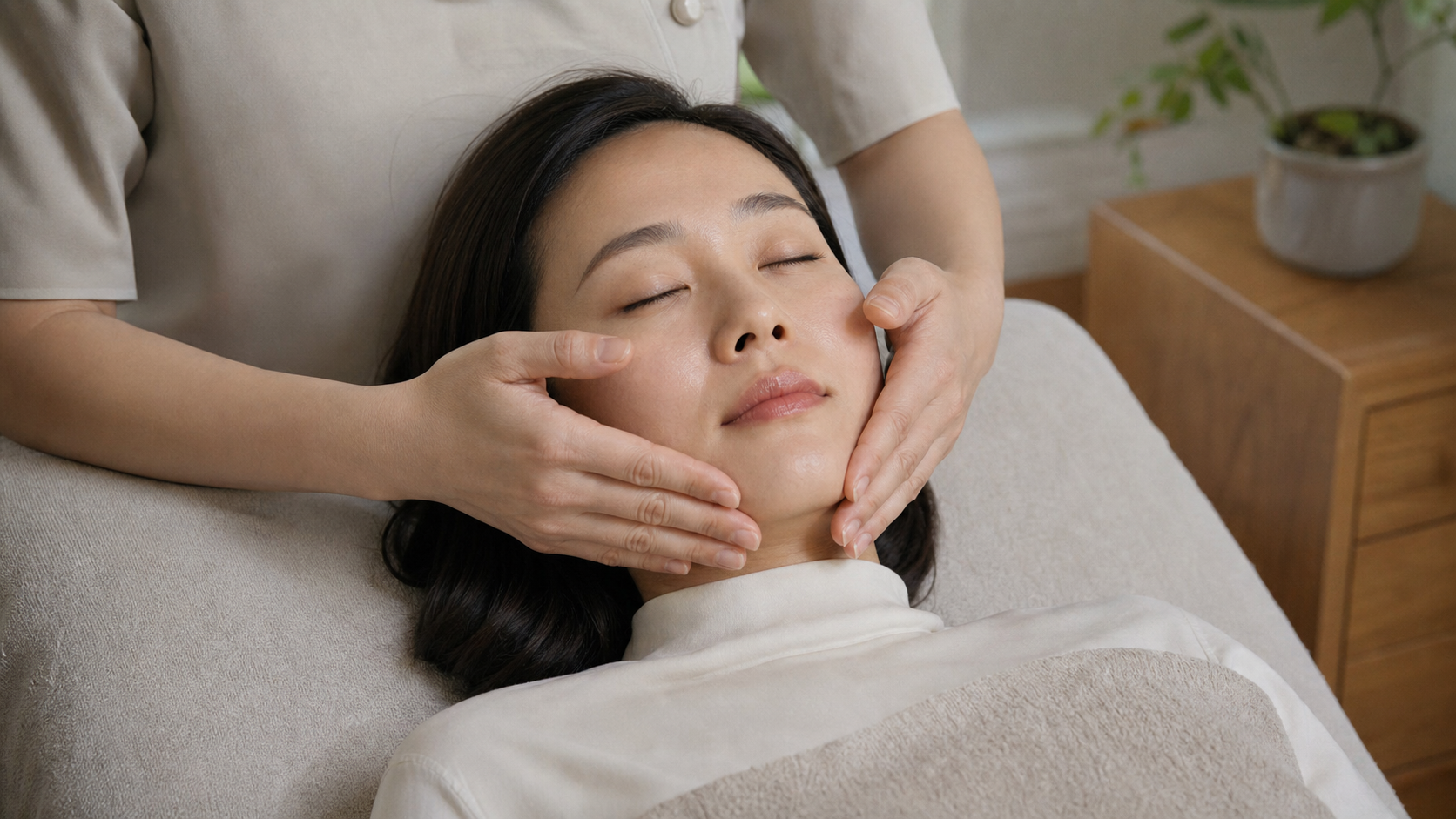
The session usually centers on pressing and gliding movements with the fingers or palms. Depending on the business, it may include several areas.
- Forehead and temples
- Cheeks and the area around the cheekbones
- Jawline and under the chin
- Neck and shoulders
- Collarbone area
Some services stay on the face, while others extend down to the shoulders. The use of oils, creams, or tools also varies. Check the menu details before booking.
Face gyeongrak and face sculpting
The two labels often overlap in Korean esthetics, though they tend to emphasize different ideas.
| Term | Main emphasis | Shared feature |
|---|---|---|
| Face gyeongrak | Traditional meridian language and the lines followed by the hands | Hands-on care of the face and nearby areas |
| Face sculpting | The cosmetic aim of making facial lines look more defined | May include the face, neck, and shoulders |
This is an industry tendency, not an official classification. The service description matters more than the label.
Face-shrinking and bone claims
Claims that hand pressure makes facial bones smaller or moves the cheekbones and jaw aren’t part of a sound definition. Esthetic hand pressure hasn’t been shown to reshape an adult facial skeleton.
Temporary pressure marks, facial expression, or posture can make someone look a little different right after a session. That shouldn’t be described as structural change or permanent face reduction. Clinical care for swelling is also not interchangeable with a general face gyeongrak service.
Skin and pressure
Facial skin can react strongly to friction and pressure. Harder doesn’t mean better.
- Ask for lighter pressure if you feel pain, tingling, or burning.
- Don’t work over broken skin, marked inflammation, or a suspected infection.
- Sudden facial asymmetry, altered sensation, or jaw pain that persists needs medical assessment first.
Related terms
- Gyeongrak: The East Asian medicine concept that brings meridians and their smaller branches together.
- Gyeongrak massage: The broader label for gyeongrak-style face or body care.
- Face sculpting: A Korean esthetic menu term centered on the cosmetic appearance of facial lines.
Frequently asked questions
Is face gyeongrak an official type of meridian? No. It’s an industry term that brings the gyeongrak concept into a face-focused esthetic service, not a formal meridian category.
Can face gyeongrak make facial bones smaller? No. Esthetic hand pressure hasn’t been shown to reduce or reposition adult facial bones.
Is face gyeongrak the same as face sculpting? The names often overlap. Face gyeongrak tends to emphasize meridian language, while face sculpting emphasizes the cosmetic appearance of facial lines. Neither label defines a universal protocol.
This glossary entry is for general information. Experiences vary, and esthetic care isn’t intended to prevent or treat a condition.