Facial Redness
Facial redness is visible color that appears when small blood vessels in the skin widen. It may show up briefly after heat or stress and then fade, or it may recur often and last longer.
Redness describes what you see, not a single cause. An esthetician doesn’t diagnose that cause or treat blood vessels.
Transient flushing and lasting redness
Transient flushing can happen when body temperature or emotion changes. A hot room, exercise, hot drinks, spicy food, alcohol, and stress are common triggers. The color usually fades after the trigger passes.
Color that lasts longer than it used to or remains in one area needs to be distinguished from a brief flush. Redness can also look violet or brown on some skin tones, so color alone isn’t enough to identify the cause.
Different causes of facial redness
Skin irritation, contact dermatitis, sunburn, rosacea, and other conditions can make the face look red. Redness alone doesn’t prove that someone has too much internal heat or poor circulation.
Rosacea is a skin condition that can begin with frequent flushing. See a dermatologist if redness lasts or comes with visible vessels, acne-like bumps, burning, or eye symptoms. An esthetician can’t determine whether these signs are rosacea.
Skin irritation during a session
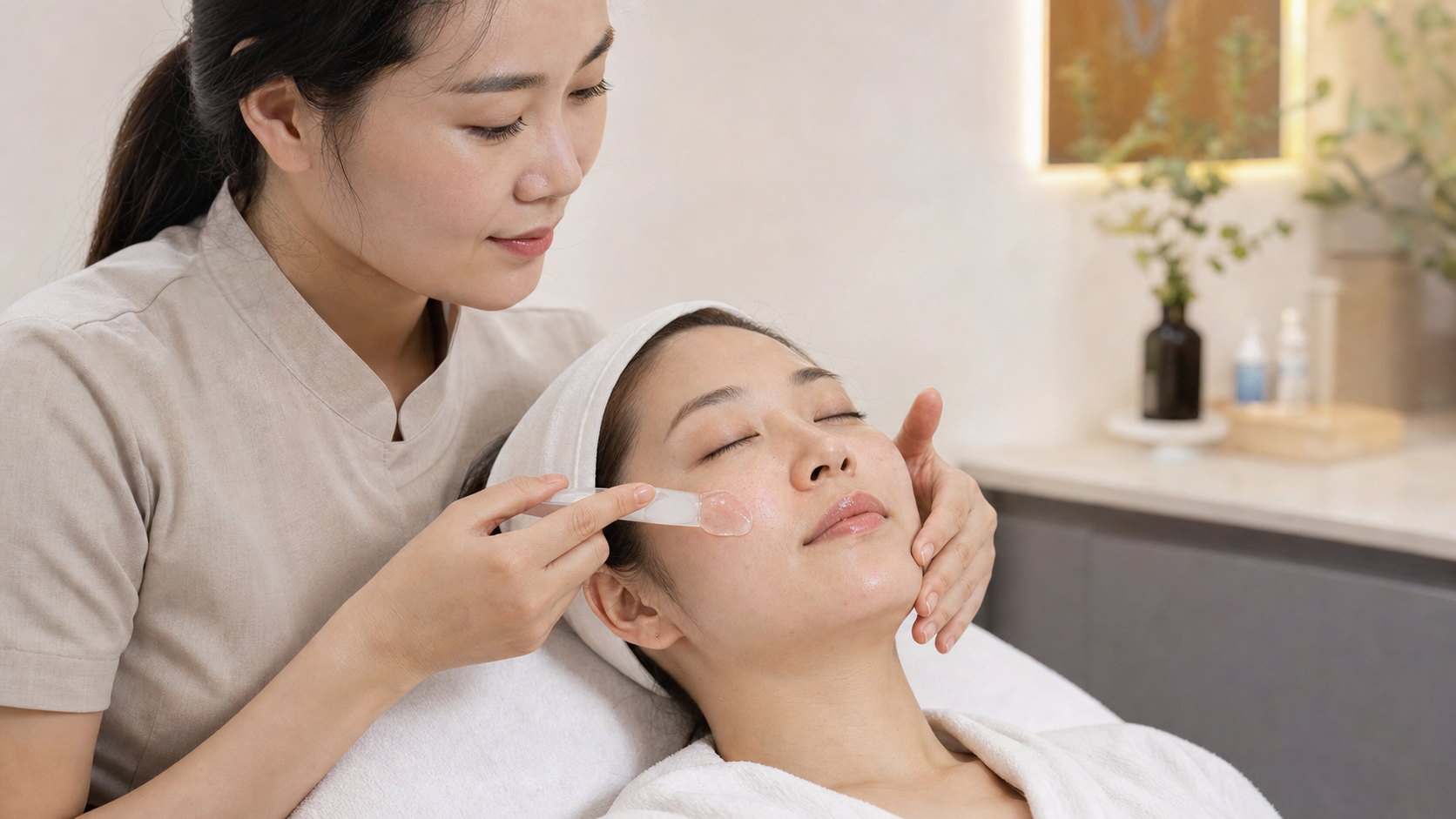
Friction, hot steam, heated tools, and an unsuitable product can increase redness during a session. Red skin shouldn’t be presented as proof of better circulation. It may be a sign that the skin has been irritated.
Before care begins, the practitioner should ask when redness appears and how long it lasts. Stinging or burning during the session is a reason to lower the intensity or stop.
Scope of esthetic care
Esthetic care doesn’t promise to remove vascular redness or improve rosacea. The goal is to avoid adding unnecessary irritation.
- Prolonged heat is avoided while skin temperature and response are watched.
- Harsh friction and strong exfoliation are avoided.
- Several new products aren’t layered at once.
- Pressure and time are reduced during manual massage.
Skin may look less red or feel calmer for a while after a gentle session. That isn’t the same as treating persistent facial redness.
Related terms
- Flushing: Sudden color caused by dilation of skin blood vessels.
- Blushing: Flushing linked to emotions such as embarrassment or stress.
- Rosacea: A skin condition that can involve lasting color, recurring flushing, visible vessels, or lesions.
- Sensitive skin: Skin that develops unpleasant sensations from stimuli that normally shouldn’t cause them.
Frequently asked questions
Is every red face a case of facial flushing? No. Many conditions cause redness. Timing, duration, triggers, and other symptoms all matter.
Does redness after massage prove better circulation? No. Pressure, friction, and heat can also cause redness, so discomfort and skin response need to be checked first.
Can someone with facial redness have an esthetic facial? It depends on whether the color is a brief reaction or a sign that needs medical assessment. Lasting redness, burning, or lesions should be checked by a dermatologist first.
This glossary entry is for general information. Experiences vary, and esthetic care isn’t intended to prevent or treat a condition.