Deep Tissue Massage
Deep tissue massage is a style of focused bodywork that usually combines slower movement with pressure that builds gradually. The name doesn’t mean a provider can select one exact tissue layer, and it doesn’t mean you have to tolerate pain.
There is no single sequence or pressure level shared by every school and provider. This entry covers the features that commonly appear under the deep tissue label. It doesn’t present deep tissue massage as a Meccrom service.
Definition of deep tissue massage
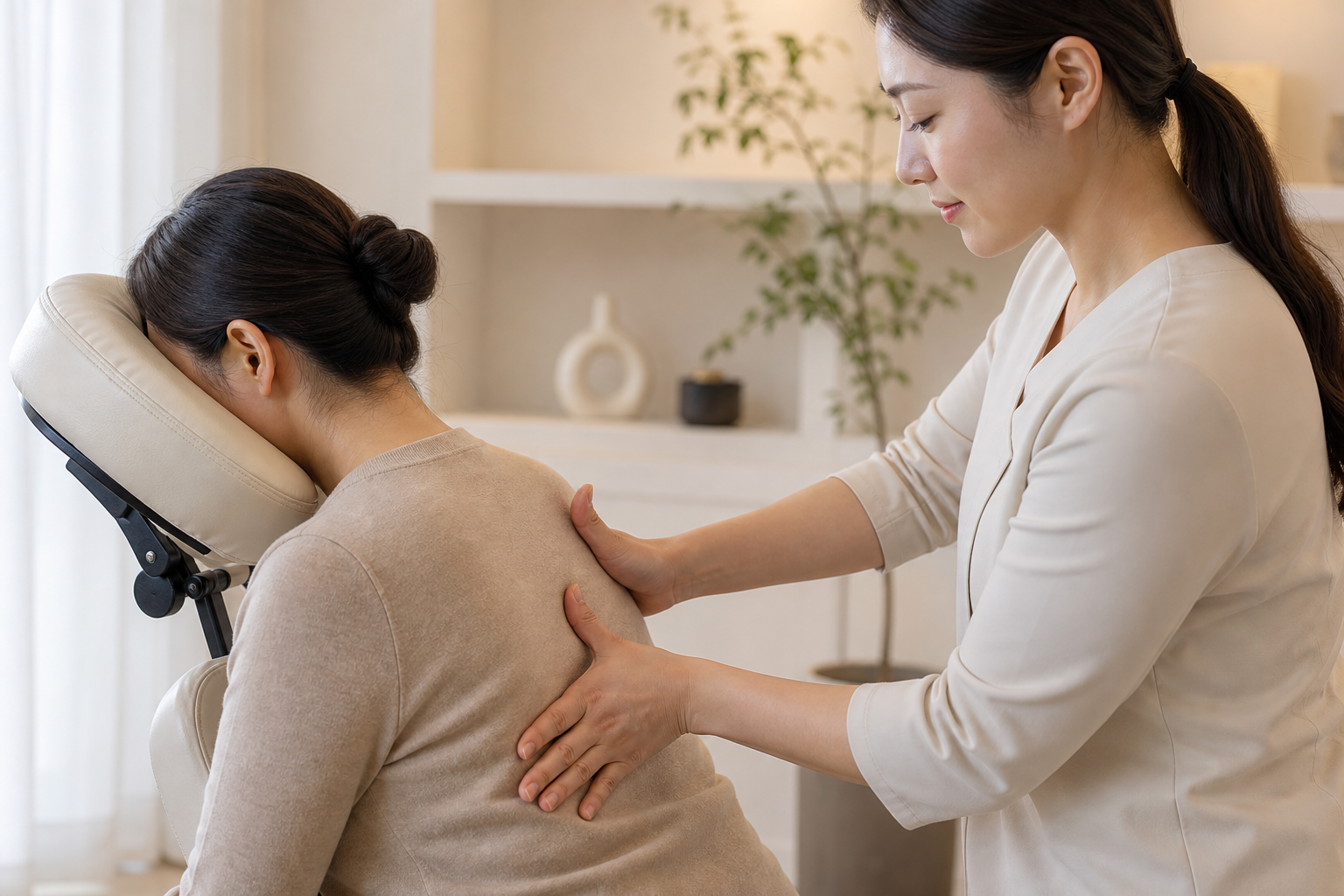
Deep tissue work usually slows down over a chosen area instead of moving quickly across the whole body. A provider may use the fingers, knuckles, palms, forearms, or elbows and adjust the contact as the session continues.
The label alone doesn’t tell you whether a session covers the full body or spends most of its time on the back, shoulders, or another selected area. It also doesn’t set one standard pressure. Ask about the working area and how the pressure will be adjusted before you book.
Pace and pressure
Firm pressure can be part of deep tissue massage, but force isn’t the only feature. The provider also needs time to make contact, watch how your body responds, and change the pressure when needed.
- Pace: The movement usually slows down over the area that needs focused work.
- Pressure: It should build gradually, with room to ease off at any point.
- Contact: Fingers or knuckles can work over a smaller area, while palms and forearms spread contact across a wider one.
- Focus: Time may be divided unevenly so the chosen area receives more attention.
If you tense up, hold your breath, or feel sharp pain or tingling, ask the provider to reduce the pressure or stop. More pain doesn’t prove that the work has reached the right place.
Overlap with Swedish massage
Swedish massage combines movements such as gliding, kneading, friction, vibration, and tapping. Deep tissue work tends to place more emphasis on a slower pace and focused pressure.
That boundary isn’t rigid. A provider might use Swedish movements over a broad area, then slow down for more focused work in one spot. The service name can’t tell you the exact area, pressure, or time on its own.
Claims and evidence
Research has examined massage for short-term relief in some pain conditions. Those findings vary by condition and type of massage, and they don’t prove that every service called deep tissue massage has the same effect.
Deep tissue massage doesn’t tear apart adhesions, flush toxins from the body, or treat the cause of chronic pain. You may feel more comfortable after a session, but ongoing pain or a change in movement needs a medical assessment.
Safety checks before a session
The U.S. National Center for Complementary and Integrative Health says massage has a low overall risk of harm. Rare, serious injuries such as blood clots, nerve injury, and fractures have been reported, with some cases involving forceful massage or people who were more vulnerable to injury.
Ask your clinician about massage before booking if you have a bleeding or clotting condition, take blood-thinning medicine, have a high fracture risk, have an open or infected area of skin, or recently had surgery. Follow any instructions about areas and pressure to avoid.
Before the session starts, agree on the areas to work on, the areas to leave out, and the pressure you want. You should be able to change any of those choices during the session.
Related terms
- Manual massage: The broad category of care that presses, glides, and works on the body by hand.
- Swedish massage: A massage style that combines several classic movements across the full body or selected areas.
- Lomilomi massage: A Hawaiian tradition that needs to be distinguished from the modern spa style sold under the same name.
Frequently asked questions
Does deep refer to one exact anatomical layer? No. In service names, it usually points to slower, focused work with adjusted pressure. It doesn’t mean that a provider can isolate one precise tissue layer by touch.
Can deep tissue massage use lighter pressure? Yes. Pressure should change with the body area and your comfort. Firm contact may be part of the style, but sharp pain and tingling are signals to ease off.
Does next-day pain mean the session worked? No. Soreness isn’t a measure of quality. If pain is severe or lasts, don’t ask for more force on the same area. Talk with a medical professional.
This entry is for general information. Results and comfort vary, and massage isn’t intended to prevent or treat disease.