Therapy
Therapy means treatment for a medical, psychological, or functional problem in English, but Korean beauty and spa businesses use the word more broadly for many care programs. A medical therapy and an esthetic therapy can have completely different providers, goals, and actions.
The label doesn’t prove a qualification, a professional standard, or a treatment effect. The word before therapy and the service details provide the useful information.
The basic meaning and Korean usage
In English, therapy appears in physical therapy, psychotherapy, and occupational therapy. These are professional services that address health or function. In Korean, the borrowed word has expanded to beauty therapy, aromatherapy, stone therapy, color therapy, and many other programs involving skin care, scent, warmth, or emotional activities.
That Korean usage isn’t automatically wrong. The boundary still needs to be clear. An esthetic service shouldn’t be presented as if the word therapy gives it the same role as medical treatment.
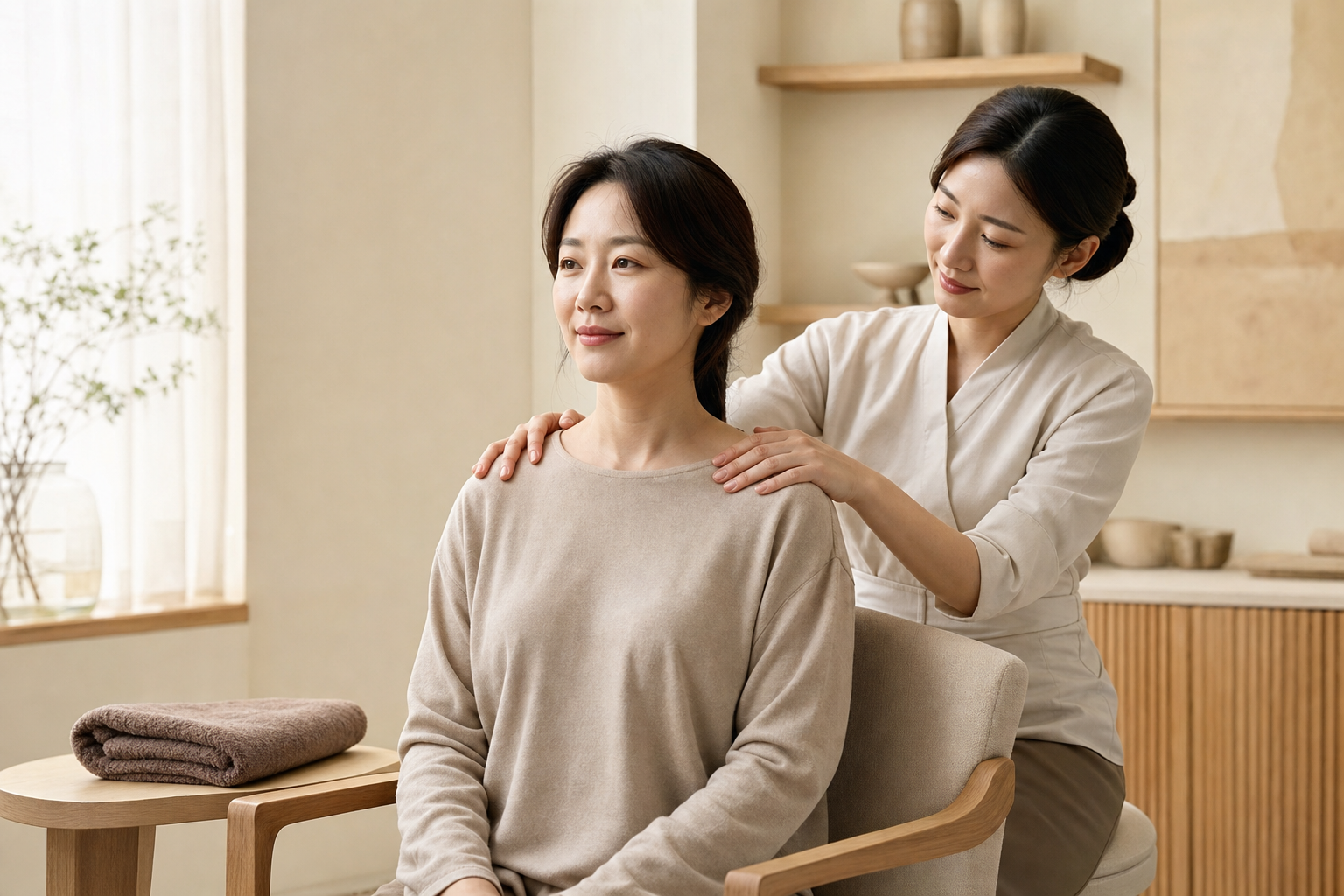
Beauty Therapy and Body Therapy
In international beauty education, Beauty Therapy can cover facial and body skin care, analysis, cosmetics, and massage. Body Therapy may include body analysis, body treatments, massage, and some electrical treatments.
The use of these names in professional education doesn’t mean every Korean service follows the same curriculum. The job title beauty therapist or body therapist also doesn’t prove one universal license. Ask where the provider trained and what the course covered.
Therapy and massage
Massage often points to hands-on movements such as pressing, gliding, kneading, and tapping. Some businesses use therapy for the whole program, including oil, scent, warmth, devices, and the way several techniques are combined.
There is no official rule that massage means the movement and therapy means the whole session. Some providers use the words as near synonyms. Others use therapy as a menu name for a group of massage techniques. Check the actual content instead of relying on that distinction.
What to check in a service name
Provider
Find out whether the service is medical treatment, counseling, or nonmedical beauty and spa care. The title therapist on its own doesn’t prove that someone is a medical professional or holds a particular qualification.
What happens
Ask whether the service involves hands-on touch, scent, stones, cosmetics, or a device. Two aromatherapy services may differ because one uses scent only while the other applies a diluted oil to the skin.
Body area and contact
Check whether it covers the face, body, full body, or one area, and whether clothing is changed. Ask how privacy is protected and whether you can refuse an area or stop the session.
Promised outcome
Separate comfort and grooming claims from claims to treat pain or disease. If a service presents medical outcomes, verify the provider’s license and the legal scope of that service. This glossary doesn’t make a ruling on local advertising law because the required regulatory source is still pending.
The limits of esthetic therapy
Esthetic therapy provides skin and body care within a comfortable, nonmedical range. It doesn’t diagnose the cause of pain, treat disease, or medically correct bones and joints. Feeling comfortable or seeing a temporary change in appearance isn’t the same as a treatment result.
See a medical professional first for sudden swelling, numbness, persistent pain, or difficulty moving.
Related terms
- Sugi Therapy: An industry term for arranging hands-on methods into a care program.
- Aromatherapy: The use of essential oils by inhalation or diluted application to the skin.
- Stone Therapy: Care that combines warmed stones with hands-on movements.
- Manual Massage: A broad term for pressing, gliding, and kneading the body by hand.