Stone Therapy
Stone therapy uses heated stones placed on the body or held in the practitioner’s hands during massage. You’ll also see it called hot stone massage or stone massage.
The heat may feel comforting, but hotter isn’t better. How the stones are heated and checked matters as much as the massage technique.
Stone therapy and hot stone massage
Stone therapy is a broad industry label for bodywork that uses stones. Hot stone massage is the best-known version, built around heated stones. Many spas use the two names for the same service.
There isn’t one standard number of stones or a single placement sequence. In one session, stones may rest on the body for a short time. In another, the practitioner may keep them moving in the hands. Check the body area and method when you book so you know what the service includes.
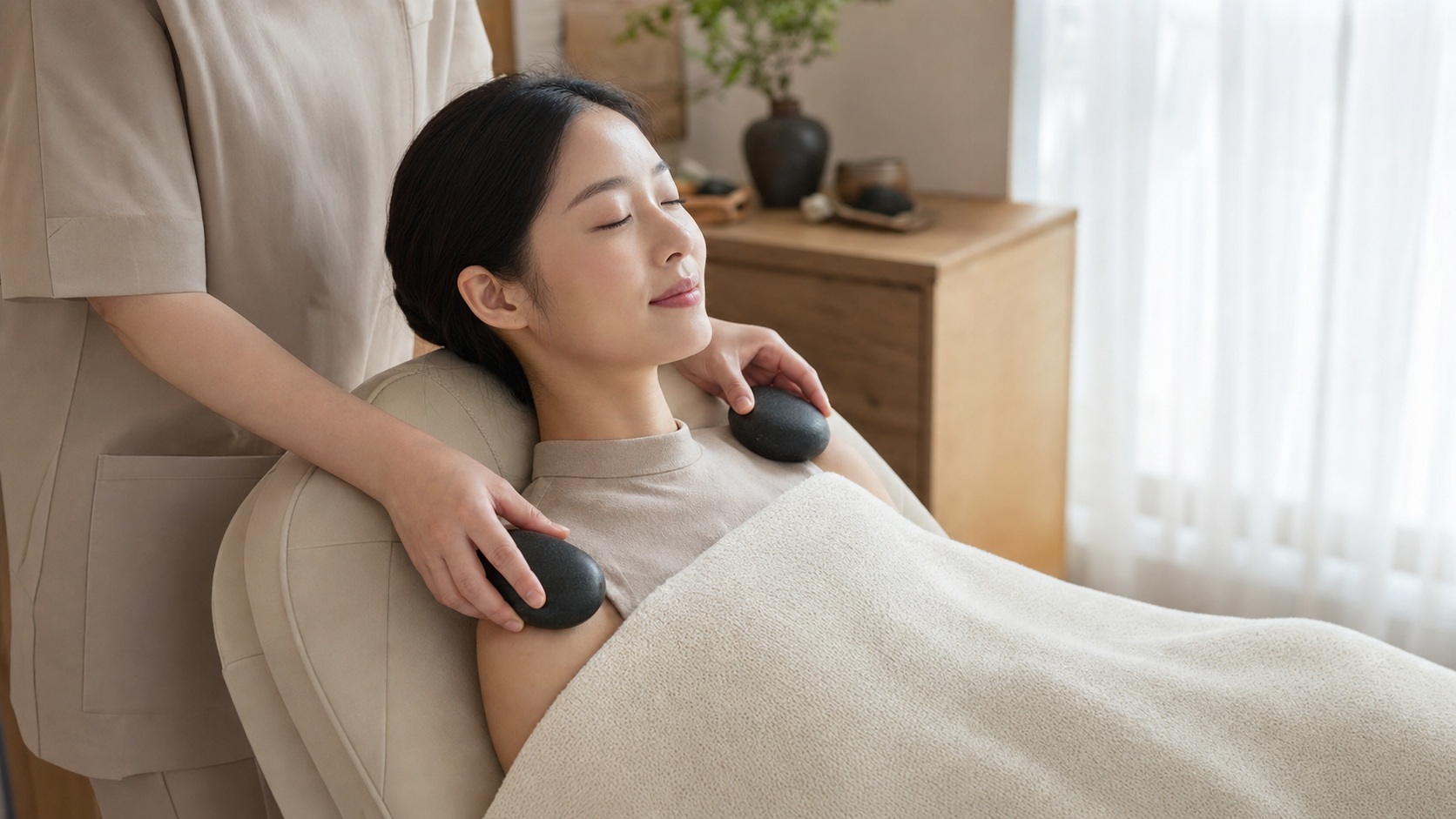
How heated stones are used
A practitioner may begin with hands-on massage, apply oil, and then bring heated stones into the movements. The broad surface of a stone can glide over the skin or sit in the hand while the practitioner applies pressure.
A stone left in place stays over one area longer than a moving stone. That makes heat control especially important. A towel, sheet, or clothing should sit between a resting hot stone and bare skin, while the practitioner keeps checking the temperature and your comfort.
Stones used in hot stone massage
Smooth basalt is common in hot stone massage. It holds heat and cools gradually, which makes it practical for this kind of bodywork.
Basalt isn’t the only possible material, and the shape and size of the stones vary by program. The name of the stone tells you less about safety than the heating setup does. A dedicated stone heater, a working thermometer, and a check before skin contact are the details that matter.
Stone temperature and burn prevention
The often-cited range of 110 to 130 degrees Fahrenheit, or about 43 to 54 degrees Celsius, refers to the water in a stone heater. It isn’t a guaranteed safe temperature for a stone touching skin. Stone size, body area, and contact time all change how the heat feels.
Burn prevention depends on a few practical controls:
- Heat stones in equipment made for the job and monitor the water with a calibrated thermometer.
- Don’t heat massage stones in a microwave, oven, frying pan, heating pad, or other improvised device.
- The practitioner should be able to handle and check each stone before it touches you.
- Place a towel, sheet, or clothing under stones that will stay in one spot, then keep checking the heat.
- Speak up as soon as a stone feels too hot, sharp, or uncomfortable.
Heated stones shouldn’t be placed casually over broken skin or an area where you can’t sense heat normally. If you’ve recently had surgery or aren’t sure heat-based care suits your health situation, check with your health care provider and tell the practitioner before the session.
What stone therapy can and can’t do
Stone therapy is massage with added warmth. It doesn’t treat arthritis or a muscle disorder, and it doesn’t remove toxins from the body. Massage research varies by technique and population, so it can’t prove one blanket benefit for every hot stone session.
When choosing a service, ask how the studio monitors heat, what happens if a stone feels too hot, and whether you can leave out any body area.
Related terms
- Aromatherapy: Care that uses plant essential oils by inhalation or in a diluted form on the skin.
- Manual massage: Hands-on care that presses and moves the skin and soft tissue. Stone therapy may combine these hand movements with heated stones.
Frequently asked questions
Are stone therapy and hot stone massage the same thing? Stone therapy is the broader label, while hot stone massage specifically uses heated stones. In everyday spa menus, the names often refer to the same service.
What temperature should the stones be? The common 110 to 130 degrees Fahrenheit range applies to heater water, not a guaranteed stone-to-skin temperature. Every stone still needs to be checked and adjusted for the body area and contact time.
Should I tolerate a stone that feels very hot? No. Tell the practitioner right away if the heat feels sharp or uncomfortable. Enduring more heat doesn’t make the session more effective.