Gyeongrak
Gyeongrak is the East Asian medicine concept that brings the main meridians and their smaller branches into one system. Traditional theory describes qi and blood as moving along these pathways. Acupuncture points are mapped within the same framework.
Gyeongrak belongs to a traditional medical model. It isn’t another name for a blood vessel, nerve, or other structure identified in modern anatomy.
The gyeongrak concept
Gyeongrak is the Korean reading of 經絡. Gyeongmaek refers to the main routes, while nakmaek describes the smaller branches said to connect them with different parts of the body. Together, the two form gyeongrak.
The World Health Organization standardized names for the major meridians and acupuncture points so practitioners and researchers could use consistent terminology. This standard aligns names and locations. It doesn’t establish meridians as anatomical structures or endorse a particular health claim.
Meridians, collaterals, and points
Three terms help separate the parts of the traditional model.
- Gyeongmaek, or meridians: The main routes in the system.
- Nakmaek, or collaterals: Smaller routes said to branch away and connect different areas.
- Gyeonghyeol, or acupuncture points: Named locations used in traditional practices such as acupuncture and moxibustion.
Classical texts describe 12 main meridians and a separate group known as the eight extraordinary vessels. International acupuncture nomenclature lists 14 main meridian names by adding the Governor and Conception Vessels. The numbers differ because each naming system groups the routes differently.
Gyeongrak in traditional medicine
The theory has been part of East Asian medicine for more than two thousand years. The WHO’s standard terminology traces much of this conceptual language to early texts such as the Huangdi Neijing.
Traditional medicine uses the model to describe body functions and select points for practices such as acupuncture. Modern biomedicine describes nerves, blood vessels, and lymphatic vessels as separate structures that can be observed and measured. The two frameworks shouldn’t be treated as interchangeable.
Gyeongrak in Korean esthetics
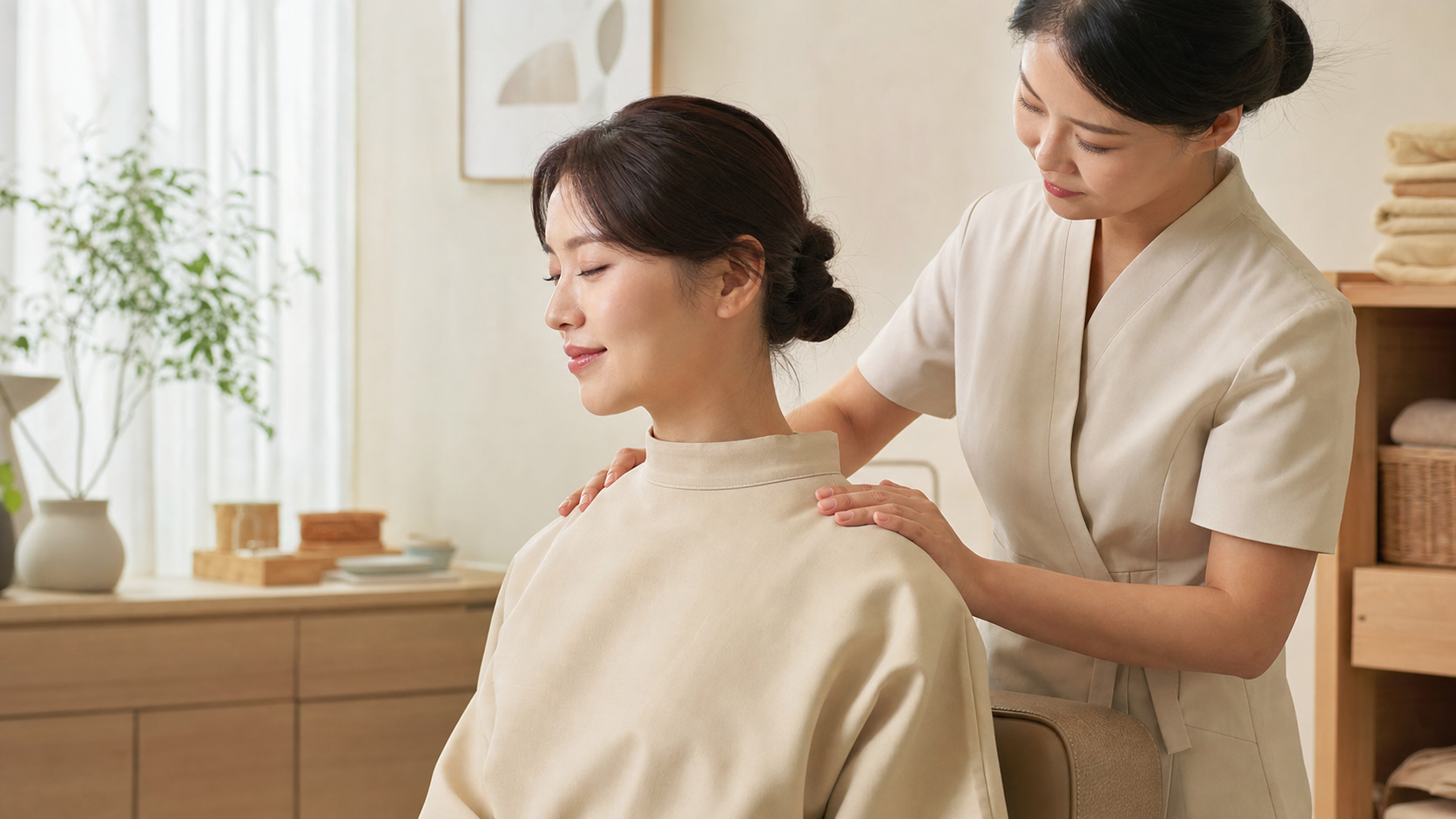
Korean esthetic menus sometimes use gyeongrak for hands-on face or body services. In this setting, the concept may guide the order of a session or the lines followed by the therapist’s hands. The body area, movements, and pressure can differ from one business to another, so the name alone doesn’t define a standard procedure.
Acupuncture inserts fine needles through the skin. Esthetic care works on the skin and surrounding soft tissue by hand. Borrowing the word gyeongrak doesn’t turn an esthetic service into traditional medical diagnosis or treatment.
The difference from anatomy
You’ll sometimes hear gyeongrak described as if it were a vessel that carries toxins or as another name for the lymphatic system. That’s inaccurate. Gyeongrak is a traditional concept, not an anatomical tube.
Swelling, altered sensation, and pain need the right medical language and assessment. Sudden one-sided changes or symptoms that persist shouldn’t be written off as blocked gyeongrak. Those belong with a qualified health professional.
Related terms
- Gyeongrak massage: An industry label that applies the traditional concept to hands-on care.
- Face gyeongrak: A gyeongrak-style esthetic service focused on the face.
- Manual massage: A broad industry term for care performed mainly by hand.
Frequently asked questions
Is gyeongrak a network of blood vessels or nerves? No. It’s a concept within traditional East Asian medicine. Blood vessels and nerves are structures described and observed in modern anatomy.
Why do some sources mention 12 meridians and others mention 14? The 12 are the principal meridians. International acupuncture nomenclature adds the Governor and Conception Vessels when listing 14 main meridian names.
Is esthetic gyeongrak care the same as acupuncture? No. Both may refer to the traditional concept, but the methods are different. Acupuncture inserts fine needles at selected points. Esthetic care uses the hands on the skin and surrounding soft tissue.
This glossary entry is for general information. Experiences vary, and esthetic care isn’t intended to prevent or treat a condition.