Swedish Massage
Swedish massage combines long gliding strokes, kneading, friction, vibration, and rhythmic tapping. English-language training materials also use the name classical massage. In Korea, Swedish massage can mean a gentle oil service or appear in unrelated business menus, but the professional technique is defined by its movement vocabulary, not by one level of pressure or amount of oil.
This entry explains the massage style. It does not present Swedish massage as a Meccrom service.
Swedish massage and classical massage
The U.S. National Center for Complementary and Integrative Health lists Swedish or classical massage as a widely used form of massage. Training programs often teach its movements as a foundation for other hands-on work.
The history cannot be reduced to one inventor. Pehr Henrik Ling developed a Swedish system of physical training in the nineteenth century. Johann Mezger later helped organize and popularize the French names used for massage movements. Modern Swedish massage developed through these overlapping traditions.
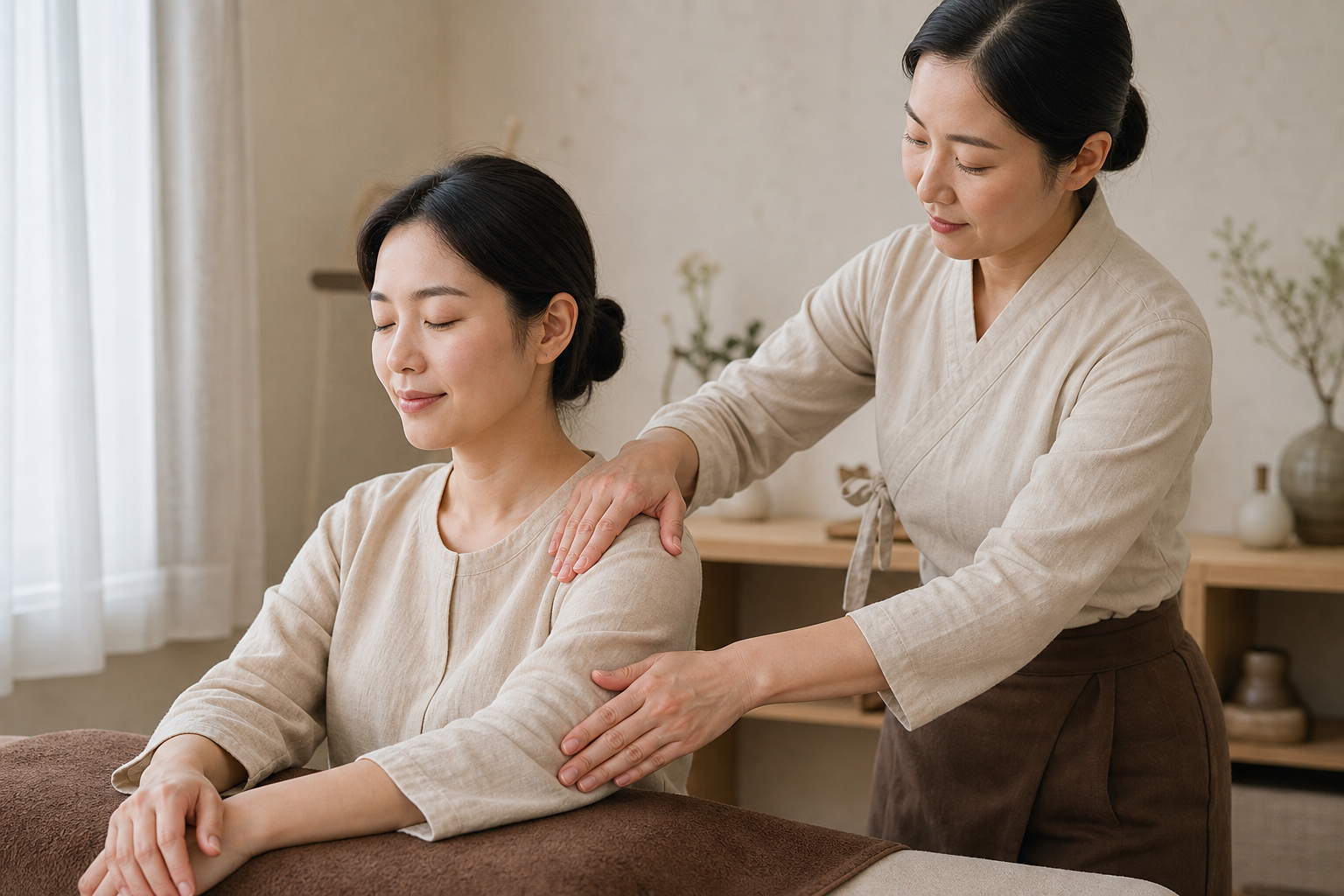
Five common Swedish massage movements
Effleurage, long gliding strokes
Effleurage moves the palms or fingers smoothly over a broad area. It can spread oil or lotion and often connects the beginning, end, and transitions of a session. Pressure may start light and change with the body area and the client’s preference.
Petrissage, lifting and kneading
Petrissage lifts, rolls, and compresses skin and soft tissue. It is different from pressing hard into one point. The palms, fingers, knuckles, or forearms can change the width and rhythm of contact.
Friction, focused rubbing
Friction uses shorter circular or cross-fiber movements over a smaller area. It can create more pressure and surface friction than a long glide, so the practitioner needs to monitor comfort.
Vibration, short shaking movements
Vibration places a hand or fingertips on the body and delivers a small, rapid shaking movement. It usually stays in one area instead of travelling across a long section of skin.
Tapotement, rhythmic tapping
Tapotement alternates the sides of the hands, fingertips, or cupped hands in a quick rhythm. It is not automatically a forceful movement. The shape of the hand and the speed change how it feels.
A session does not need to use all five movements in equal proportions or a fixed order. The area, time, and preferred pressure determine which techniques are combined.
Pressure, products, and session order
Swedish massage is not limited to very light pressure. Gliding may begin gently, while kneading or friction can feel more distinct. More pressure is not better by definition. The comfortable range differs by person and should be adjusted before and during the session.
Oil or lotion reduces surface friction and helps longer movements travel across the skin. A large amount of warm oil is not required. Clients can ask which ingredients and scents are used and whether an unscented product is available.
There is also no rule that Swedish massage must follow one full-body sequence. A session may focus on the back, arms, legs, or another agreed area. Areas outside the session are covered, and the client can exclude any area before or during the work.
Deep tissue, aromatherapy, and lomilomi
Pressure alone does not separate these names.
| Style | Main point of distinction | Common session features |
|---|---|---|
| Swedish massage | Combination of five classic movement groups | Gliding, kneading, friction, vibration, and tapping selected for the area |
| Deep tissue massage | Focus and pace of the work | Slower movements and gradually adjusted pressure over selected areas |
| Aromatherapy massage | Use of essential oils | Diluted essential oils added to massage movements that may overlap with Swedish massage |
| Lomilomi massage | Hawaiian cultural tradition and lineage | Broad, connected movements that may use the hands and forearms |
Deep tissue massage does not need to hurt. Aromatherapy massage can resemble Swedish massage in its hand movements, but the essential-oil component is what the name highlights. Lomilomi is a Hawaiian tradition, not simply a Swedish variation.
Consent and areas of contact
A professional session begins by agreeing on the areas included, the areas left out, pressure, and products. A client removes clothing only to the extent they choose, and areas not being worked on remain covered. Any movement or contact can be declined, and the session can be stopped at any time.
Korean search results use Swedish massage for the professional technique and for other business categories. Check the actual contact areas, draping, products, and provider training instead of relying on the name. Sexual contact and sexual language are not Swedish massage techniques.
Evidence and safety
Massage studies use different populations, techniques, and outcome measures, so they do not establish every claim made under the Swedish massage label. The name does not support promises of detoxification, fat breakdown, weight loss, or stronger immunity. A sense of relaxation after a session is different from treatment of a disease.
Serious adverse events from massage are rare, but blood clots, nerve injury, and fractures have been reported. Anyone with a recent operation, fracture, open wound, bleeding risk, or a condition under treatment should ask a clinician whether massage is appropriate. Pain, tingling, or dizziness during a session is a reason to reduce pressure or stop.
Related terms
- Manual Massage: A broad market term for pressing, gliding, and kneading by hand.
- Lomilomi Massage: A Hawaiian massage tradition that needs to be distinguished from the modern spa services sold under the same name.
- Deep Tissue Massage: Slower, focused work with pressure adjusted over a selected area.
- Aromatherapy: The use of plant essential oils by inhalation or diluted skin application.