Maternity Therapy
Maternity Therapy is nonmedical esthetic care that adjusts position, pressure, products, and working areas for a client who is pregnant. It isn’t one standardized technique. Korean spas and beauty businesses use the name for a broad range of services offered during pregnancy.
Maternity Therapy and Prenatal Therapy overlap. In this glossary, Maternity Therapy covers screening and service boundaries, while Prenatal Therapy explains how positioning and pressure are adjusted during a session.
Maternity Therapy and prenatal massage
Prenatal massage usually means massage adapted for pregnancy. The client tells the practitioner about the pregnancy, and a practitioner trained in prenatal work adjusts positioning and touch. Maternity Therapy is a broader commercial label that can include massage, skin care, aromatherapy, or body care.
The name alone doesn’t tell you what training or method sits behind the service. Ask how the client will be positioned, what pregnancy-specific training the practitioner has, and whether the products and ingredients are disclosed.
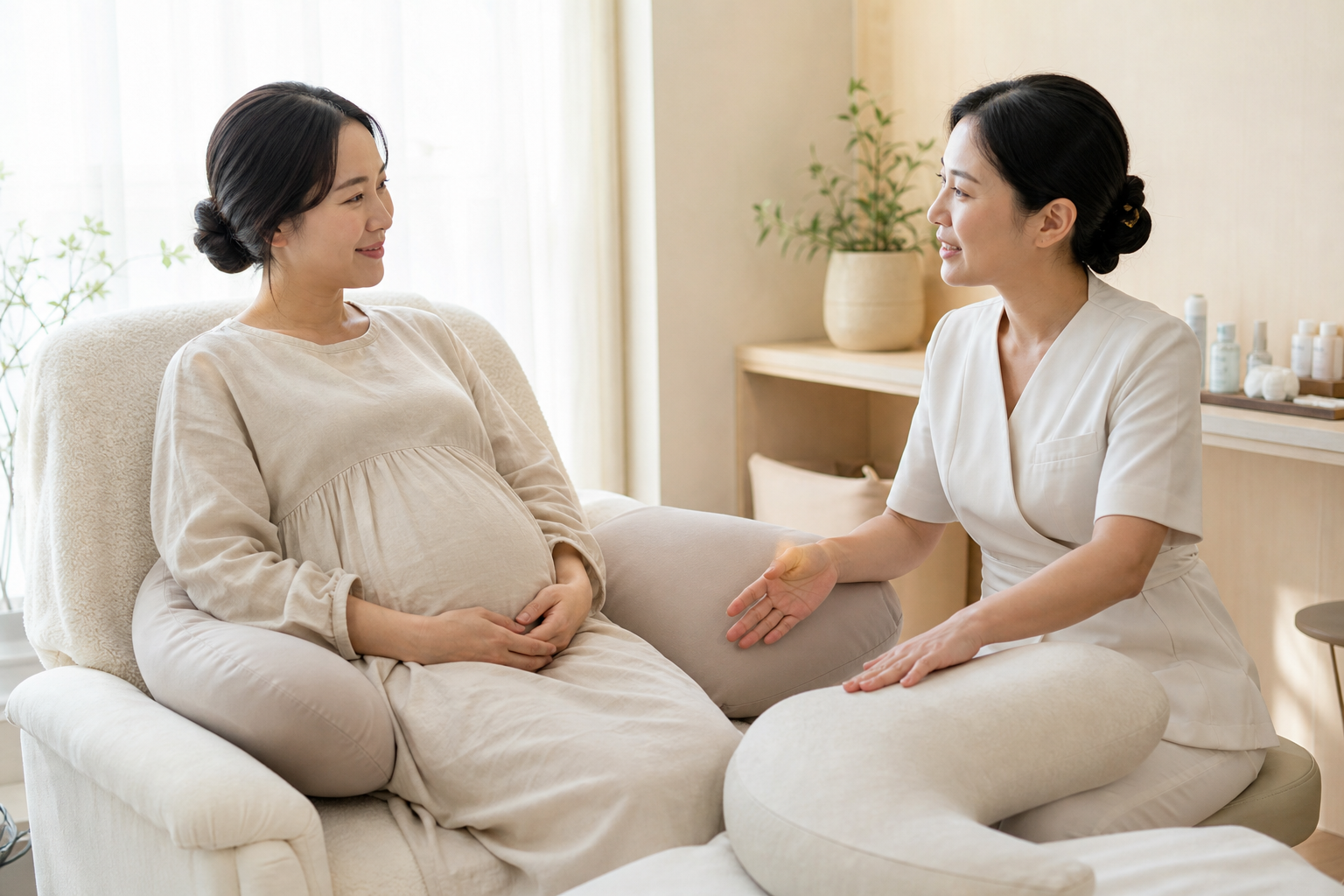
What to share before a session
Pregnant clients don’t necessarily need a new doctor’s note before every massage. A practitioner still needs enough information to stay within the scope of esthetic care.
- Your stage of pregnancy and whether you’re carrying more than one baby
- Any instruction to rest, limit activity, or avoid a certain position
- Recent bleeding, pain, dizziness, or another unusual change
- Positions that are hard to hold and areas you don’t want touched
- Sensitivity to fragrance or products that irritate your skin
- Any product or activity your maternity clinician has asked you to avoid
If your pregnancy has complications or your clinician has limited your activity, ask the maternity team before booking. An esthetic practitioner can’t override that guidance or assess whether a pregnancy is medically stable.
Comfortable positioning during pregnancy
Side-lying is common in prenatal massage because it allows access to the back without pressure on the abdomen. Cushions may support the knees, abdomen, and back. If lying flat feels uncomfortable, the upper body can be raised or the session can be done while seated.
There isn’t one position for every pregnant client. Comfort can change with the stage of pregnancy, the size of the abdomen, breathing, and how the body feels that day. The client should be able to pause or change position at any time.
Pressure and body areas
Maternity Therapy doesn’t have to mean barely touching the skin. It also doesn’t mean tolerating the pressure used before pregnancy. The practitioner starts within a comfortable range and adjusts according to the client’s response.
The session shouldn’t press hard on the abdomen or continue in a position that feels wrong. Any body area can be left out. Swelling and pain during pregnancy have many possible causes, so an esthetic practitioner shouldn’t diagnose them or claim that pressing a particular spot will solve them.
Fragrance and essential oils
Natural doesn’t automatically mean suitable during pregnancy. Safety information varies by essential oil, concentration, and whether the product is inhaled or applied to the skin. Fragrance can also feel stronger or less pleasant than it did before pregnancy.
Ask for the product name, full ingredient list, and dilution information. Unscented care should be an option when the safety of an oil hasn’t been confirmed. Aromatherapy doesn’t replace prenatal care or medical advice about pregnancy symptoms.
Changes that need maternity care first
Postpone the session and contact the maternity team if you have bleeding, leaking fluid, a severe headache, chest pain, trouble breathing, or sudden severe swelling. These aren’t changes for an esthetic practitioner to assess.
Stop a session immediately if dizziness, shortness of breath, abdominal pain, or sudden discomfort appears. Changing the pressure and carrying on isn’t the right response.
What Maternity Therapy can’t promise
Maternity Therapy offers hands-on care in a supported position. It can’t promise to remove swelling, treat back pain, make birth easier, or speed postpartum recovery. Feeling comfortable after a session is different from changing the course of pregnancy or birth.
When choosing a service, look past the benefit claims. Check whether you can change position freely, see the product ingredients, and stop the session without pressure to continue.
Related terms
- Prenatal Therapy: How positioning and pressure are adjusted during hands-on care in pregnancy.
- Postpartum Therapy: Separate nonmedical care considered after birth.
- Aromatherapy: The use of essential oils by inhalation or diluted application to the skin.